House Republicans Reject Senate DHS Funding Bill, Escalating Shutdown Crisis
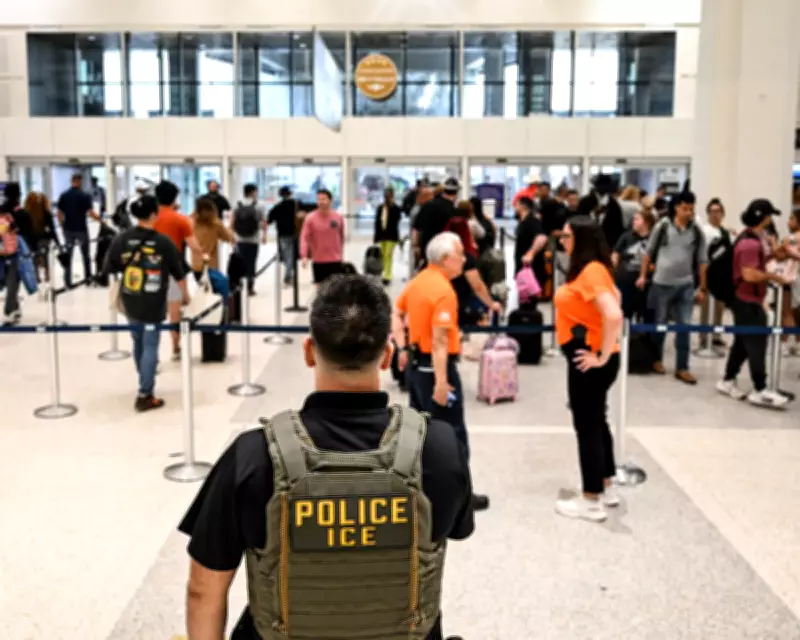
House Republicans have decisively rejected legislation passed by the Senate that would finance most of the Department of Homeland Security while withholding funds from Immigration and Customs Enforcement and parts of Customs and Border Protection. This move critically imperils efforts to end a 42-day partial government shutdown that has forced thousands of DHS employees to miss paychecks and caused significant disruptions for travelers facing long airport security lines.
Johnson Announces Alternative Short-Term Funding Measure
GOP House Speaker Mike Johnson announced on Friday that his party will instead advance a short-term funding bill designed to keep the DHS operational through May 22nd. Johnson expressed hope to hold a vote on this stopgap measure in the House, where Republicans maintain a razor-thin majority, and send it to the Senate promptly. Following an extensive two-hour conference call with Republican colleagues, Johnson launched a scathing critique of the Senate package.
"This gambit that was done last night is a joke," Johnson declared to reporters. "I'm quite convinced that it can't be that every Senate Republican read the language of this bill." He further condemned the Democrats' negotiation tactics as "unconscionable" for attempting to force a deal in the early morning hours. Johnson also confirmed he consulted with former President Donald Trump prior to his announcement, stating, "He understands what we're doing and why, and he supports it."

Conservative Opposition and Political Fractures
This announcement surfaces as Speaker Johnson grapples with unifying his fractured party. Numerous conservative hardliners in the House had already dismissed the Senate bill, which lawmakers advanced during a rare overnight session just before Congress's scheduled two-week recess, as a non-starter. Republican Representative Chip Roy, a member of the influential House Rules Committee, labeled the predawn Capitol Hill breakthrough as "laughably bad" and insisted his colleagues would reject it outright.
"It is absolutely offensive to the people that we represent that the Senate would send over a bill that doesn't fund border patrol and the core components of ICE," Roy asserted. He indicated that members would push to attach several concessions to advance Trump's agenda, including measures related to voter identification.
Scope of the Senate Bill and Immediate Consequences
The Senate-passed measure aimed to fund DHS subagencies affected by the nearly six-week funding lapse, including the Transportation Security Administration, the US Coast Guard, the Federal Emergency Management Agency, and the Cybersecurity and Infrastructure Security Agency. The House GOP leadership's decision to reject this agreement precipitates a direct clash with the Senate and will compel many lawmakers, who have already departed Washington, to return from their recess to vote on the House's proposed continuing resolution.
This House proposal is unlikely to garner any Democratic support. Senate Minority Leader Chuck Schumer has already declared it "dead on arrival" in the upper chamber, rendering it virtually impossible to secure the 60 votes necessary to overcome a filibuster.
Broader Political Deadlock and Democratic Stance
Congress has remained deadlocked for two months over broader DHS funding. Democrats have demanded stronger safeguards on federal immigration enforcement, particularly following the fatal shootings of two US citizens during the Trump administration's immigration crackdown in Minneapolis. Senate Republicans ultimately acquiesced to an 11th-hour deal that Democrats had advocated for weeks, which involved reopening only the affected agencies while omitting funding for ICE and border patrol.
Although the passed bill lacked many key Democratic reforms—such as requirements for judicial warrants when entering private property and prohibitions on officers wearing masks—Schumer celebrated the deal as a party victory. "Democrats held firm in our opposition that Donald Trump's rogue and deadly militia should not get more funding without serious reforms, and we will continue to fight for those reforms," he stated.

Contrasting Agency Impacts and Executive Action
Since ICE received $75 billion through the president's sweeping policy bill last year, it has remained largely insulated from the funding lapse impacting the rest of DHS and has continued its operations. This contrast has become increasingly stark as TSA workers endure weeks without pay. Acting TSA Chief Ha Nguyen McNeill reported this week that some officers are sleeping in cars or selling plasma, with 40% having stopped reporting to work. The White House noted that nearly 500 officers have resigned since last month.
In response, President Trump signed an executive order directing DHS to immediately pay 60,000 airport security workers. He declared an "unprecedented emergency situation" and again blamed Democrats for their "reckless decision to prioritize criminal illegal aliens over American citizens" for the ongoing shutdown.
Future Funding Strategies and Reconciliation Process
The push for ICE funding persists unabated, with Senate Republicans pledging to advance federal immigration enforcement money—alongside funding for the administration's Iran campaign and parts of the Save America Act—through the reconciliation process. This legislative maneuver requires only a simple Senate majority. Late Thursday, Republican Lindsey Graham, who chairs the Senate Budget Committee, affirmed he will "proceed quickly and efficiently" to ensure "ICE and other vital functions of homeland security, as well as the US military and efforts to increase voter integrity, are Democrat-resistance proof."