
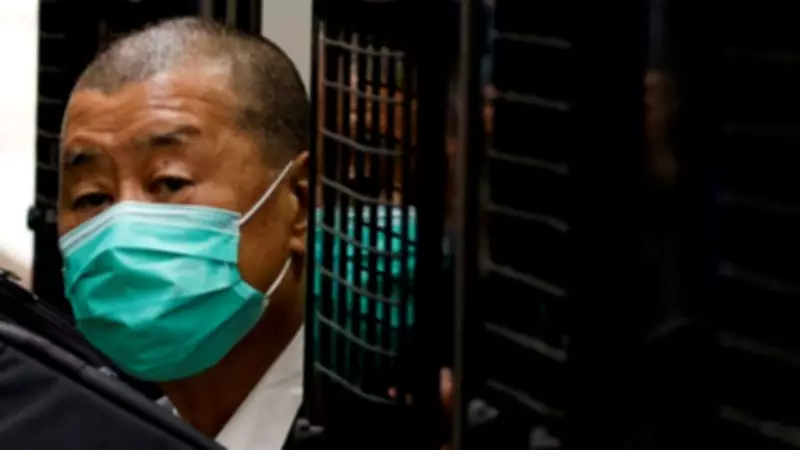
Hong Kong's Chief Executive, John Lee, has publicly welcomed the 20-year prison sentence handed to British pro-democracy activist and media tycoon Jimmy Lai, describing the verdict as a necessary measure against actions that endanger national security. The sentencing, which occurred yesterday, has drawn sharp criticism from Western nations, including the United Kingdom and the United States, but Mr Lee remained defiant, asserting that Mr Lai had "poisoned" the city with his activities.
International Condemnation and Political Fallout
The case has sparked significant diplomatic tensions, with UK Foreign Secretary Yvette Cooper labelling the prosecution as "politically motivated" and expressing grave concerns over Mr Lai's health. Sir Keir Starmer, the UK's Prime Minister, faced pressure to address the issue during his recent visit to China, highlighting the delicate balance between seeking closer economic ties with Beijing and upholding human rights principles. In response, China's embassy in London accused the UK of interfering in Hong Kong's legal processes, dismissing Ms Cooper's remarks as "erroneous".
Details of the Charges and Sentencing
Jimmy Lai, aged 78, was found guilty last December on two counts of conspiracy to collude with foreign forces and one count of publishing seditious materials. Throughout the trial, Mr Lai maintained his innocence, declaring himself a "political prisoner" subjected to persecution by Beijing. His son, Sebastien, emotionally described the sentence as "essentially a life sentence… a death sentence", underscoring the severe impact on the family.
China's White Paper and Security Law Enhancements
In the wake of the sentencing, the Chinese government has released a comprehensive white paper outlining plans to further enhance the national security law imposed on Hong Kong. This legislation, initially introduced in 2020, has been widely criticised for curbing free speech and dissent in the city. The white paper frames the law as a "legal shield" that has restored order following the massive pro-democracy protests of 2019, which saw Hong Kong engulfed in unrest.
Historical Context and Broader Implications
Mr Lai's arrest and subsequent sentencing mark a pivotal moment in Hong Kong's recent history, coming more than five years after his initial detention. As the founder of the now-defunct Apple Daily newspaper, he has long been a vocal critic of the Chinese Communist Party, embodying what analysts describe as the regime's fears of principled, articulate opposition. Sky News Asia correspondent Helen-Ann Smith, citing Mr Lai's biographer Mark Clifford, noted that he represents "the embodiment of what they fear"—a steadfast figure with a significant platform.
Chief Executive John Lee emphasised that the sentencing serves as a "solemn warning against malicious plots" threatening national security, while also endorsing the white paper's publication as a step towards stability. This development occurs against the backdrop of Hong Kong's transition from British rule in 1997, with the city continuing to navigate complex political dynamics under China's sovereignty.




