A devastating fire at the Wang Fuk Court apartment complex in Hong Kong's New Territories has claimed 151 lives, marking the city's deadliest blaze in decades. The tragedy has prompted an official response that highlights both the enduring differences and the converging approaches between Hong Kong and mainland China in handling public disasters.
An Independent Inquiry and Arrests
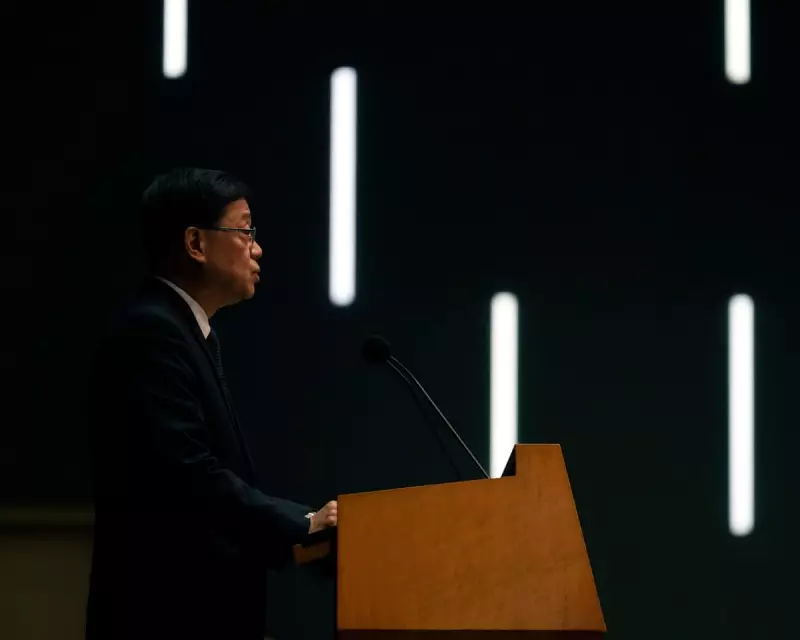
In the wake of the disaster, Hong Kong's Chief Executive, John Lee, announced on Tuesday the creation of an independent, judge-led committee to investigate the fire. This move aligns with a longstanding tradition in Hong Kong of holding independent public inquiries after major incidents, a practice not seen in mainland China where the judiciary is under the control of the Chinese Communist Party (CCP).
Authorities have already taken action, arresting 13 people, including several from a construction company, on suspicion of manslaughter. The arrests follow months of reported complaints from residents about the potential flammability of materials used in ongoing construction works at the complex. As of now, no government official has taken direct responsibility for the tragedy.

A Changing Political Landscape
The catastrophe casts a shadow over the upcoming Legislative Council (LegCo) elections, scheduled for Sunday. However, the political environment has transformed significantly since the pro-democracy protests of 2019-2020. This election, the second under sweeping "patriots-only" reforms, will feature only government-approved candidates.
Professor Jeffrey Wasserstrom, a historian at UC Irvine, notes that the government no longer fears opposition candidates challenging the status quo. Instead, the concern is a low voter turnout, seen as a rare, safe form of dissent. In the 2021 "patriots-only" election, turnout plummeted to a record low of 30.2%, compared to 58.3% in 2016.
The space for dissent has narrowed. Over the weekend, student Miles Kwan was arrested over a petition demanding government accountability for the fire, with local media reporting two further arrests. "Before the national security law, there wouldn't be any repercussions for people just for speaking out," Wasserstrom observed.
A Gulf That is Narrowing
The response to the fire still showcases key distinctions from mainland China. Chief Executive John Lee faced direct, unscripted questions from journalists at a press conference—a scenario unimaginable for China's leader, Xi Jinping. An AFP journalist pointedly asked Lee why he deserved to keep his job after a "prosperous society" allowed 151 people to burn to death.
Furthermore, Hong Kong's information landscape, though constrained by national security laws, remains more open than the mainland's, with access to Western social media and Google still available.
Yet, the gulf is narrowing. Legal experts argue Hong Kong's judiciary is losing its independence. Former UK Supreme Court justice Jonathan Sumption resigned from Hong Kong's court last year, stating the rule of law was "profoundly compromised" on issues the government cares about. This fire undoubtedly qualifies.
The tragedy invites comparison with mainland China's 2022 Urumqi apartment fire, which killed at least nine people and sparked the widespread White Paper protests against zero-Covid restrictions. The Chinese state has sought to erase that event from public memory, just as it did with the 1989 Tiananmen protests. Authorities may attempt a similar memory purge in Hong Kong, though analysts suggest they are unlikely to be as successful.