Hillsborough Law Will Criminalize Lying by Senior Ministers, Campaigners Reveal
In a landmark development, the proposed Hillsborough Law will introduce a new criminal offence specifically targeting senior government officials who deliberately mislead the public. The legislation, officially known as the Public Office Accountability Bill, includes a standalone offence of "misleading the public" that could result in prison sentences of up to two years for those found guilty.
Who Will Be Affected by the New Legislation?
The new offence will apply directly to the prime minister, cabinet ministers, heads of government departments, civil servants, and public officials such as police and NHS staff. However, backbench MPs and members of the House of Lords are currently exempt from these provisions, a point that has sparked significant debate among parliamentarians.
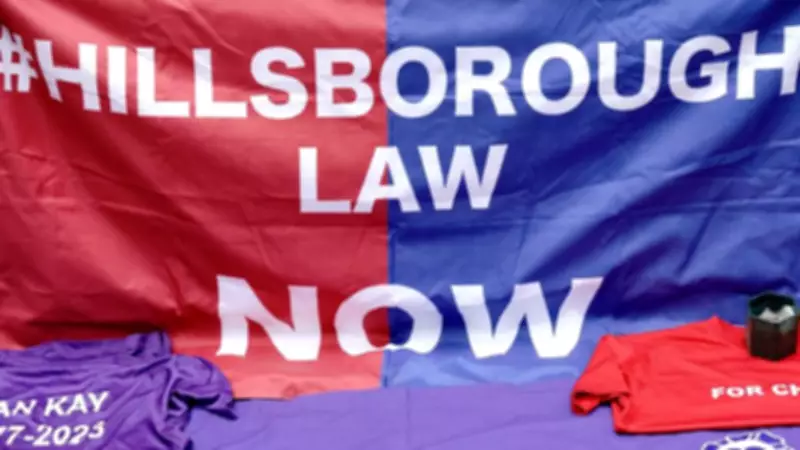
Democracy campaigners have described this measure as "historic" and a crucial step toward "criminalizing lying" in politics. The legislation follows decades of campaigning by families affected by the 1989 Hillsborough disaster, which claimed 97 lives and was marred by police cover-ups.

Growing Calls to Extend the Law's Reach
More than 30 MPs have backed an amendment proposed by Labour MP Luke Myer, calling for the offence to be extended to all members of both houses of parliament. Labour MP Neil Duncan-Jordan emphasized that "MPs shouldn't be above the law," noting that public trust in politicians is at an all-time low and that this change is essential for restoring credibility.
Independent MP Rosie Duffield, who resigned from the Labour Party in 2024, described supporting the amendment as a "no-brainer." She argued that transparency should apply to ordinary backbenchers as well, stating that "when a few at the top are embroiled in scandal, it besmirches us all."
Key Provisions and Controversies
The Hillsborough Law establishes a duty of candour, requiring public officials to act with honesty during investigations and inquiries into state actions. This duty is reinforced by the misleading the public offence, which is not limited to inquiry contexts. Campaigner Marcus Ball, who previously attempted to prosecute Boris Johnson over Brexit campaign claims, hailed the move as "historic" but criticized the exemption for backbench MPs as "completely illogical."
The government has included a clause requiring proof of harm or potential harm for charges to be brought, which some MPs argue could weaken the law's effectiveness. Conversely, Conservative MP Mike Wood expressed concerns about free speech, warning that the offence might subject ministers to "politically motivated lawfare" and that disagreements should be resolved through elections rather than courts.
Delays and Future Prospects
The bill's passage through parliament was delayed last month due to disputes between the government and Hillsborough families over its application to security services. Liverpool MP Ian Byrne, a leading advocate for the legislation, has urged the prime minister to implement it fully without further delay, citing recent political scandals as evidence of its necessity.
A government spokesperson reaffirmed commitment to the legislation, stating it will "change the balance of power, so the state must always act for the people it serves." The offence is intended for serious cases, such as public officials spreading false narratives about events, and will not apply to statements made in parliament due to parliamentary privilege.