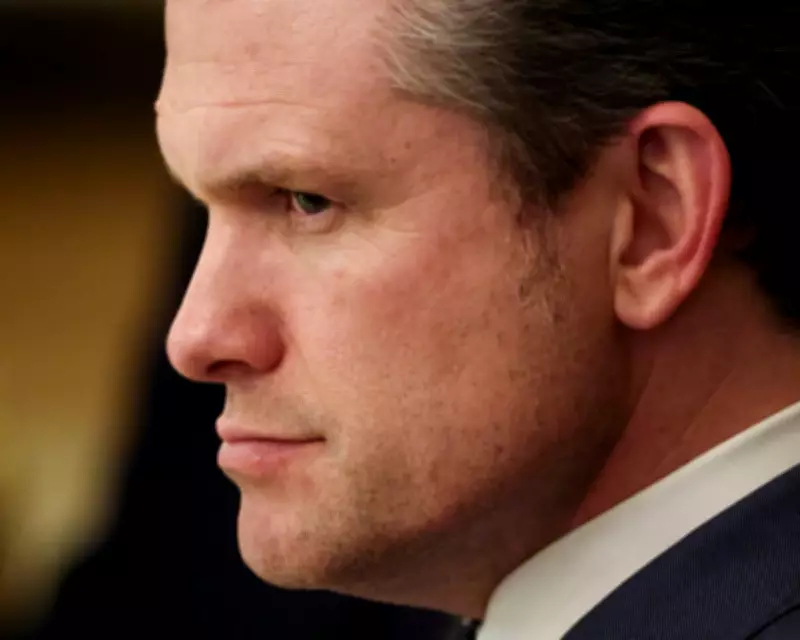
Hegseth's Television Rhetoric Promotes Violent Ideology Within Trump Administration
Pete Hegseth, a prominent television host and Trump administration figure, has been using live broadcasts to announce future war crimes and promote a culture of violence, according to political analysts. His rhetoric, described as "faithful to his master's desire for total domination and destruction," includes statements like "no quarter" and encouragement of gratuitous cruelty, such as "We are punching them while they're down." This represents a significant departure from traditional military codes of honor.
Administration's Embrace of Violence as Policy
The Trump administration appears to be selecting cabinet members specifically for their endorsements of violence rather than despite them. Hegseth was primarily known as a television host willing to defend war crimes before his appointment. Similarly, Markwayne Mullin has shown pride in challenging a witness to a fistfight during a Senate hearing and refused to apologize for "understanding" an assault on Senator Rand Paul.
Unlike historical fascist movements that promoted self-sacrifice, the current administration glorifies what critics describe as "video game-style killing at a distance." This violence is justified not with strategic objectives but with emotional appeals to "fury" and vengeance, accompanied by open admissions that basic laws of warfare will be broken.

Trump's Longstanding Pattern of Violence Promotion
Donald Trump has never concealed his desire for domination and willingness to have followers engage in violence. This pattern extends from his calls to "rough up" people at rallies to pardoning even the most brutal January 6 insurrectionists. During his first administration, an "axis of adults" mostly restrained his worst impulses, but after events like the Venezuela "excursion," figures like Hegseth seem intoxicated by the idea that special military operations could be quick, costless in American lives, and make for compelling television.
Trump's fixation on visuals and props—believing that showing a pile of paper on television proves he has divested from his companies or that he has a great healthcare plan—now permeates his administration. He appears to treat global decapitation campaigns as if they were a version of The Apprentice involving live ammunition, as if he gets to remove other leaders and choose their successors.
Historical Parallels to Fascist Propaganda
Historically, ideologies that made violence central to their propaganda include fascist movements with slogans like "Long live death" and Mussolini's celebration of veterans as a "trenchocracy." Gigantic ossuaries for war dead were meant to encourage future sacrifice, while Nazi youth were presented with slogans like "We are born to die for Germany."
Hegseth and company appear to be promoting a similarly nihilist cult of death, but one that celebrates killing by pressing a button thousands of miles away. Meanwhile, America's own war dead are dishonored as Trump has used their repatriation to display Maga merchandise and fundraise off war victims.
Media Manipulation and Reality Distortion
The reality of war recedes as airwaves fill with entertaining images and empty talk. Hegseth, fond of overwrought language and alliterations like "warriors, not wokesters," seems unable to articulate anything beyond cliches such as "unbreakable will" or snippets of Christian nationalism that conflict with the First Amendment's prohibition of an established religion.
Hegseth has created a fantasy world within the Pentagon itself, replacing traditional press conferences with gentle exchanges between "the secretary of war"—a fantasy title since Congress hasn't authorized changing the department's name—and figures from outlets like the Epoch Times and LindellTV. Despite this insulation from reality, Hegseth insists the press isn't positive enough about U.S. attacks on Iran.
Psychological and Ideological Implications
Critics draw parallels between Hegseth's rhetoric and Hannah Arendt's description of Nazi bureaucrat Adolf Eichmann as someone utterly incapable of thinking, instead producing an endless stream of hollow phrases. The fragile egos of Maga men performing puerile stunts seem incapable of facing the reality of what has been unleashed so thoughtlessly.

The administration's obscene focus on "lethality" represents a shift toward war understood as inflicting maximum destruction and pain rather than achieving strategic objectives—objectives the administration has been utterly incapable of articulating. This raises serious questions about whether this rhetoric will legitimize illegal wars and further erode democratic norms.