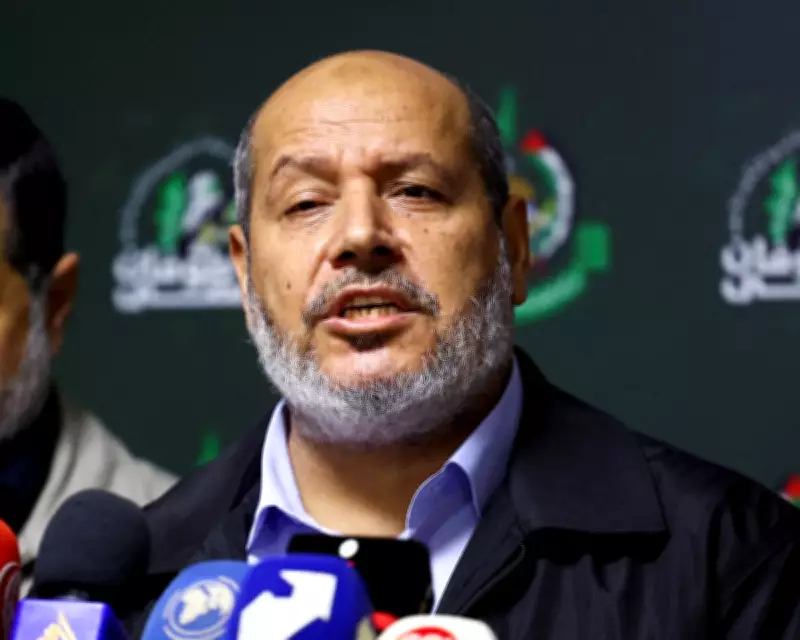
Hamas has reportedly commenced leadership elections among its members at a crucial moment for the militant Palestinian movement, with imminent decisions that could determine its future existence and impact peace prospects in Gaza. According to BBC reports and Gulf press coverage, voting has already taken place among Hamas members in Gaza, with ballots expected from those in the West Bank, Israeli prisons, and the diaspora.
Election Process and Critical Decisions Ahead
The electoral process, which could extend over several weeks, involves selecting delegates to Hamas's 50-member general Shura council. This council ultimately chooses the movement's politburo and a new interim leader. The incoming leader will confront monumental choices, including the extent of cooperation with a US-sponsored peace initiative, potential disarmament and arsenal reduction, demands for Israeli withdrawal from Gaza, and whether to seek inclusion in a new Gaza government or recede into political obscurity.
Leadership Vacuum and Assassination Threats
Much of Hamas's leadership has been eliminated by Israel during a military campaign that has devastated Gaza and resulted in over 75,000 Palestinian casualties over 28 months. Among those killed were Gaza Hamas leader Yahya Sinwar and military chief Mohammed Deif, who orchestrated the October 2023 attack on southern Israeli communities that claimed approximately 1,200 lives, including more than 800 civilians.

Israel also assassinated deputy leader Saleh al-Arouri in Beirut in January 2024 and overall political leader Ismail Haniyeh in Tehran in July 2024. A September 2023 airstrike in Doha targeted surviving leadership gathered to discuss US peace proposals, though key figures survived. The current election occurs under extreme secrecy due to assassination risks for anyone identified in leadership roles.
Frontrunners and Divergent Paths
The two primary contenders in the leadership race are Khalil al-Hayya and Khaled Meshaal, both survivors of the Doha airstrike. They represent distinct visions for Hamas's future direction. Al-Hayya, who leads the Gaza wing while residing in the Gulf, is considered Sinwar's successor—a hardliner with close ties to Iran among Hamas's foreign sponsors.
Meshaal, a Hamas founder and former overall leader for over two decades, now heads the movement abroad from Doha. He is viewed as more flexible, with stronger connections to Qatar and Turkey. Michael Milshtein, a former Israeli military intelligence colonel at Tel Aviv University, notes that Meshaal favors considering political settlements with Israel and reconciliation with the Palestinian Authority.
Strategic Implications and Regional Dynamics
Khaled Elgindy, a senior research fellow at the Quincy Institute for Responsible Statecraft, emphasizes that this election marks a new, potentially existential chapter for Hamas. He suggests Meshaal would foster better relations with Arab states, Qatar, and Turkey, while possibly reducing reliance on Iran. However, it remains uncertain whether grassroots frustration with Hamas has influenced voting members.
Under Donald Trump's peace plan, the National Committee for Administration of Gaza (NCAG)—a group of non-affiliated Palestinian technocrats—is designated to assume immediate governance of Gaza and oversee Hamas's disarmament. While Hamas leaders have informally indicated willingness to surrender heavier weapons like rockets and mortars to Palestinian authorities, fighters are likely to retain personal firearms for self-defense against Gaza's armed clans and criminal gangs, some allegedly backed by Israel.
Organizational Rebuilding and Future Challenges
Reuters reports that Hamas has been actively reconstructing its organization in recent weeks, collecting taxes on goods entering Gaza under ceasefire agreements, and replacing senior officials in Gaza ministries and district governors. This rebuilding effort coincides with the leadership transition, highlighting the group's resilience amid ongoing conflict and political uncertainty.

The election outcome will significantly influence Hamas's strategic posture, its engagement with international peace efforts, and its role in post-conflict Gaza. As the voting proceeds in secrecy, the movement stands at a crossroads, balancing militant ideology with pragmatic survival in a rapidly evolving geopolitical landscape.