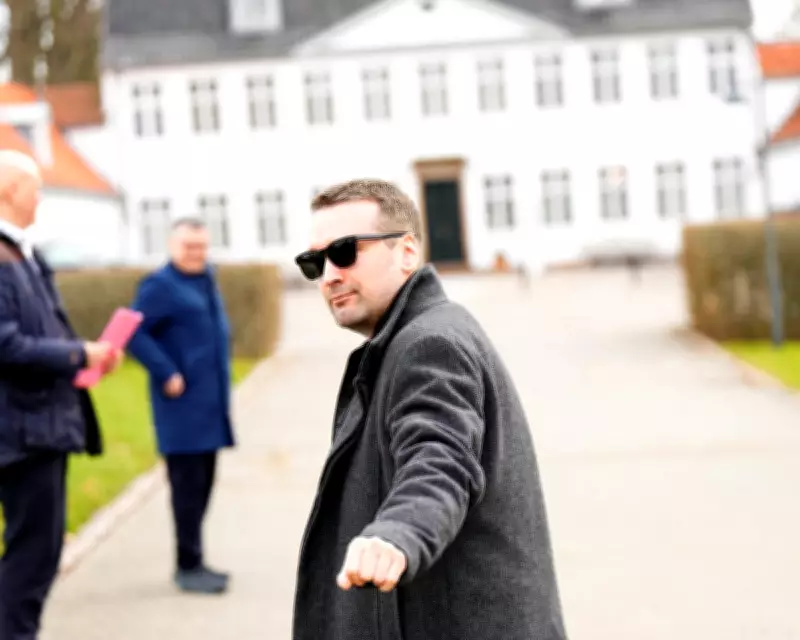
Qarsoq Høegh-Dam: The Greenlandic MP Championing Independence in Denmark
In a historic move, Qarsoq Høegh-Dam has become the first member of the pro-independence Naleraq party to secure a seat in the Danish parliament. This groundbreaking election marks a significant step in Greenland's long-standing quest for self-governance, as Høegh-Dam vows to use his position to transfer power from Copenhagen to Nuuk, Greenland's capital.
A Mission to Render Himself Obsolete
With an unconventional goal, Høegh-Dam declares, "I want to make myself as obsolete as possible." He believes that if he succeeds in his efforts, Greenland will achieve full independence, eliminating the need for representation in the Danish parliament. The MP emphasizes that the Greenlandic people should be governed solely by their own parliament and government, aiming for a future where his role is no longer necessary.
Geopolitical Tensions and Historical Context
The election comes amid heightened geopolitical drama in the Arctic, highlighted by former U.S. President Donald Trump's threats to take control of Greenland. This incident, which escalated tensions to the point of Denmark preparing for potential attacks, has cast a global spotlight on the relationship between Greenland and Denmark. Historically, Greenland's colonization began in 1721 under Denmark-Norway, with the territory becoming part of the Kingdom of Denmark in 1953 and gaining home rule in 1979. However, Copenhagen still retains control over foreign and security policies, a point of contention for many Greenlanders.
Naleraq's Rise and Political Strategy
Naleraq, founded in 2014, has seen a surge in popularity, doubling its seats in Greenland's parliament during the last election. While all Greenlandic parties support eventual independence, Naleraq advocates for a swift transition, adhering to a 2009 act that recognizes Greenland's right to self-determination. Høegh-Dam warns that Denmark's failure to meet commitments, such as maintaining prison facilities, could be exploited by foreign powers like the U.S. and Russia in the race for Arctic control.
Collaboration and Constitutional Reform
Despite political differences, Høegh-Dam plans to work closely with Naaja Nathanielsen, the other Greenlandic MP elected to the Danish parliament from the Inuit Ataqatigiit party. Nathanielsen is pushing for reform of the 1953 constitution, which was not voted on by Greenlanders and restricts Nuuk's authority over foreign and security policy. She argues that this inequality hinders meaningful discussions on Greenland's future, emphasizing the need for an even playing field.
A Family Legacy and Future Vision
Høegh-Dam comes from a family deeply involved in Greenlandic politics, including his sister and late uncle, who designed the national flag. He expresses hope to contribute to this legacy, advocating for a postcolonial structure that empowers Greenland as an independent nation. While not opposed to a close relationship with Denmark, he insists that the current system is ineffective and must evolve to reflect Greenland's aspirations in a changing world.