German State Election Presents Crucial Test for Chancellor Friedrich Merz
Friedrich Merz's centre-right Christian Democratic Union faces a pivotal regional election this Sunday in Baden-Württemberg, marking the first of several state votes this year where the party aims to counter the growing influence of the far-right Alternative für Deutschland.
Neck-and-Neck Race in Prosperous Auto Hub
Voters in Baden-Württemberg, a prosperous southwestern state with 11.2 million residents that serves as Germany's automotive heartland, will head to the polls. Following their national election victory a year ago, the CDU now seeks to reclaim first place from the Greens, who have secured the last two state elections in this traditionally conservative stronghold.
Recent polling indicates a dramatically tightened race, with both the CDU and Greens statistically tied at 28% support each. This represents a significant shift from earlier surveys that showed the CDU enjoying substantial leads in the region.

Controversial Candidates and Historic Possibilities
The CDU campaign is led by 37-year-old Manuel Hagel, a former bank branch manager whose candidacy encountered turbulence following revelations about sexist and inappropriate comments he made toward female students during a 2018 school visit. Hagel has since issued apologies for these remarks.
Conversely, the Greens present 60-year-old Cem Özdemir as their lead candidate. Should the Greens prevail, Özdemir would make history as Germany's first state premier of Turkish heritage. Özdemir brings substantial national experience, having served as agriculture minister under former Chancellor Olaf Scholz and becoming one of Germany's first parliamentarians of Turkish origin back in 1994.
Far-Right Challenge and Economic Concerns
The anti-immigration AfD party has been polling at approximately 18% in Baden-Württemberg, which would establish a new record for the party in this western state, though still below their national polling average of around 25%. The AfD's lead candidate, Markus Frohnmaier, has attracted national attention through his connections to Russia and associations with Donald Trump's Make America Great Again movement.
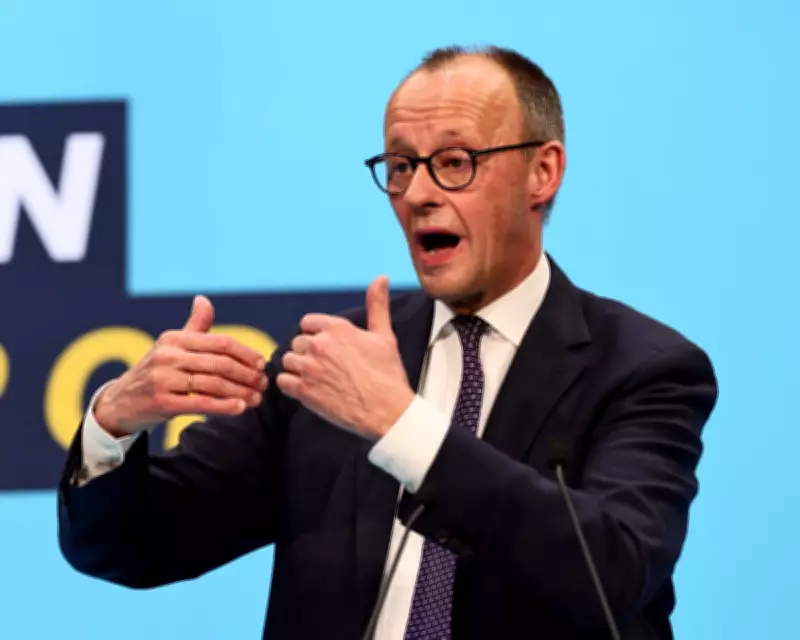
During Friday's final campaign rally, Merz emphasized the broader significance of the election, noting that international observers would be watching closely to determine whether the CDU remains electorally competitive during turbulent times.
Brian Fuerderer, a 34-year-old surgical equipment company executive, expressed disappointment with the campaign's focus, telling AFP that political parties were avoiding essential economic issues and Germany's problematic dependence on foreign energy supplies, particularly highlighted by ongoing Middle East conflicts.
Economic Priorities and Industry Challenges
Baden-Württemberg hosts major automotive manufacturers including Porsche and Mercedes-Benz, representing Germany's significant yet struggling car industry. Like other German sectors, automotive companies face substantial challenges ranging from elevated energy costs to intensifying competition from Chinese manufacturers.
Merz has identified revitalizing Germany's stagnant economy as his primary objective and has actively lobbied the European Union to reconsider its planned 2035 ban on new combustion-engine vehicles. Interestingly, even the Greens' Özdemir has advocated for greater flexibility during the transition to electric vehicles.
Political Implications and Future Elections
A disappointing performance in this traditionally CDU-friendly state would represent an unfavorable beginning for Merz's party during a year packed with regional elections. The CDU hopes its stricter migration policies will help reclaim voters who have shifted to the AfD.
The political calendar continues with another crucial test on March 22nd, when the CDU attempts to defeat the centre-left Social Democrats in Rhineland-Palatinate. Additional regional elections will follow in September across formerly communist eastern German states, where the AfD anticipates strong performances.

Leadership Transition and Voter Perceptions
Should the Greens secure victory on Sunday, Özdemir would succeed his party colleague Winfried Kretschmann, the 77-year-old who has governed Baden-Württemberg for fifteen years. Özdemir represents the "realist" faction within the Greens and has deliberately distanced himself from more left-leaning elements of his party.
Hans Christian, a 44-year-old businessman, explained to AFP that Özdemir's practical approach resonates with Baden-Württemberg voters. "People believe experience matters during challenging times," Christian observed. "This has benefited the Greens, since Mr. Özdemir simply possesses greater life experience."
Frohnmaier recently highlighted on social media a poll showing the AfD reaching 20% support in Baden-Württemberg, describing such a result as "sensational" and the party's best performance ever in any western German state.