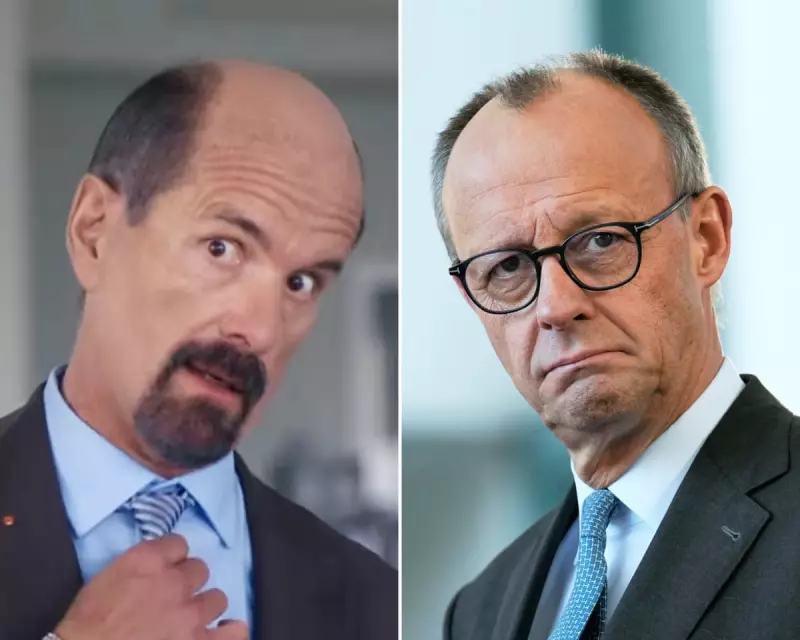
The leader of Germany's main opposition party, Friedrich Merz, has ignited a political and cultural debate after appearing in a cameo role for an upcoming film based on the cult comedy series 'Stromberg'. The move has drawn sharp criticism from rivals and commentators who argue it blurs the line between serious politics and satire.
A Political Cameo in the World of Satire
The controversy centres on Merz's participation in the film 'Stromberg – Der Film', which is scheduled for release in German cinemas on December 4, 2025. Merz, who heads the Christian Democratic Union (CDU), appears as himself in a scene. According to reports, his character is approached by the film's protagonist, the hopelessly incompetent office manager Bernd Stromberg, played by actor Christoph Maria Herbst.
In the scene, Stromberg supposedly seeks career advice from the seasoned politician. The decision by Merz, a figure known for his sober and economically-focused rhetoric, to lend his image to a project rooted in cringe comedy has left many in German political circles bewildered.

Cross-Party Criticism and Defence
The reaction from other political parties has been largely negative. The co-leader of the Green party, Ricarda Lang, publicly questioned the judgement behind the move. Meanwhile, a senior figure from the Social Democratic Party (SPD) described the cameo as "a misstep" that risked undermining Merz's political gravitas.
Critics contend that by associating himself with a satirical character known for manipulative behaviour and chronic inadequacy, Merz has inadvertently made himself a part of the joke. They argue it trivialises the office he seeks and plays into existing public cynicism about politicians and their relationship with media.
Defenders of the CDU leader have pushed back, framing the appearance as a light-hearted moment of self-deprecation and a nod to popular culture. They suggest it could help to soften Merz's sometimes austere public image and connect with a broader audience. However, this defence has done little to quell the storm of commentary.
Broader Implications for the Political Zeitgeist
This incident touches on a deeper tension in modern political communication. The 'Stromberg' series, much like the UK's 'The Office', holds a mirror to the absurdities of corporate and bureaucratic life, making its protagonist an icon of failure. A politician voluntarily stepping into that world is a risky gambit.
The debate raises questions about how contemporary political figures navigate entertainment and satire in an era where public perception is heavily mediated. With the film's release imminent, the scrutiny on Merz's brief performance is likely to intensify, testing whether this cultural crossover will be seen as a relatable human moment or a significant error of judgement.
Ultimately, the episode highlights the precarious balance politicians must strike between accessibility and authority. As Germany looks ahead to future electoral contests, the lingering image of its potential chancellor sharing the screen with a fictional buffoon may prove to be an unexpected factor in shaping his public persona.