Farage Frames Senedd Election as Critical Referendum on Starmer's Leadership
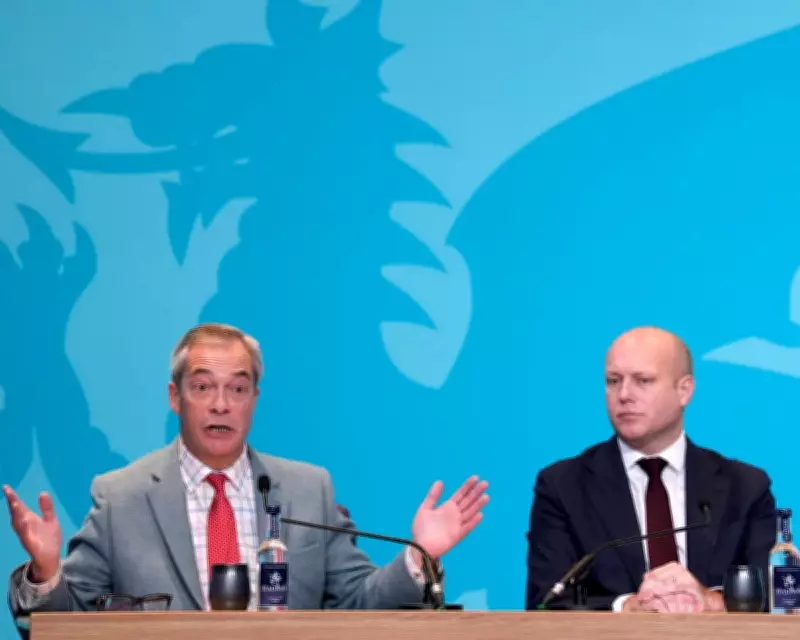
Nigel Farage has emphatically declared that the upcoming Senedd elections in May will serve as a decisive referendum on Keir Starmer's premiership, as Reform UK intensifies its campaign to disrupt Labour's century-long political stronghold in Wales. Launching the party's election manifesto in Newport alongside newly appointed Welsh leader Dan Thomas, Farage positioned the Welsh contest as a broader national judgment on the Labour leader's performance.
Manifesto Launch Amidst Protests and Political Ambitions
Addressing an audience of approximately 2,000 supporters at a media conference that doubled as a rally, Farage asserted, "It's a Welsh election, but I'm afraid, whether you like it or not, it doubles up as a referendum on Keir Starmer's premiership." He predicted that May 7 would mark the end of Labour dominance in Wales, particularly in the valleys, and claimed that a successful Reform campaign could oust what he called "the worst prime minister any of us have seen in our lifetimes."
The event, where manifestos were available in both Welsh and English, faced minor disruptions as security guards removed a heckler shortly after Farage began speaking. Outside, about a dozen protesters advocating for refugee and Palestinian causes had gathered, highlighting the contentious atmosphere surrounding Reform's growing influence.

Reform's Surge and Policy Proposals for Wales
Reform UK is capitalizing on Welsh Labour's struggles with a 26-year incumbency and an unpopular Westminster leader, though most polls still show Plaid Cymru ahead of Reform. The party is poised to benefit significantly from Wales's new proportional voting system, potentially transforming from its current two Members of the Senedd—both recent defectors from the Conservatives—into the largest party in the Senedd. This would mark the first time a right-wing party has had a genuine chance of winning in Wales since the 1850s.
Dan Thomas outlined what he described as Wales's "wrong direction" under current leadership, citing NHS waiting lists, declining education standards, and the cost of living crisis as key failures. "This is not inevitable, it is the result of political failure," Thomas stated, blaming Labour and its recent propping up by Plaid Cymru for over a century of underperformance.
Core Policies and Strategic Adjustments
Reform's manifesto for Wales includes several headline proposals: reducing income tax by 1p, prioritizing social housing for residents who have lived in the country for at least 10 years, and improving the sustainable farming scheme introduced by Welsh Labour this year. The party also reiterated its commitment to abolishing the Welsh government's controversial 20mph speed limit in urban areas and axing the nation of sanctuary policy, which primarily supports Ukrainian refugees, along with scrapping international aid.
Notably, Farage walked back a previous promise from last summer to reopen Wales's coalmines and restart Port Talbot's blast furnaces, replacing it with a pledge to "work with the Westminster government to protect strategic national industries such as steel." Many of the policies announced mirror those recently proposed by the Welsh Conservatives, and Farage indicated that detailed costings for the manifesto would be published soon.
Electoral Strategy and Candidate Deployment
Despite the ambitious rhetoric, Reform UK has yet to release its candidate lists for the Senedd election. Thomas previously indicated that the party plans to field around 100 candidates across the 16 new constituencies created by the electoral reform, aiming to maximize its presence under the proportional system. As the campaign heats up, all eyes will be on whether Reform can translate its surging support into a historic electoral breakthrough that reshapes Welsh politics.