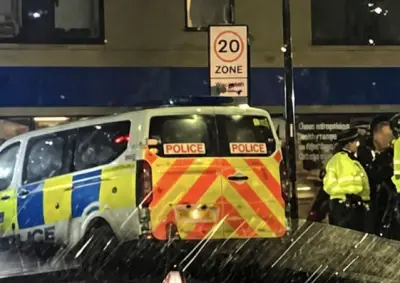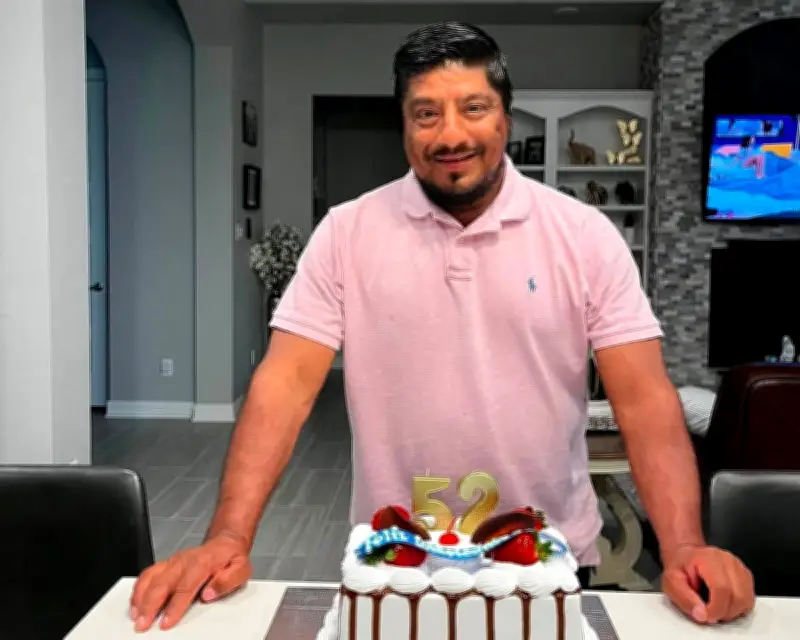
Lorenzo Salgado Araujo, a 52-year-old construction worker, was fatally shot by Immigration and Customs Enforcement (ICE) agents on Tuesday morning during a targeted enforcement operation in Texas. His family has called for a full independent investigation into his death, as it marks the 10th fatal shooting by federal immigration officials since President Donald Trump began his second term, according to a review by the Guardian.
Details of the incident
Early Tuesday, Salgado left his home after having coffee and a meal prepared by his wife, said goodbye to his dog, and drove his white van to pick up three co-workers before heading to a construction site. However, during a "targeted enforcement operation," ICE officers shot and killed Salgado and arrested the other three men. The Department of Homeland Security (DHS) alleged that Salgado "weaponized" his vehicle when officers tried to stop and arrest the four men. Salgado's family, public officials, and civil rights groups dispute this claim and have demanded an independent investigation.
Pattern of fatal shootings
Since Trump's second term began, federal immigration officials, including ICE and Customs and Border Protection (CBP) agents, have been responsible for 10 fatal shootings. Not all occurred during immigration enforcement; one involved CBP agents shooting a man who fired on a border patrol station in Texas, and another involved an off-duty ICE officer killing a man in California. In at least four cases, including Salgado's, victims were driving when shot. Law enforcement training typically advises moving out of a vehicle's path rather than shooting at it. From July 2025 to January 2026, the Wall Street Journal identified over a dozen incidents of federal immigration officials firing at people in vehicles.
Family and advocates respond
Ronaldo Salgado, the son of Lorenzo Salgado Araujo, stated at a press conference on Wednesday: "He did not deserve to die." Civil rights groups and lawmakers have echoed this call. Jesse Franzblau, associate director of policy at the National Immigrant Justice Center, said: "The deaths of people in immigration prisons has reached new terrifying levels – 21 people have died in ICE detention this year alone, and now we are learning of yet another shooting death by an immigration agent on the streets of another US neighborhood. Congress has given ICE and CBP billions of dollars, $70bn alone in a bill passed just last month, with no accountability for the violence they have brought to our communities."
Controversy over DHS claims
DHS has repeatedly claimed that victims weaponized their vehicles. In the case of Renee Good, a U.S. citizen killed by ICE in January, footage later contradicted the administration's statements. Similarly, in the March 2025 shooting of Ruben Ray Martinez, a U.S. citizen, officials claimed he "intentionally" ran over a federal agent, but video evidence painted a more complicated picture. Congressional Democrats Robert Garcia and Greg Casar noted: "DHS's repeated lies and omissions about the shooting of Mr Martinez reflect a troubling pattern in which official statements about the use of lethal force are later challenged by video footage, witness testimony, or subsequent investigations."
Calls for independent investigation
Steve Descano, Fairfax County commonwealth's attorney, stated: "Anytime someone is killed by a federal law enforcement agent, federal authorities should legitimately investigate to see if that killing is criminal. The Trump administration has made it clear that this is a duty they have no interest in fulfilling – and unfortunately their moral abdication means that state and local prosecutors must be the ones to pursue transparency and justice." Congressional Representative Sylvia Garcia and Texas State Representative James Talarico also called for an independent probe. Talarico added: "Previous incidents have shown that this agency cannot be trusted to report all the facts." Houston Mayor John Whitmire insisted on a "transparent, independent investigation" by federal authorities, though local officials lack jurisdiction over federal law enforcement matters.