Former Labour MP Tony Wright has sparked a debate about the purpose of political manifestos, criticising the party's pre-election commitment not to raise key taxes as an unnecessary "straitjacket".
The 'Irresponsible' Tax Pledge
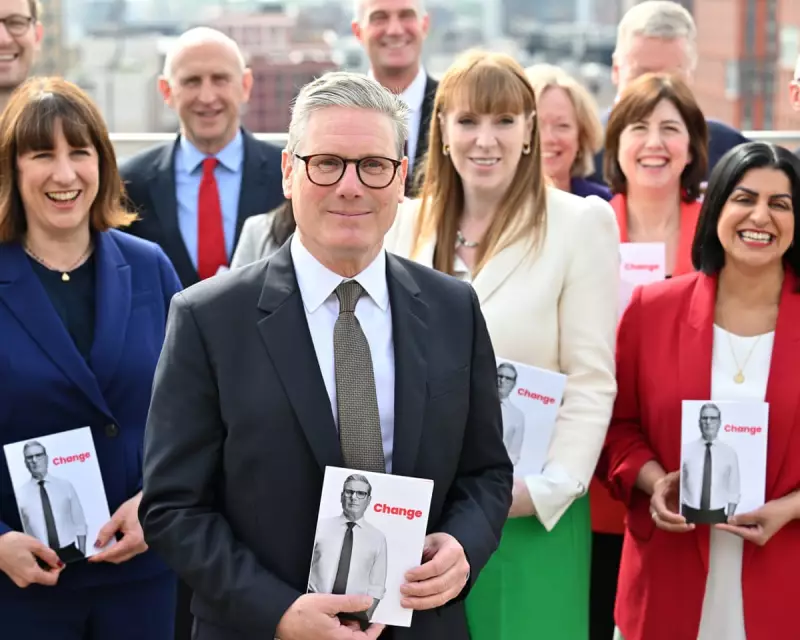
In a recent letter, Wright agreed with commentator Martin Kettle's assessment that Labour's manifesto promise not to increase major taxes was "irresponsible". He likened the move to sending an army into battle without its most effective weapons. The pledge was made as Keir Starmer and his shadow cabinet launched the Labour election manifesto in Manchester on 13 June 2024.
Wright, who served as the Labour MP for Cannock Chase from 1992 to 2010, argued the commitment was particularly needless given the political climate. He believes Labour was destined to win the general election because voters primarily wanted the Conservatives out, not necessarily because of specific fiscal promises.

Manifestos: A Broad Prospectus, Not a Contract
The core of Wright's argument extends beyond tax policy to the very nature of election manifestos. He contends they should be viewed as a broad prospectus rather than a binding contract. A key reason, he states, is that it is impossible to discern why an individual casts their vote.
"It is not just that nobody reads them," Wright writes, "but that it is impossible to know if someone voted for a party because of something in its manifesto or despite something in its manifesto." He asserts that an election victory simply provides a mandate to govern, and governing inherently demands responding to unforeseen challenges and changing circumstances.
The Case for Political Flexibility
Wright suggests a more sensible approach for Labour would have been to state it had no current desire to raise taxes, while crucially adding that this position would depend on the economic landscape it inherited. This, he says, would have afforded the government vital flexibility.
He is particularly critical of the discourse surrounding U-turns. "Implementing a bad policy simply because it was in the manifesto is clearly silly," he argues. "Replacing a bad policy with a better one is what good government is all about." He believes such policy adjustments should be welcomed as pragmatic, not condemned as inconsistent.
The debate touches on wider tensions in modern politics between making clear pledges to voters and retaining the administrative freedom to react to events, such as those potentially outlined in a future Budget 2025. Wright's intervention highlights the perennial question of how tightly a government should be held to its pre-election promises.