Europe has reached a turning point as the United States signals it can no longer be counted on as the continent's primary security guarantor. At this week's Nato summit in Ankara, leaders confronted a new reality: they must prepare to defend themselves without the assurance of American military backing.
Summit reveals deep divisions
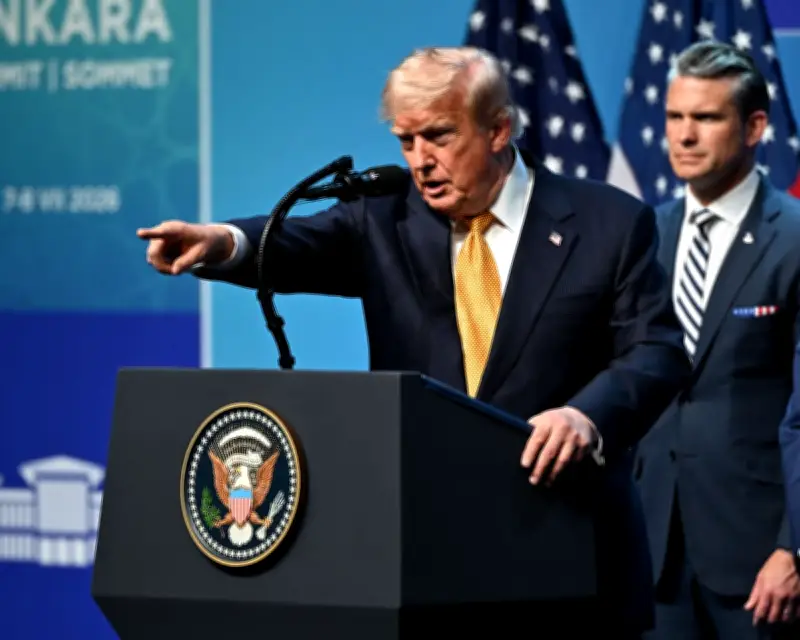
The final day of the summit saw US President Donald Trump suggesting the ceasefire with Iran was "over" after an exchange of hostilities. Trump also reiterated his desire to annex Greenland, criticised allies for not joining US-Israel attacks on Iran, and called for a halt to trade with Spain over its reluctance to increase defence spending. Despite these tensions, the subsequent meeting with the other 31 leaders went smoothly, as many nations showcased significant increases in military expenditure since the previous summit, when member states agreed to raise defence spending to 5% of GDP by 2035.
Nato Secretary General Mark Rutte framed the summit around delivery, emphasising that Europe and Canada were "stepping up" after demands from the US president. According to Dan Sabbagh, the Guardian's defence and security editor, "Europe has gone through the five stages of grief and we're certainly arrived at acceptance. We are now at the point where people are starting to plan. They realise that you can't rely on the US as much as before, that Europe's run down its arms industry."
Massive military investment underway
Ahead of the summit, Britain and 11 other Nato countries committed to a £37bn project over the next decade to build new missile capabilities to protect Europe. Other joint defence projects are already under way, including Germany potentially joining an effort from the UK, Italy and Japan to build Britain's next generation fighter jet. However, critics question whether such massive investment is necessary, given that Russia has been weakened by the Ukraine war, with almost half a million Russian soldiers killed and the country facing fuel shortages from Ukrainian drone attacks.
"Nato says that Russia might be ready for another war by 2030. But this seems very, very early given that the Ukraine war is still ongoing," Sabbagh noted. "We can't rule it out, but if it were to happen, it would be in many years."
Europe's worst fears and capabilities
European governments have spent the second Trump presidency contemplating how to defend themselves without US aid. So far, Trump has not forced Ukraine into a peace deal or teamed up with Russia to reshape the continent. But it remains unclear how the US would respond to Russian aggression against a European country. Sabbagh pointed out that Europe has a population of about 600 million, compared to Russia's 140 million, and with its economic power and technological advantages, Europe could stand on its own feet against Russia if a crisis emerged.
The US has signalled it wants to reduce its troop numbers in Europe and the number of fighter jets stationed on the continent by a third, while redeploying naval and bomber divisions away from the continent. "Can Europe compensate for that? Of course it can, but it comes at a cost to European taxpayers," Sabbagh said. "The question becomes: what is the level of will among European governments and electorates to do that?"
Long-term shift in US posture
Even after Trump leaves office, the US position on its military presence in Europe is unlikely to change. "Europe's recognised that you can't get away with leaning on America any more," Sabbagh added. "Europe's been getting away with it for a long time and in a lot of European countries, there's a recognition that it needs to change. The price of deterrence may well be greater than the price that has been previously paid."
While some countries like Poland and the Baltic states are already spending more than 4% of GDP on defence, others like Spain have refused to sign up to 3.5%. The varying levels of commitment highlight the challenges ahead. "People are less certain what the US would do in a crisis, and they understand they need to be self-reliant," Sabbagh concluded. "It is a process that will take time. But do they believe that America can't be relied upon at all? I'm not quite sure we're at that stage."