European Union leaders have reached a landmark agreement to provide Ukraine with a massive financial lifeline, approving a €90 billion (approximately $106bn) interest-free loan to cover the country's most pressing needs for the next two years. The deal, struck in the early hours of Friday, notably does not use frozen Russian state assets as collateral, opting instead for borrowing secured against the EU budget.
A Deal Forged in Late-Night Talks
The summit, which began on Thursday, saw intense negotiations over how to fund Ukraine's defence and economic survival. The European Commission had initially championed a plan to use €210 billion in immobilised Russian central bank assets, primarily held in Belgium, as security for the loan. However, this proposal faced significant political and legal hurdles.
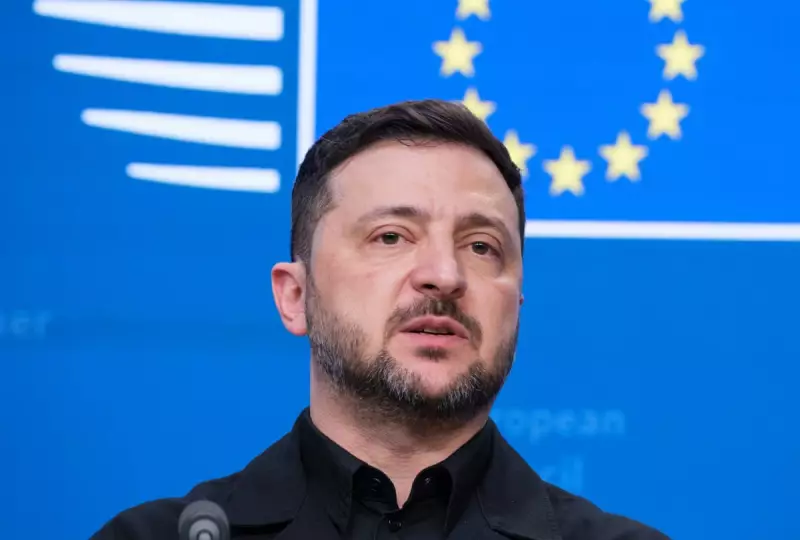
Ukrainian President Volodymyr Zelenskyy, addressing leaders at the outset, made a moral and legal case for the Russian asset route. "Russian assets must be used to defend against Russian aggression and rebuild what was destroyed by Russian attacks. It’s moral. It’s fair. It’s legal," he stated. Despite this, diplomats described the technical and political complexities as too demanding to resolve immediately.

Unity Over Frozen Assets
Facing strained public finances across the bloc, leaders ultimately united around a compromise. Belgian Prime Minister Bart De Wever said the decision to provide the loan through EU borrowing, rather than tapping the frozen assets, avoided "chaos and division." He emphasised, "We remained united."
The final agreement, confirmed by EU Council President Antonio Costa on social media, ensures funding for 2026-2027. A draft text of the summit conclusions seen by Reuters specifies the money will be raised via borrowing on capital markets, backed by the EU budget. Crucially, the deal exempts Hungary, Slovakia, and the Czech Republic from financial obligations, accommodating their opposition to funding Ukraine.
Future Use of Russian Assets Remains on Table
While the immediate €90bn package does not utilise the frozen funds, the door is not closed. The summit conclusions note that work will continue on a separate loan mechanism based on the Russian central bank assets. German Chancellor Friedrich Merz, a proponent of the asset plan, clarified that Ukraine would only have to repay the newly agreed loan if Russia paid war reparations. The EU reserves the right to claim the immobilised Russian assets if Moscow fails to compensate.
The decision comes against a backdrop of heightened tension over the frozen assets. On Thursday, Russia's central bank announced legal action seeking damages from European clearing houses, following a $230bn claim against Euroclear, the Brussels-based depository holding the bulk of the assets. Security officials have reported an intimidation campaign against the firm.
Poland's Prime Minister Donald Tusk framed the funding choice starkly as one between "money today or blood tomorrow." With the EU estimating Ukraine needs an extra €135bn to stay afloat, this €90bn loan represents a critical, if complex, step in sustaining European support for Kyiv.