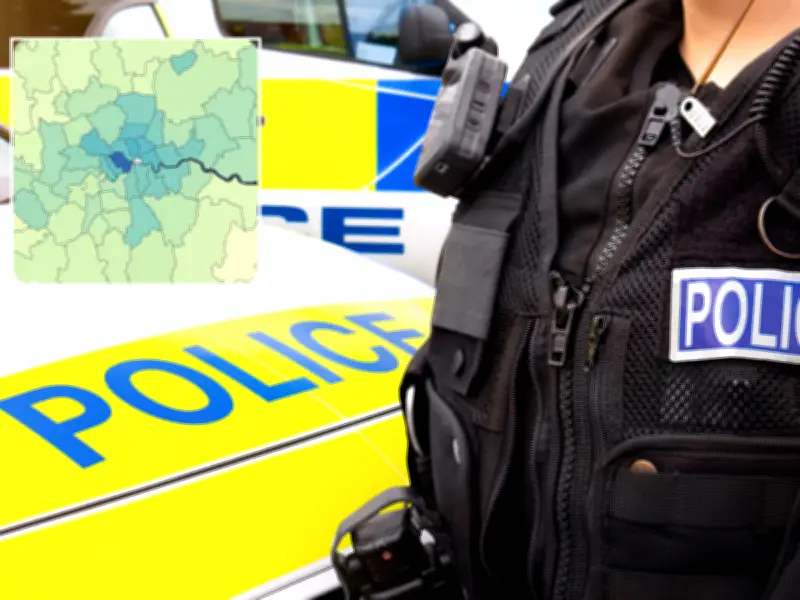
Drug crime in London has surged by 32% in 2025, with 54,642 offences recorded by the Metropolitan Police, including trafficking and supply linked to criminal gangs. While most crime types fell, drug offences rose sharply, according to Home Office figures.
Brent tops London in drug offences
Brent recorded the highest number of drug crimes in London last year, with 2,846 offences, a 62% increase on the previous year. This equates to almost eight drug crimes per day, or one every 185 minutes. Westminster followed with 2,758 offences (up 21%), Tower Hamlets with 2,717 (up 19%), and Newham with 2,677 (up 24%).
Islington sees fastest rise
Islington experienced the fastest increase in drug crime in London, with offences rising 75% to 2,033. Westminster had the highest drug crime rate in the capital, with 13 offences per 1,000 residents, the second-highest in England and Wales after Liverpool (15 per 1,000). Islington now has the second-highest crime rate in London and fourth-highest nationally, with nine offences per 1,000 residents.

Crime rates across boroughs
Crime rates, which account for population size, show Hackney has the third-highest drug crime rate in London and seventh-highest in the country, with eight offences per 1,000 residents. Kensington and Chelsea, Tower Hamlets, Brent, Haringey, and Camden all also had eight per 1,000 residents.
Police response: 'Clear Hold Build'
The figures include possession, supply, and production of drugs, often linked to organised criminal gangs. Police have stepped up efforts to tackle “county lines” gangs and disrupt supply chains. The “Clear Hold Build” framework, rolled out nationally in 2024, links organised crime specialists with neighbourhood policing teams to address local challenges.
Deputy Chief Constable Gunney, National Serious Organised Crime lead, said: "We know the symptoms of SOC can manifest in a number of different ways from spikes in ASB to rises in theft and reports of violence. Historically, these crimes have been seen in isolation and not as symptoms of wider organised criminality like drug trafficking and money laundering. What CHB has done, is connect specialist SOC officers to neighbourhood teams so escalating behaviours and patterns can be viewed and investigated through a different lens."
In a recent update, the National Police Chiefs Council reported that 1,254 people had been arrested, 331 charged, and offenders sentenced to a combined total of more than 438 years. Gunney added: "These sites are real success stories where change hasn’t happened overnight but has been as a result of the hard work, determination and specialist skills of all involved."