Many years ago, Patrick Lenton rage-quit his editor job at a digital youth media publication. It was the beginning of the pandemic, his team had been slashed to an exhausted handful who cried every morning, and his freelance budget had been cut to zero—all while he was still expected to reach traffic targets. A spree of insane business decisions were made that trickled down like sewage water at a music festival. So he quit. They announced that they were selling the publication only two weeks later, which explained basically everything.
Like many elder millennial journalists, Lenton was sold a particular, rose-tinted version of what working in media would entail. Carrie Bradshaw, Bridget Jones, even the titular Sally from When Harry Met Sally all poisoned his weak developing brain with a fantasy of wearing cute blazers and smoking cigarettes in an apartment and writing silly little stories that somehow saved the day. No movie exemplified this fantasy more than The Devil Wears Prada, a film that weaponises millennial hustle culture into an aerosol and through its protagonist, Andy Sachs, sold him the dream of becoming a journalist and impressing Meryl Streep through hard work and a can-do attitude. He was good at writing and wanted to write for a living and maybe change the world for the better.
Now, many years later, not only is smoking passe and apparently bad for you, but the millennial journalism fantasy has been transmuted from a dream into a depressing capitalistic reality, dominated by mass layoffs and redundancies, constant media buyouts and endless ruinous tech pivots, all in a field owned by ridiculous amoral billionaires and fascist-leaning media monopolies.

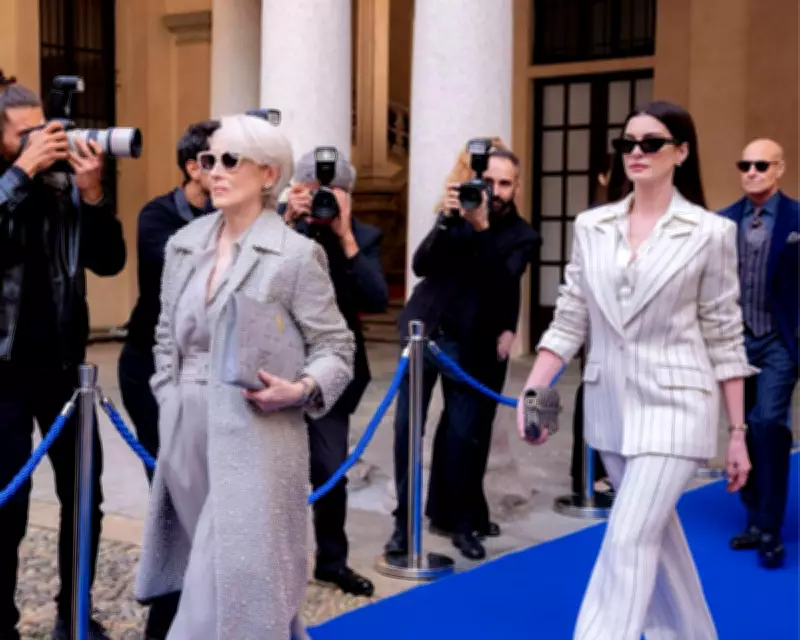
In The Devil Wears Prada 2, the iconic legacy fashion magazine Runway is on hard times—its physical edition little more than a book of brand ads, its glamorous and cruel editor, Miranda Priestly, forced to fly economy and eat in the cafeteria. When a new owner takes over, things get even worse. Andy, meanwhile, has been working as a journalist at a newspaper and finds out, while accepting a journalism award, that she and the entire paper have been made redundant after being bought out by a new owner.
Lenton doesn't know a single journalist his age who hasn't, like Andy, ricocheted around the rapidly shrinking media industry, through multiple buyouts, redundancies and pivots to video. The Devil Wears Prada 2 can be read as a eulogy to both the era of glossy print fashion mags and also parts of the digital media era that replaced it. It was this style of journalism that he started out in, working at an online outlet that juggled, often unsuccessfully, the tension between reporting on real news for a young audience along with silly online content, and between progressive ideals and earning a minimum wage from advertising. He saw the best minds of his generation writing lists about which of the Muppets were most fuckable.
Like Andy, who had to 'slum it' in fashion magazines, it wasn't what he might have initially dreamed of, but even in this strange new space he was able to live out the journalism fantasy. Sure, they were ranking Disney princesses based on how likely they would have been to die in the Challenger disaster but BuzzFeed journalists were also winning Pulitzer prizes. To be clear, he loved writing the stupid stuff the most but it was important that he occasionally wrote some real journalism too. He believes in the importance and function of journalism in society—even if his contribution is mostly deep dives into a large hat Harry Styles wore once.
But what he has discovered in his career is that his dream of doing any form of reporting is usually hindered by the rich amoral puffer vest-wearing idiots who keep buying up or taking over media companies. In one of his previous roles, he came on board just as the site was being bought out by a big corporate advertising company. It seemed that they wanted an in-house media publication to provide news to put on their outdoor advertising billboards. At one point they even tried to force-pivot every journalist into a billboard copywriter but gave up when the only text submitted to be advertised on billboards all around the country was 'Help! I'm stuck in a billboard factory'.

He has as many stories of profound ineptitude and negligence as he has NDAs which mean he can't write about them but it all boils down to one depressing realisation—like Andy in The Devil Wears Prada 2, he still loves the work but his fantasy is just hoping there will be an industry for him to work in that manages to survive the ravages of the idiots in charge.