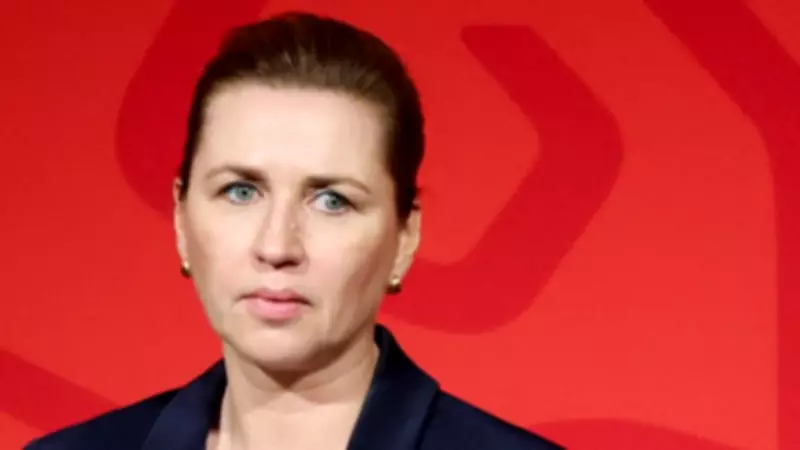
Denmark's Prime Minister Faces Uphill Battle to Maintain Leadership After Electoral Defeat
Danish Prime Minister Mette Frederiksen has declared her intention to continue leading the government despite her Social Democrats party suffering substantial losses in Tuesday's national election. The vote, which failed to produce a clear majority for either the left or right blocs, has plunged Denmark into what could be weeks of complex coalition negotiations.
Election Results Leave Political Landscape Fragmented
While Frederiksen's Social Democrats remain Denmark's largest political party with 21.9% of the vote, this represents a significant decline from their 27.5% share in the 2022 election. The party secured 38 seats in the 179-seat parliament, far short of the majority needed to govern independently.
The election saw gains across the political spectrum, with the Green party capturing 11.6% of votes and 20 seats to Frederiksen's left. On the right, the Liberal Party won 10.1% (18 seats) and the Liberal Alliance secured 9.4% (16 seats). Perhaps most notably, the anti-immigration Danish People's Party dramatically increased its support to 9.1% of the vote, gaining 16 seats and marking a 7% improvement from previous elections.

Coalition Mathematics Points to Center Party as Potential Kingmaker
With neither the left nor right blocs achieving sufficient votes to form a government independently, attention has turned to the Moderates party as potential kingmakers. Led by Foreign Minister Lars Lokke Rasmussen, a former prime minister, the centrist party secured 14 seats and could determine the composition of Denmark's next government.
The Moderates were part of the 2022-2026 coalition government alongside the Social Democrats and Liberal Party, giving them experience in cross-bloc cooperation that may prove crucial in the coming negotiations.
Domestic Concerns Overshadow Foreign Policy Achievements
Frederiksen had called the early election hoping voters would reward her handling of international crises, particularly her management of tensions surrounding former US President Donald Trump's ambitions regarding Greenland and her response to the Ukraine war. However, domestic issues dominated the campaign, with the cost of living emerging as the primary concern for Danish voters.
The prime minister's international reputation, which has made her something of a role model for Britain's Labour government particularly regarding immigration policy, proved insufficient to overcome voter anxiety about economic pressures affecting households across Denmark.
Immigration Policy Creates Political Pressure from Both Sides
Frederiksen has implemented one of Europe's toughest immigration regimes during her tenure, featuring temporary refugee status, conditional support systems, and strong integration expectations. This approach has drawn criticism from left-wing parties who consider it excessively harsh, while simultaneously failing to satisfy right-wing voters who have increasingly supported the Danish People's Party's pledge to achieve net zero Muslim migration.
On economic policy, Frederiksen attempted to reinforce her leftist credentials with a proposed wealth tax, but this initiative created tension with Liberal Party leader Troels Lund Poulsen, who has indicated he will not enter another coalition with the Social Democrats.
Leadership Calls for Stability Amid Global Uncertainty
Speaking after the election results, Frederiksen emphasized Denmark's need for stable leadership during turbulent times. "We are ready to take the lead," she stated, adding that Denmark "needs a stable government" in an increasingly unsettled world marked by conflicts in Europe and the Middle East.
Foreign Minister Rasmussen echoed this sentiment, noting that as a small nation of six million people within NATO and the European Union, Denmark must find political unity to navigate global challenges effectively.
The coming weeks will determine whether Frederiksen can assemble a governing coalition that allows her to continue as prime minister, or whether Denmark will see new leadership emerge from the fragmented political landscape created by Tuesday's inconclusive election.