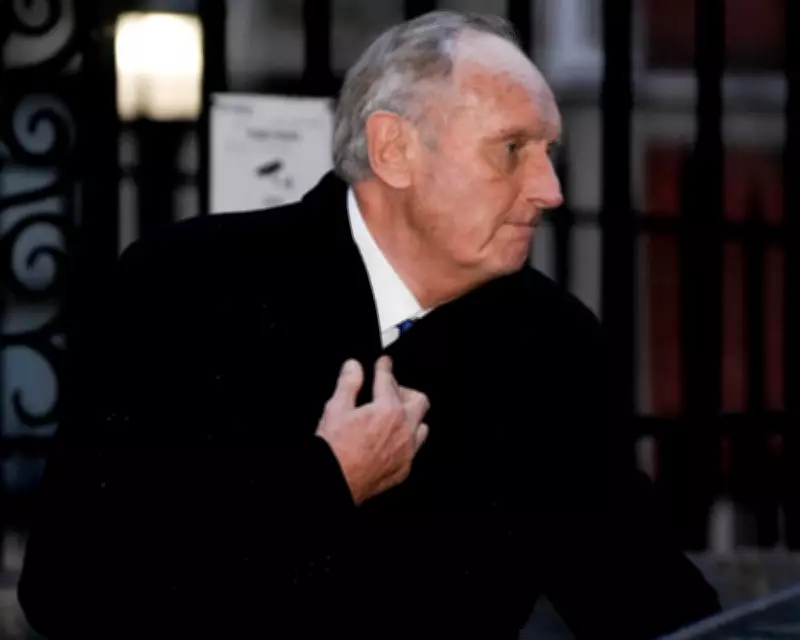
Former Daily Mail Editor Testifies in High-Stakes Privacy Trial
Paul Dacre, the influential former editor of the Daily Mail, has delivered emotional testimony in London's high court, describing allegations that his newspaper used criminal methods to target Doreen Lawrence as "bitterly wounding" and "preposterous". The long-serving editor, who led the publication from 1992 to 2018, appeared visibly affected as he addressed claims brought by Stephen Lawrence's mother alongside six other high-profile claimants.
Defending a Legacy Campaign
Dacre expressed particular distress that the allegations came from Doreen Lawrence, whose son's murder case the Daily Mail had championed for fifteen years. "Given our campaign to bring Stephen's killers to justice," Dacre told the court, "I find these claims especially bewildering and bitterly wounding to me personally." The newspaper's famous 1997 front page, which labelled five suspects as murderers and challenged them to sue, remains one of British journalism's most memorable interventions.
In his written submission, Dacre emphasised his pride in the Lawrence campaign, describing it as the effort to which he devoted the most space during his twenty-six-year editorship. "Of all my countless campaigns," he stated, "this is the one of which I am most proud and which made a significant contribution to the public good."

Addressing Specific Allegations
The court heard detailed allegations of unlawful information gathering against Associated Newspapers Ltd (ANL), publisher of both the Daily Mail and Mail on Sunday. These include accusations of phone hacking, landline tapping, electronic surveillance, and document "blagging" - all of which the company strenuously denies.
Dacre revealed that one particular article complained about by Lawrence - revealing Jack Straw's decision to order a public inquiry into her son's murder - came directly from the then home secretary himself. "We were on friendly terms," Dacre explained, "having been students together at Leeds University. Mr Straw called me to a meeting and volunteered this information in July 1997."
Questioning Investigative Practices
During cross-examination, claimants' barrister David Sherborne presented evidence suggesting ANL journalists had made extensive use of private investigators. The court heard about a box discovered in the Daily Mail's managing editor's office containing payment records to investigators including Steve Whittamore, totalling more than three million pounds.
Sherborne showed Dacre multiple invoices indicating journalists had obtained vehicle registration details, ex-directory telephone numbers, and criminal record checks. While acknowledging some use of what he called "inquiry agents," Dacre maintained this was legitimate when serving the public interest. "The law allows journalists to make certain inquiries in the public interest," he asserted, adding that the Information Commissioner had found "no evidence" of illegal requests to investigators.
Implementing Reforms
Dacre told the court he had "brought the shutters down" on using inquiry agents in 2007 after evidence emerged about their widespread deployment across the newspaper industry. He banned Daily Mail journalists from employing them entirely, demonstrating what he described as proactive leadership in ethical journalism.
The former editor also emphasised the need for "a sense of proportion," arguing that legitimate searches for addresses and phone numbers should not be equated with the more serious allegations of bugging and hacking made by the claimants.
Wider Implications for Media
This high-profile case involves not only Doreen Lawrence but also Prince Harry, Sir Elton John and his husband David Furnish, alongside actors Elizabeth Hurley and Sadie Frost. Their collective action represents one of the most significant privacy cases against British media in recent years.
ANL's legal team maintains that all stories cited by claimants were obtained "entirely legitimately from information variously provided by contacts of the journalists responsible." The company has indicated that numerous journalists are prepared to give evidence addressing the specific allegations against them.

As the trial continues, media observers note its potential to establish important precedents regarding journalistic practices and privacy rights in the United Kingdom. The outcome could influence how newspapers conduct investigations and interact with public figures for years to come.