Cooper Dismisses Blair's Call for UK Support of Trump's Iran Strikes
Foreign Secretary Yvette Cooper has firmly rejected former Prime Minister Tony Blair's argument that the United Kingdom should have backed Donald Trump's initial airstrikes on Iran. Cooper emphasized that Britain must "learn the lessons" from the mistakes made during the Iraq war, marking a significant divergence in foreign policy perspectives within the Labour Party.
Blair's Private Comments Spark Controversy
At a private lunch event hosted by Jewish News on Friday, Blair stated that Prime Minister Keir Starmer "should have backed America from the very beginning" and allowed the Trump administration to utilize British airbases. The former Labour leader asserted, "If they are your ally and they are an indispensable cornerstone for your security ... you had better show up when they want you to."
Blair's intervention comes as Trump escalates his criticism of Starmer over the UK's lack of immediate support for the US-Israeli strikes on Iran. Trump posted on social media, "We don't need people that join Wars after we've already won!"

Cooper's Firm Rebuttal on National Television
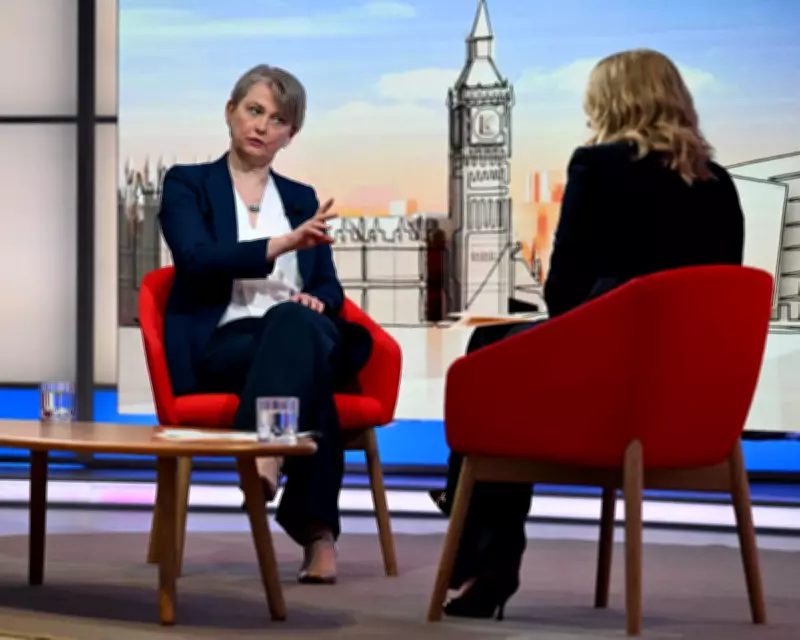
When questioned about Blair's remarks during an appearance on Sky News' Sunday Morning with Trevor Phillips, Cooper responded unequivocally: "I just disagree." The foreign secretary elaborated on her position, stating, "There are some people in politics who think that we should always agree with the US whatever. There are other people in politics who think we should never take action with the US again whatever the circumstances. I don't think either of those positions is in the UK national interest, and it is the responsibility for Keir Starmer to act in the UK's national interest for British citizens."
Pressed on whether she was labeling Blair "a poodle," Cooper clarified, "I think the point is to make sure that, actually, we learn the lessons from some of the things that went wrong in Iraq, and I think that is exactly what Keir Starmer has done."
Blair's Defense of His Position
Blair, who has faced intense criticism over the past two decades for his decision to join the US invasion of Iraq in 2003, made his comments at the private event, noting he had already expressed his criticism directly to the government. According to reports from the Mail on Sunday, Blair told attendees that alliances are tested "when it's hard," explaining that the bases were necessary for refueling purposes.
He contrasted the current situation with historical conflicts, stating, "It's not like Vietnam. It's not like the Iraq campaign [where] we sent thousands of British troops. So I just think you've got to make the argument to the public about this. You've got to say to them the American relationship matters. It matters particularly today. It's not a question of whether it's this president or that president."
A spokesperson for Blair later clarified that the remarks were made at a private gathering and were not intended for public dissemination.
Cooper's Response to Trump's Criticism
Cooper addressed Trump's repeated criticisms of Starmer over the past week, which included the US president stating on Saturday that Starmer's assistance was unnecessary in Iran and earlier comments that the prime minister was "not Winston Churchill." Cooper asserted that the UK must "take decisions ourselves" and act according to its own national interests.
During an interview on the BBC's Sunday With Laura Kuenssberg, Cooper explained, "It's for the US president to decide what he thinks is in the US national interest, and that's for him to do. But it is our job as the UK government to decide what's in the UK national interest, and that doesn't mean simply agreeing with other countries or outsourcing our foreign policy to other countries."
Iranian Ambassador Issues Warning
Cooper's comments coincided with a warning from the Iranian ambassador in London, Seyed Ali Mousavi, who cautioned the UK to be "very careful" about deepening its involvement in the conflict. While the UK has permitted the US to use British bases for "defensive strikes" on Iranian facilities, it has not participated in any direct attacks.

Mousavi stated on Sunday with Laura Kuenssberg that Iran would have a "right to self-defence" if the UK directly joined US-Israeli attacks on his country. He advised that the British government and other nations should be "very delicate, very careful" in their actions, adding that he believed the British government had indeed learned lessons from the 2003 invasion of Iraq.
The ongoing debate highlights the complex dynamics of international alliances and the enduring impact of past military decisions on current foreign policy deliberations.