Climbing on Hyde Park Holocaust Memorial Garden to Become Criminal Offense
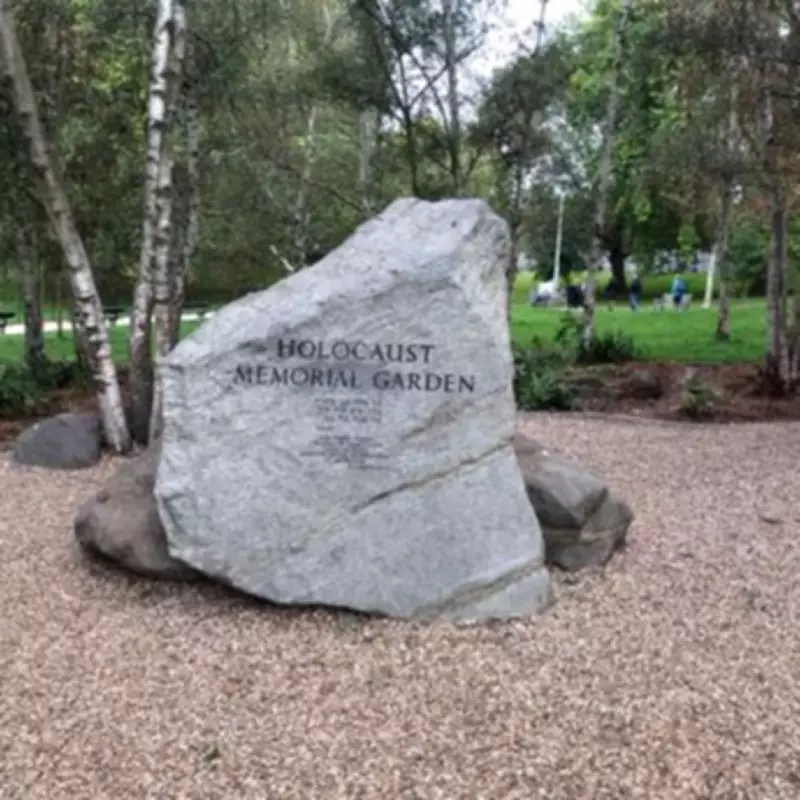
Climbing over the Holocaust Memorial Garden in Hyde Park is set to become a criminal offense, following a decision by the House of Lords to include the site in new legislation. The move comes after the memorial was covered with tarpaulin during a nearby demonstration, raising concerns about potential vandalism.
New Legal Protections for Memorials
Peers have agreed to add the London garden, which features boulders and birch trees, to a draft list of memorials where climbing would be banned under the Crime and Policing Bill. Individuals who climb on the garden without "a good reason" would face severe penalties, including up to three months in prison and fines reaching £1,000.
The Holocaust Memorial Garden will join other significant monuments on the protected list, including The Cenotaph in Whitehall, Birmingham's Hall of Memory, the Liverpool Cenotaph, The Response in Newcastle, and the Portsmouth Naval War Memorial. Additionally, climbing on the statue of wartime prime minister Sir Winston Churchill outside the Houses of Parliament would also become illegal.

Historical Significance and Recent Concerns
Built in 1983, the Holocaust Memorial Garden stone bears the poignant inscription: "For these I weep. Streams of tears flow from my eyes because of the destruction of my people." Lord Parkinson of Whitley Bay, who proposed including the garden in the bill, highlighted that the memorial had to be covered with tarpaulin as recently as April 2024 due to fears of potential anti-Semitic vandalism.
"Sadly, that had to be covered in tarpaulin as recently as April 2024," Lord Parkinson stated, referencing published photographs showing the boulder concealed under blue protective material. The Conservative peer emphasized that "many other memorials" deserve additional protection from climbing activities.
Government Support and Practical Considerations
Lord Katz, speaking for the Government, confirmed that both the Holocaust Memorial Garden and the Monument to the Women of World War II in Whitehall are "culturally significant" and indicated ministerial support for Lord Parkinson's proposal. The Women's World War II monument, unveiled in 2005 on the 60th anniversary of the war's end, was also added to the protected list during Monday's proceedings.
Addressing practical enforcement concerns, Lord Katz clarified: "The Holocaust Memorial Garden in Hyde Park is, of course, designed to be enjoyed as a garden and people are free to walk within it. I've given consideration to the practical issue of whether the police will be able to enforce this offense."
He explained that the legislation specifically targets climbing activities rather than normal walking, and that police officers would exercise discretion when determining whether an offense has been committed. The bill establishes "a clear and fixed list of memorials, which provides certainty for the public, policing and the courts."
Additional Protections for Public Officials
The Government has also amended the bill to prohibit protests outside the homes of public office-holders, including MPs, peers, members of the Senedd, and the Mayor of London. Lord Katz asserted that "harassment and intimidation must never be accepted as a part of a public office-holder's role."
Certain properties are exempt from this ban, including 10, 11 and 12 Downing Street, the Palace of Westminster, the Prime Minister's country retreat Chequers in Buckinghamshire, and the Foreign Secretary's country retreat at Chevening House in Kent. Lord Katz distinguished between legitimate political engagement and unacceptable protest activities, noting that "it is perfectly legitimate for campaigners during election time to door knock and to speak to their local public office-holders about a different political opinion."
The Crime and Policing Bill now faces further parliamentary scrutiny before it can become law, potentially establishing stronger protections for both historical memorials and public officials across the United Kingdom.