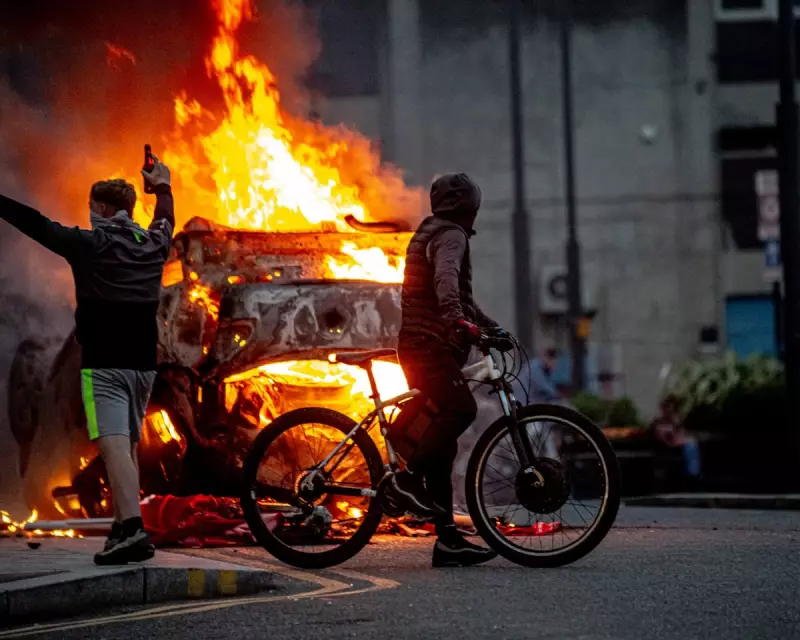
Once confined to the fringes of political discourse, stark warnings of a potential civil war in the United Kingdom are now entering more mainstream conversations. This shift follows a summer of rioting across England, which prompted tech billionaire Elon Musk to controversially claim that such a conflict was inevitable.
From Margins to Mainstream: A Dystopian Vision Gains Traction
The dystopian forecast, which envisions tens of thousands of deaths in a bitter domestic conflict, is no longer limited to niche online forums. It has spread to a broader cross-section of public debate, appearing in the opinion pages of newspapers like the Daily Telegraph, local Facebook groups, and speeches by political figures including Nigel Farage.
Academics are also contributing to this grim discussion. Professor David Betz of King's College London, a former government adviser on counter-insurgency, has become a prominent voice. He speculates that a "culturally fractured" Britain, facing economic stagnation and collapsed trust in politics, could descend into a messy, asymmetrical war.

Betz outlines a scenario where conflict breaks down along ethnic and geographic lines, leading to three factions: Muslim urban enclaves, a white British population viewing the government as illegitimate, and a beleaguered state. He has suggested casualty figures could reach 23,000 deaths a year and has spoken of ethnic cleansing becoming a reality.
Public Perception and Political Rejection
This alarming vision resonates with a significant minority of the public. A YouGov poll last year found 33% of British adults believed a civil war could occur within the next ten years. Dominic Cummings, former chief aide to Boris Johnson, has claimed intelligence services are already discussing risks of racial and ethnic mob violence.
The topic has edged so close to the mainstream that Labour leader Keir Starmer felt compelled in September to condemn those he accused of promoting ideas of a "coming struggle" for the nation. He criticised a strategy designed to force a choice between "globalists and nationalists."
Experts Urge Caution and Highlight Social Resilience
However, many experts urge strong scepticism towards predictions of imminent civil war. Professor Dominic Abrams, a social cohesion adviser, argues the UK is well-equipped to absorb conflicts through institutions like the NHS, universities, and trade unions.
"It's not a stretch to state that there will be increasing levels of conflicts over different issues among different people," Abrams said. "But I think it's a stretch that we would be moving towards a civil war, because it fails to recognise the constant adaptation operating both at national level and among local communities."
Nevertheless, concerns about deep-seated social tensions persist. A July thinktank report described the UK as a "powder keg", noting a third of people rarely meet anyone from different backgrounds. The research warned that without urgent action to address polarisation, the unrest seen last summer could be reignited.
While the most extreme predictions of sectarian war are dismissed by most analysts, the fact that they are being discussed beyond far-right silos indicates a palpable anxiety about the nation's social fabric and future cohesion.