The perpetrator of New Zealand's deadliest mass shooting is attempting to overturn his convictions and withdraw his guilty plea through a legal appeal that has commenced this week. Brenton Tarrant, the Australian white supremacist responsible for murdering 51 Muslim worshippers during the horrific 2019 Christchurch mosque attacks, has initiated proceedings before one of the country's highest judicial bodies.
Court Considers Extraordinary Appeal Application
The New Zealand Court of Appeal is currently examining whether to permit Tarrant's appeal to proceed, despite it being filed outside the standard legislative timeframe. The 35-year-old terrorist, who became the first person in New Zealand under current legislation to receive a life sentence without parole in August 2020, is now challenging both his convictions and his unprecedented sentence.
Central Legal Argument Focuses on Prison Conditions
According to official court documentation, the primary consideration will be Tarrant's application to vacate his guilty pleas. The legal argument centres on whether the conditions of his imprisonment rendered him incapable of making rational decisions when he entered his guilty pleas in March 2020. Tarrant's defence claims his detention conditions were "torturous and inhumane," potentially invalidating his original admissions of guilt.

The week-long hearing in Wellington, which began on 9th February, will see Tarrant providing evidence via video link from his prison facility. If the court grants his application to withdraw the guilty pleas, the case would return to the High Court for a full trial. Should the application be rejected, a separate hearing later this year will address his sentence appeal specifically.
Enhanced Security Measures Implemented
Authorities have implemented stringent security protocols around the court proceedings, with attendance strictly limited to media representatives, legal counsel, and authorised personnel within the courtroom itself. Limited public viewing has been arranged in an adjoining room, while victims and family members can observe proceedings via delayed broadcast from Christchurch. Tarrant's legal team has been granted permanent name suppression throughout the process.
Victim Families Express Emotional Distress
Aya Al-Umari, whose brother Hussein al-Umari was murdered at Masjid al-Noor during the attacks, expressed profound discomfort about the hearing. She told media that listening to Tarrant's testimony would prove particularly challenging for surviving family members. "For the sake of my sanity ... I have to think of them as just words with absolutely no meaning behind them," she explained. "But at the same time it is reopening a wound that you try so hard to close and try and move forward with life."
Background to the 2019 Terrorist Attacks
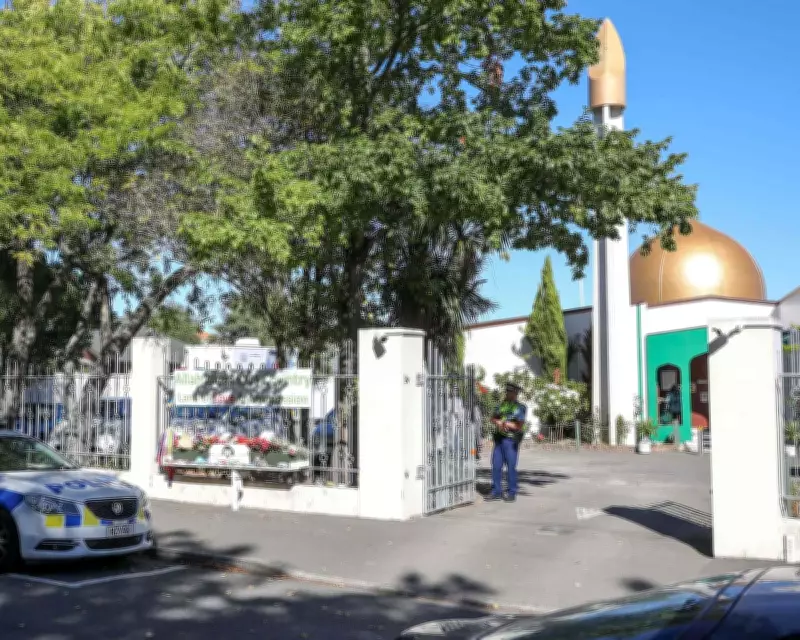
Tarrant relocated to New Zealand in 2017 specifically to plan and execute a white supremacist terrorist attack. He meticulously prepared for months, conducting reconnaissance at both targeted mosques, distributing a manifesto outlining his extremist ideology, and live-streaming portions of the assault on social media platforms. The coordinated attacks on Al Noor Mosque and Linwood Islamic Centre represented the most devastating mass shooting in New Zealand's history.
Legislative Changes Following the Tragedy
In response to the atrocities, the former government led by Prime Minister Jacinda Ardern implemented significant firearms reforms, including banning military-style semi-automatic weapons and establishing a comprehensive firearms registry. Meanwhile, the coronial investigation into the attacks continues as New Zealand's largest ever inquiry of its kind. In October 2025, the High Court indicated Tarrant might still be called as a witness during the ongoing inquest, despite objections from survivors and victims' families.
The current appeal proceedings represent another painful chapter for a nation still grappling with the aftermath of its worst terrorist incident. The judicial outcome will determine whether the original legal process stands or whether New Zealand must endure a retrial of one of its most notorious criminals.