
China condemns UK nationalisation of British Steel as blow to investment confidence
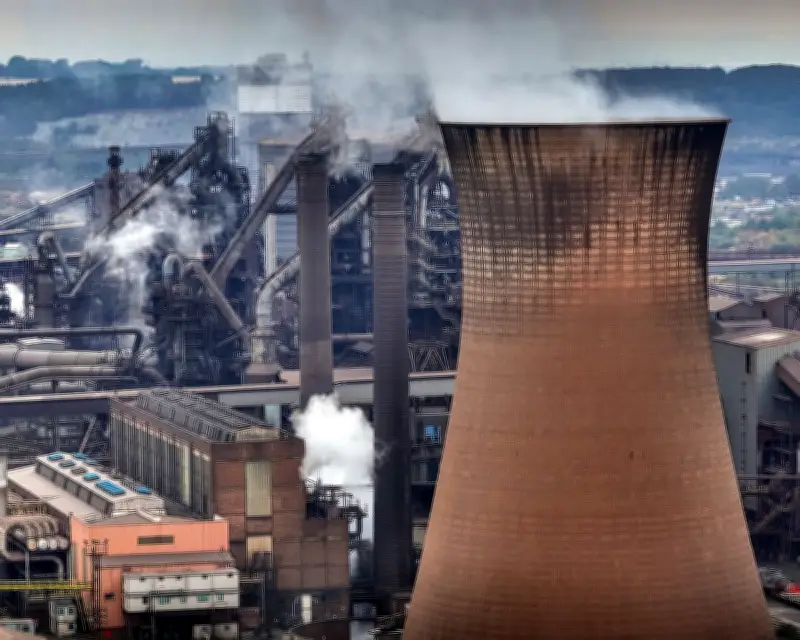
China's government has expressed strong dissatisfaction with the UK's decision to nationalise British Steel, warning that the move severely undermines Chinese companies' confidence in investing in the UK. The nationalisation, announced on Thursday, brings British Steel under public ownership to safeguard steel production at its Scunthorpe site and protect 4,000 jobs.
UK government defends nationalisation as essential for steel production
The Department for Business and Trade stated that the move was essential to maintain steel production at British Steel's site in Scunthorpe, Lincolnshire, and to protect the company's future and UK supply chains. The government plans to appoint an independent valuer to determine compensation for the previous Chinese owner, Jingye, aiming to prevent legal action under international treaties.
China's Ministry of Commerce issues strong rebuke
A spokesperson for China's Ministry of Commerce (Mofcom) told the Chinese media outlet Global Times: 'The UK side, disregarding Jingye Group's important contributions to the British economy and society, forcibly took control of British Steel and subsequently nationalised the company in the name of national security, seriously undermining Jingye's legitimate rights and interests and dealing a severe blow to Chinese companies' confidence in investing in the UK.' The spokesperson added that China would 'take strong measures to firmly protect the interests of Chinese companies.'
Background: Jingye's ownership and government intervention
British Steel was previously owned by Chinese company Jingye. The Labour government intervened in April last year with an emergency recall of parliament to prevent the closure of British Steel after Jingye threatened to walk away without preserving the blast furnaces. Jingye has argued in its UK accounts and on social media that British Steel was a valuable asset worthy of large compensation.
Nationalisation law and new leadership
The nationalisation followed the Steel Industry (Nationalisation) Act 2026 receiving royal assent. The new law allows ministers to transfer steel businesses' shares or property into public ownership. After the nationalisation, a new leadership team was appointed to focus on stabilising the business and turning it into a 'commercially sustainable, low-carbon enterprise.'
Prime Minister Starmer's statement
Former Prime Minister Keir Starmer, in one of his last significant actions, confirmed the nationalisation on Thursday, stating: 'British Steel is part of the fabric of our nation and a cornerstone of Britain's industrial strength. Today's decision secures the future of steelmaking in the UK, protects skilled jobs and safeguards a vital national capability.'
Geopolitical tensions between UK and China
The nationalisation adds to recent geopolitical flashpoints between the UK and China. Earlier this year, Starmer travelled to China to bring 'stability and clarity' to relations after years of inconsistency. Last year, the government finalised a £38bn deal for the Sizewell C nuclear project after easing out China General Nuclear, which had held a 20% stake, in 2021 over security fears. In 2020, Boris Johnson angered China by ordering Huawei equipment removed from Britain's 5G networks.
China calls for fair treatment under bilateral investment treaty
The Mofcom spokesperson reportedly said the UK government should 'abide by relevant international rules, earnestly fulfil its obligations under the China-UK bilateral investment treaty, treat Chinese companies operating in the UK in a fair and impartial manner, and fully protect their legitimate rights and interests.'




