In the tranquil village square of Villa Baviera, a small Chilean settlement near Parral, Germanic crosses and colorful toy-town facades mask a dark and brutal history. This site, originally known as Colonia Dignidad, was founded in 1961 by Paul Schäfer, a former Nazi soldier and weapons smuggler. Schäfer purchased extensive land in the valley, creating a fenced enclave that imprisoned up to 300 people with minimal outside contact, where he sexually abused and tortured children.
A Legacy of Horror and Dictatorship
During the dictatorship of General Augusto Pinochet, Colonia Dignidad served as a clandestine torture center. State security forces are believed to have murdered at least 100 individuals there. Schäfer was eventually convicted on child abuse charges and sentenced to 20 years in prison, dying behind bars in 2010. Efforts to excavate and investigate the commune have been inconsistent over the years.
Hope Dashed by Political Reversal
Last year, then-President Gabriel Boric signed a decree to expropriate 117 hectares (289 acres) of the site, including residential areas of Villa Baviera and Schäfer's former home. This move aimed to create a memorial for the victims and was seen as a significant step toward justice. Key documentation linking the site to its role as a detention center was discovered during this process.

However, the new far-right government under President José Antonio Kast has announced plans to reverse this expropriation. The administration cites financial disarray left by the previous government, justifying budget cuts of 3% across all ministries. Housing Minister Iván Poduje claimed that expropriating the site would cost over $50 million, though no evidence was provided to support this figure. Both the housing and justice ministries have declined to comment further on their plans.
Victims and Advocates Speak Out
Margarita Romero, president of the Asociación por la Memoria y los Derechos Humanos Colonia Dignidad, whose sister was detained at the site under Pinochet, expressed deep concern. "Colonia Dignidad must be treated as what it is: a site where crimes against humanity were committed," she stated. "It is not just about preserving a place, but about ensuring the material conditions for the search for truth and the advancement of justice."
Uncertain Future for the Site
The decision leaves the future of Villa Baviera in limbo. The property will remain with current landowners, a mix of descendants of original German settlers and Chilean families who moved to the area. Chile's opposition has criticized the move to entirely scrap expropriation plans rather than pause them, arguing it undermines human rights efforts.
The full horror of Schäfer's cult emerged slowly over decades. After hiding in tunnels under Colonia Dignidad, Schäfer fled to Argentina in 1997 to escape child abuse charges in Chile. He was found living in an exclusive gated community near Buenos Aires in 2005, the same year Chilean authorities took over the site.
Recent Developments and Setbacks
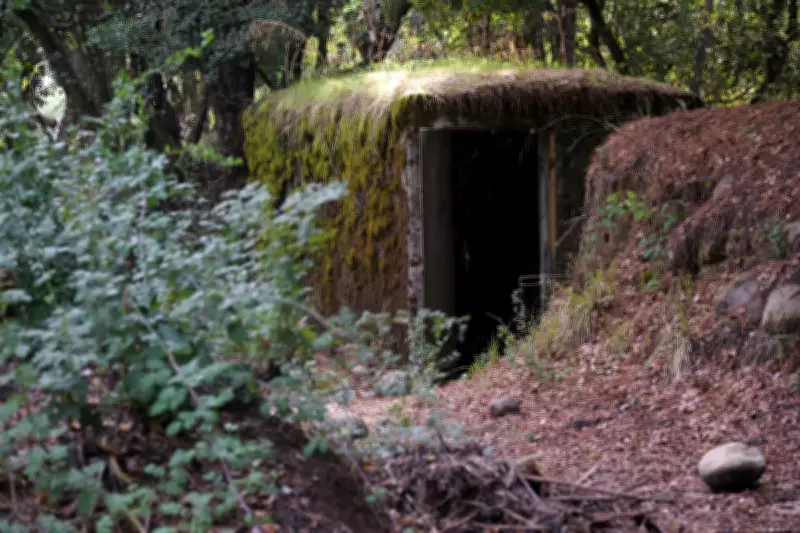
In 2023, Boric presented a new plan to search for traces of the 1,469 people who remain "disappeared" since the dictatorship. The following year, a new bunker was discovered at Colonia Dignidad as part of these searches. However, this month, Kast—who has repeatedly defended Pinochet and his dictatorship throughout his political career—abruptly removed four coordinators of the search plan, including the head of the national human rights programme after 14 years in the role.
Romero, who was detained as a medical student at the University of Concepción, warned of a broader regression. "What we are witnessing are not isolated incidents, but a clear pattern of regression in human rights," she said. "There is no indication whatsoever of a genuine commitment to the search for truth. And it is precisely this truth that makes them uncomfortable."
The reversal of the memorial plan highlights ongoing tensions in Chile between confronting past atrocities and political ideologies that seek to minimize or deny them, leaving victims' families in a state of uncertainty and despair.