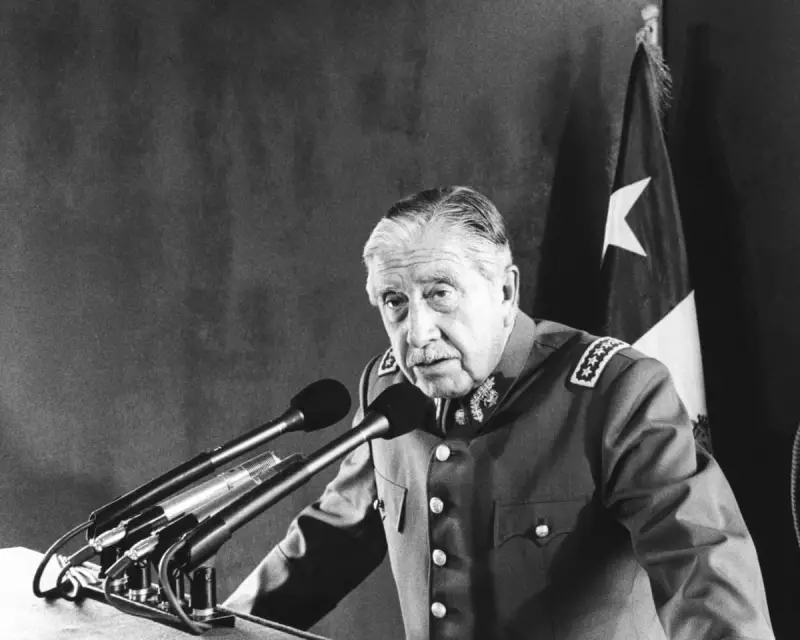
Chile has elected its first openly pro-Pinochet president, a move that has stunned international observers and forced a national reckoning with a dark past. José Antonio Kast, a far-right politician who openly campaigned as an admirer of the former dictator Augusto Pinochet, secured victory last Sunday, tapping into a vein of support for the regime that never fully disappeared.
The Unwavering Support for a Brutal Legacy
The connection is deeply personal. As a 22-year-old law student in 1988, Kast actively campaigned for a 'yes' vote in Pinochet's plebiscite, which sought to extend his 15-year rule. In a television advert from the time, Kast asserted his conviction that the regime acted "for the direct benefit of all of us young people." Despite Pinochet's eventual loss and departure from power in 1990, Kast never renounced his support, maintaining his stance throughout his career as a congressman and in three previous presidential bids.
His older brother, Miguel Kast, was a prominent minister and central bank president under the dictatorship. The president-elect himself once remarked that if Pinochet were alive today, "he would have voted for me." His victory prompts a painful question: why would a nation choose a defender of a regime responsible for an estimated 40,000 cases of torture and over 3,000 deaths?

"The truth is that support for Pinochet among part of Chile’s population never disappeared," explains Cristóbal Rovira Kaltwasser, a populism expert at Pontificia Universidad Católica de Chile. He notes that while Pinochet lost the 1988 referendum, he still commanded a significant 44% of the vote. This base later migrated to right-wing parties, but a faction always craved a return to more authoritarian roots—a sentiment Kast successfully harnessed.
Reactivating a Dormant Pinochetism
According to Kaltwasser, Kast's campaign, which also focused on populist security policies and promises to expel undocumented migrants, managed to "reactivate that dormant Pinochetism." Recent polling underscores this, showing that about a third of Chileans believe Pinochet was one of the country's best leaders or that following his ideas would restore Chile's global standing.
This electoral success signals a dangerous historical gap for many. "The fact that a Pinochet admirer won shows that the current generation has forgotten or does not know enough about the horrific crimes committed during the dictatorship," argues Dr Katia Chornik, a research associate at Cambridge University's Centre of Latin American Studies.
Chornik speaks from profound personal and academic experience. Her parents were political prisoners, held in a Santiago torture centre cynically nicknamed "La Discothèque" by secret police for the loud music used to torment detainees. This revelation led her to a decade-long research project, culminating in the digital archive Cantos Cautivos (Captive Songs) and a new book, Music and Political Imprisonment in Pinochet's Chile.
Education as the Antidote to Forgetting
Chornik's work reveals stories of immense cruelty and unexpected resilience. She documents the case of Jorge Peña Hen, a revered conductor who founded Latin America's first children's orchestra. After the 1973 coup, he was imprisoned in La Serena. There, using burnt matchsticks, he scribbled an unfinished 10-bar melody on a scrap of paper—a final creative act before his murder. His daughter later described finding the manuscript and being enveloped by her father's scent, a poignant connection to his lost life.
For Chornik, Kast's victory is a clarion call. "With Kast’s election, it’s clear that people have forgotten or don’t have enough information about the horrors of the dictatorship, so education is absolutely key," she states. She is now collaborating with UNESCO to integrate her research into school curricula across Latin America and the Caribbean, hoping to combat the amnesia that allowed a defender of dictatorship to rise to power.

The election of José Antonio Kast is not merely a political shift; it is a stark indicator of a nation's unresolved trauma and the enduring potency of authoritarian nostalgia. It underscores a critical need for sustained historical education to ensure the atrocities of the Pinochet era are neither minimised nor repeated.