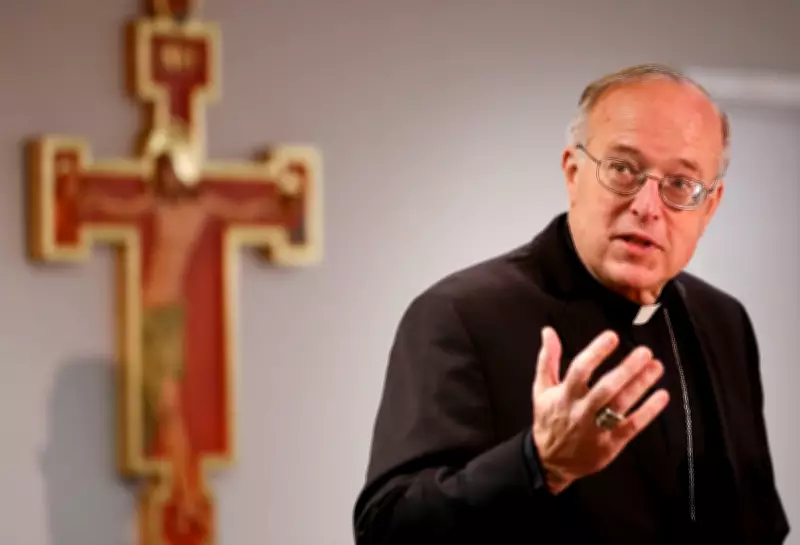
Washington Cardinal Challenges Moral Legitimacy of US-Israeli War on Iran
Cardinal Robert W. McElroy, the Archbishop of Washington, has issued a powerful declaration that the United States and Israel's military conflict with Iran is "not morally legitimate." This statement notably goes beyond the more moderate appeals for peace and dialogue recently made by Pope Leo XIV, marking a significant escalation in Catholic clerical criticism of the ongoing war.
Failure to Meet Just War Criteria
In a detailed interview with the Catholic Standard this week, Cardinal McElroy systematically argued that the conflict fails to satisfy core principles of Catholic just war teaching. He emphasized that "the criterion of just cause is not met because our country was not responding to an existing or imminent and objectively verifiable attack by Iran."
McElroy invoked the teachings of Pope Benedict, stating categorically that "Catholic teaching does not support preventative war, ie a war justified by speculation about events in the future." He warned that "if preventative war were to be accepted morally, then all limits to the cause for going to war would be put in extreme jeopardy."

Lack of Clear Intention and Proportionality
The Cardinal further contended that the war effort fails the "criterion of right intention," noting that "one of the most worrying elements of these first days of the war in Iran is that our goals and intentions are absolutely unclear." He listed objectives ranging from destroying Iran's conventional and nuclear weapons potential to overthrowing its regime, establishing a democratic government, or demanding unconditional surrender.
"You cannot satisfy the just war tradition's criterion of right intention if you do not have a clear intention," McElroy asserted. He added that "our current war effort does not meet Catholic just war teaching because it is far from clear that the benefits of this war will outweigh the harm which will be done."
Broader Catholic Concerns and Diplomatic Warnings
McElroy's remarks coincided with Cardinal Blase J. Cupich of Chicago condemning a White House social media video that mixed actual war footage with clips from action movies. Cupich called the treatment "sickening," stating that "a real war with real death and real suffering being treated like it's a video game" is unacceptable.
While Pope Leo XIV has issued moderate appeals for dialogue, urging that "the roar of bombs may cease" and "weapons may fall silent," the Vatican's diplomatic apparatus has expressed deeper concerns. Cardinal Pietro Parolin, the Vatican's secretary of state, warned that recognizing a right to "preventive war" without a supranational legal framework risks setting "the whole world ablaze."
Parolin lamented that "justice has given way to force; the force of law has been replaced by the law of force, with the conviction that peace can arise only after the enemy has been annihilated."
Parishioner Anxiety and Divided Opinions
Cardinal McElroy reported encountering "a very significant level of anxiety" among parishioners since the attack on Iran began. He noted that while "almost everyone rightly believes that the Khamenei regime has been for decades a brutal and repressive government," there is "immense concern that this war will spiral out of control and embroil the United States in ever greater depth."
Some parishioners worry about children serving in the military, while others recall previous US wars in Iraq and "the lack of peace or unity that they produced despite major American casualties and immense costs." However, McElroy also acknowledged that some believe "now is the time for the United States to end the theocracy in Iran and install a more friendly and more peaceful government."
Call to Action and Spiritual Guidance
The Cardinal urged Catholics in the Archdiocese to "pray for peace and an immediate end to this conflict." He called on citizens to "inform our political representatives of our positions on this unfolding war" and to "comfort those in our families, our parishes and our communities who are anxious."

McElroy emphasized that "nations have the strict obligation to end a war as soon as possible," particularly when "the decision to go to war was not morally legitimate." He stressed the importance of preventing the conflict from becoming "a prolonged conflict, lurching from goal to goal and from strategy to strategy."
This comprehensive critique from a senior American cardinal represents a significant moral challenge to US foreign policy, grounded in centuries of Catholic theological tradition regarding warfare and international justice.