In a dramatic legal escalation, the California Republican party has filed an emergency application with the state supreme court, seeking to block redistricting maps that voters approved last November. The move represents a direct challenge to Proposition 50, a ballot measure designed to counter Republican-led redistricting efforts in Texas.
Emergency Legal Action Against Voter-Approved Maps
The party's emergency filing requests Justice Elena Kagan, who oversees the ninth circuit, to issue an injunction before 9th February 2026. This date marks the beginning of California's candidate filing period for the June 2026 primary elections, creating a tight timeline for judicial intervention.
California Republicans argue that the new congressional district boundaries illegally prioritise race as a determining factor, thereby violating constitutional protections. "California cannot create districts by race, and the state should not be allowed to lock in districts that break federal law," stated Corrin Rankin, chairwoman of the California Republican party.

National Political Stakes in Redistricting Battle
The legal battle carries significant implications for the balance of power in Congress. Republicans currently maintain slim majorities in both the House of Representatives and the Senate. Should Democrats gain control of either chamber following the November 2026 elections, President Trump's legislative agenda could face substantial obstacles.
Furthermore, Democratic control could pave the way for congressional investigations targeting the administration, adding another layer of political consequence to the redistricting dispute.
California's Response to Texas Redistricting
The California redistricting initiative emerged as a direct response to similar efforts in Texas, where Republican-led redistricting could potentially flip up to five Democratic-held House seats. In what has become a mirror-image political strategy, California's Democratic-controlled government initiated its own redistricting process that could shift five Republican-held districts toward Democratic candidates.
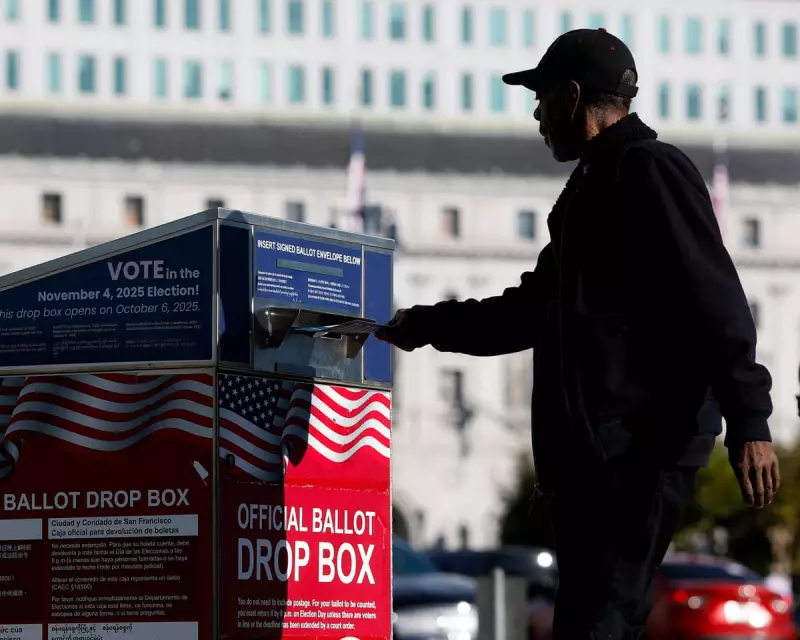
California voters endorsed this approach through Proposition 50 in November 2025, granting lawmakers authority to adopt the new congressional map. The measure passed despite opposition from Republican groups and the Trump administration.
Constitutional Challenges and Legal Arguments
The California Republican party, joined by other plaintiffs and supported by the Trump administration, initially challenged the new map in Los Angeles federal court. Their lawsuit contends that the redistricting plan unlawfully uses "race as a predominant factor" to favour Latino voters.
This approach, they argue, contravenes multiple constitutional provisions and federal statutes:
- The 14th Amendment's guarantee of equal protection under the law
- The 15th Amendment's prohibition against racial discrimination in voting
- The federal Voting Rights Act
However, the federal court rejected these arguments in a 2-1 decision on 14th January, refusing to block implementation of the new maps. The court's ruling emphasised that evidence of racial motivation appeared "exceptionally weak" while partisan motivations seemed "overwhelming."
Legal Representation and Political Connections
The emergency application to the state supreme court was filed by the Dhillon Law Group, a California-based firm representing the Republican party. The firm was founded by Harmeet Dhillon, who currently serves as US assistant attorney general for the Civil Rights Division and previously held the position of vice-chair for the California Republican party.
In their Tuesday filing, challengers to California's map accused state officials of attempting to "shore up Latino support for the Democratic party" through what they describe as the "pernicious and unconstitutional use of race."
The legal proceedings continue as California approaches critical electoral deadlines, with both parties recognising the profound implications for congressional representation and national political dynamics.