
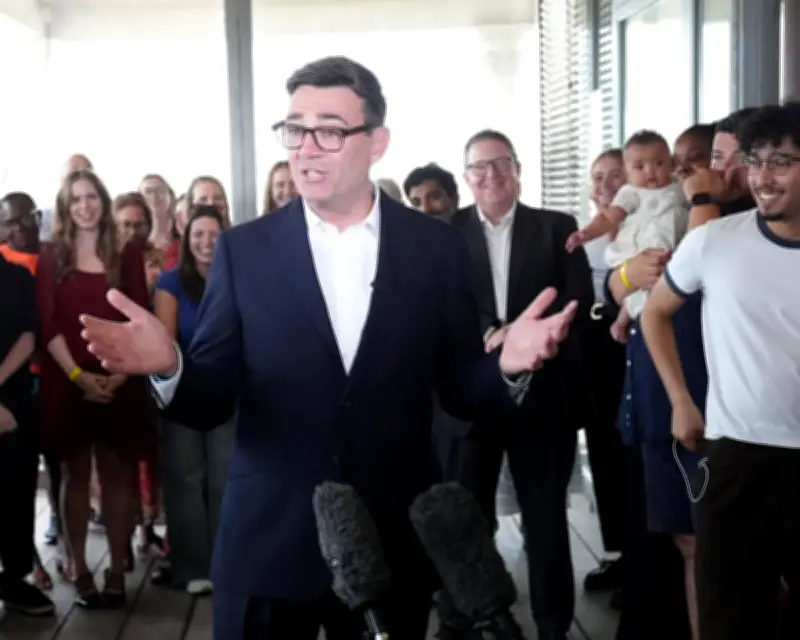
Andy Burnham has finally become Labour leader, taking the top job on Friday without a contest after two failed attempts. Sir Keir Starmer remains prime minister until Monday, when he will resign to King Charles, who will invite Burnham to form a government. The future Burnham has long imagined now shifts from promise to test.
Literary roots of Burnham's politics
Understanding Burnham's beliefs requires examining his literary influences. In 1991, fresh from graduating in English at Cambridge, the 21-year-old Burnham defended poet Philip Larkin in the Guardian's letters page, calling him an 'uncouth and uncultured' figure dismissed as 'too parochial'. Despite Larkin's bigoted reputation, his poems resonate with a northern, provincial sensibility that Burnham brings to national politics.
Burnham has acknowledged that William Shakespeare taught him to build political speeches through cadence and emotional force, while poet Tony Harrison showed him that mastering words could be a route out of powerlessness. During the pandemic, as Manchester mayor, this skill helped him turn a funding dispute with Boris Johnson's government into a moral argument about who should bear the cost.
From poetry to governing prose
The well-worn maxim that politicians campaign in poetry and govern in prose is reversed by Burnham, knowingly. His task now is to turn poetic inheritance into the prose of national government, answering harder questions: who owns what, who taxes whom, who borrows, who spends, and who decides. What remains largely unwritten is which institutions, powers, and fiscal choices would replace the Thatcherite settlement he condemns.
By having a coronation rather than a contest for the Labour leadership, Burnham has been allowed to forestall that reckoning, which may be a mistake. Those tests will come soon enough. Friday was a good day for Labour and for the country, giving the nation an experienced politician with a gift for language, well versed in using rhetoric to change minds.
Harrison's vision and Burnham's path
At Tony Harrison's memorial earlier this year, Burnham described the importance of the poem V to him as a teenager, connecting literature with his own sense of politics. Harrison saw Britain trapped by the 'versuses' of life – class, economic, and ethnic differences – and dared to imagine it 'united'. Burnham says that vision shaped him. His government will now be judged on whether it can make that single word mean more than a poet's hope.




