The city of Brussels, often hailed as the heart of European compromise, has entered uncharted political territory. The Brussels Capital Region has now gone 542 days without forming a government, officially surpassing Belgium's own infamous national record set between 2010 and 2011.
A Milestone of Political Paralysis
This unhappy milestone was reached on Tuesday, 3rd December 2024, if election day in June 2024 is included in the count—a method favoured by Dutch-language media. The region has been in a state of administrative limbo since voters went to the polls, with 14 different parties elected to its 89-seat parliament failing to find common ground. The deadlock means Brussels has now exceeded the 541-day period it took for the entire country of Belgium to form a federal government over a decade ago, a saga that captured global attention.
While Northern Ireland's 729-day stalemate remains longer, Brussels will avoid an entry in the Guinness World Records, which only recognises sovereign states. The political impasse is causing increasing alarm as the city, which hosts the EU and NATO headquarters, grapples with a mounting budget deficit, escalating drug-related violence, and a homelessness crisis exacerbated by irregular migration.

Growing Crisis and Public Outcry
The tangible consequences of the political vacuum are becoming severe. A caretaker administration remains in place but is powerless to make new spending commitments. This has led to frozen investments, stalled major construction projects, and warnings from social support organisations that they may have to cut salaries due to lost subsidies.
In a powerful demonstration of public frustration, nearly 200 prominent business, academic, and cultural figures published an open letter in Belgium's major newspapers, Le Soir and De Standaard, on Monday. The signatories, including historian David Van Reybrouck and entrepreneur Antoine Helson, decried "541 days of seeing Brussels slide into an unprecedented institutional void and funding crisis." They urgently called for political leaders to convene and agree on a governmental and budgetary path forward.
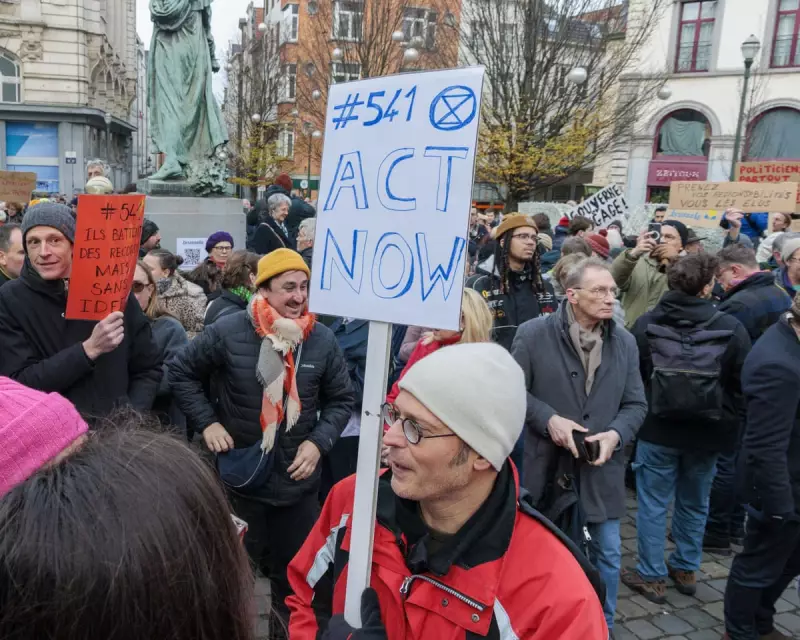
Their concerns were echoed on the streets, where approximately 500 residents staged a protest outside the city's parliament, booing politicians and holding signs that read, "Shame on you Brussels." Financial warnings are also stark: the local newspaper Bruzz forecasts the region's deficit will balloon to €1.6 billion (£1.4bn) by year's end, and a major bank has withdrawn a €500 million credit line.
Complex Coalition Calculus
The root of the deadlock lies in the complex linguistic and political landscape of the bilingual capital. The June 2024 election saw the tax-cutting liberal Mouvement Réformateur (MR) emerge as the largest French-speaking party, while the Flemish Groen (Greens) came top among Dutch-speakers. Coalition talks are hamstrung by a fixed quota of ministerial posts for both language groups, designed to protect the Dutch-speaking minority.
Deep ideological rifts have proven insurmountable. Francophone Socialists refuse to govern with the Flemish nationalist N-VA party of Prime Minister Bart De Wever, labelling it "anti-Brussels, anti-diversity." Conversely, the Flemish liberal Open VLD party refuses to join a Brussels government without the N-VA, retorting that the Socialists are like "an alcoholic addicted to public spending."
With personal insults now characterising the negotiations, a rapid resolution seems distant. As one political editor noted, in Brussels today, "so much is happening and yet nothing at all." The city famed for backroom deals and pragmatic solutions finds its own machinery of government completely seized.