The Rising Tide of Billionaire Influence in American Politics
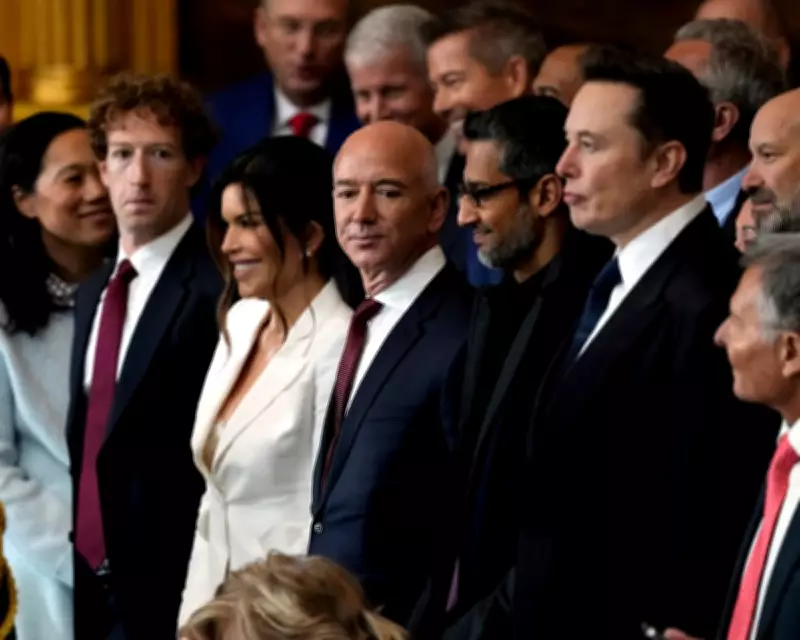
In a stark illustration of wealth concentration, eleven billionaires with a combined net worth of $1.35 trillion attended President Donald Trump's second inauguration or related events. This gathering underscores a broader trend: the United States' 900-plus billionaires exert disproportionate control over elections, economic policies, and media landscapes, prompting urgent calls for a movement to reduce their power and safeguard democratic principles.
The Gilded Age Revisited: Billionaires Shaping Policy
Not a day passes without headlines detailing billionaires leveraging their fortunes to sway the system in their favor, often through tax cuts, government contracts, or pardons. This new Gilded Age sees ultra-wealthy individuals outpacing average Americans—from auto workers to teachers—in political clout. For instance, Skydance, backed by Larry Ellison, the world's sixth-richest person, secured a $110 billion deal to acquire Warner Brothers, potentially aligning CNN's coverage more favorably with Trump. Similarly, Mark Zuckerberg's Meta plans to spend $65 million on political campaigns to oppose AI regulation, while crypto billionaires aim to defeat critics like Senator Sherrod Brown in Ohio.
Media and Economic Manipulation by the Ultra-Rich
Billionaire media moguls, including Rupert Murdoch, have shifted political discourse to the right. Elon Musk transformed Twitter into a far-right echo chamber after a $44 billion purchase, and Jeff Bezos has steered the Washington Post toward Trump-friendly stances. In labor disputes, Musk's SpaceX and Bezos's Amazon have challenged the National Labor Relations Board's constitutionality, undermining union protections. Trump's policies further enriched billionaires, with $750 billion of a $2 trillion tax cut benefiting the top 1%, and provisions allowing write-offs for private jets and increased tax-free inheritances.

Political Donations and Electoral Impact
Billionaire contributions have skyrocketed since the Supreme Court's 2010 Citizens United ruling, which removed limits on political spending. In the 2024 elections, the top six donors each gave over $100 million, totaling nearly $1 billion, with Elon Musk leading at $280 million. These funds were pivotal in Trump's potential victory over Kamala Harris and in flipping Senate seats in Montana, Ohio, and Pennsylvania. According to Citizens for Tax Fairness, 100 billionaire families contributed $2.6 billion to federal elections in 2024, accounting for one in every six dollars spent.
Proposed Solutions to Curb Billionaire Power
To address this imbalance, advocates propose multiple strategies. Overturning Citizens United through a constitutional amendment or court overhaul is a long-term goal, though billionaires may resist it via campaign contributions. Short-term measures include state-level legislation to limit corporate donations and federal laws requiring full disclosure of campaign finances, targeting the $1.9 billion in dark money spent in 2024. Public financing laws, like New York City's eight-to-one match for small donations, could amplify average citizens' voices.
The Case for a Wealth Tax and Grassroots Movements
Support is growing for a wealth tax, such as the 5% annual levy proposed by Bernie Sanders and Ro Khanna, which could raise $4.4 trillion over a decade to fund healthcare, childcare, and housing. Economists Emmanuel Saez and Gabriel Zucman note this could halve billionaire wealth in 15 years, reducing concentration. Building a cross-partisan movement is essential, as polls show 53% of Americans believe billionaires threaten democracy, and 71% support a wealth tax on top earners.
Hope Amidst Growing Public Awareness
Increasing public discontent, exemplified by figures like Texas Senate candidate James Talarico, who criticizes billionaires for redesigning politics for profit, fuels optimism. Sanders' wealth tax proposal highlights inequality, echoing Franklin Roosevelt's efforts to counter "organized money" through progressive taxation and unionization. As Paul Krugman argues, reducing extreme wealth concentration is vital for preserving American democracy, making this a critical moment for collective action.