
Avi Lewis Elected to Lead Canada's New Democratic Party
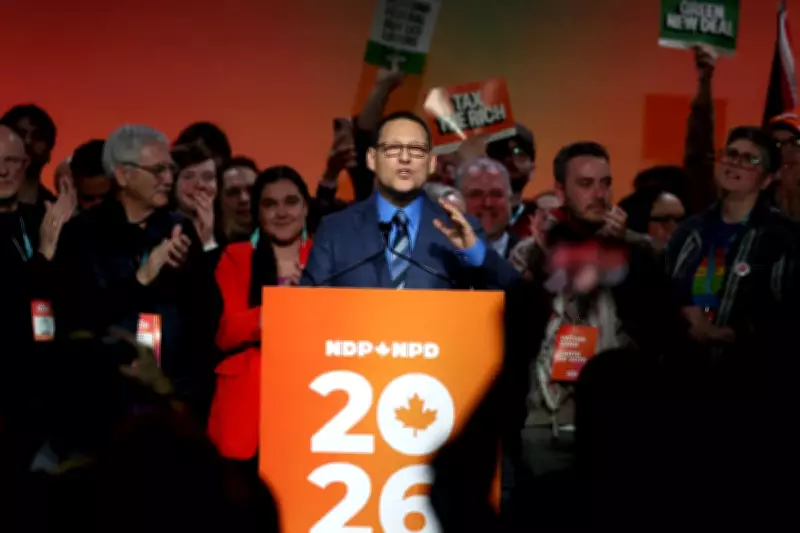
In a decisive first-ballot victory, former broadcaster and documentary filmmaker Avi Lewis has been elected as the new leader of Canada's New Democratic Party (NDP). The election took place on the final day of the party's convention in Winnipeg, Manitoba, where Lewis addressed enthusiastic supporters and outlined his vision for a party resurgence.
Rebuilding from Electoral Devastation
The NDP faces significant challenges following last year's federal election, which saw the party lose official party status after dropping from 24 to just six Members of Parliament. With approximately C$13 million in debt and federal polling hovering around 6%, Lewis inherits a party in need of substantial rebuilding. The leadership convention attracted a record number of voting members, demonstrating strong engagement despite recent setbacks.
Progressive Platform Promises
In his victory speech, the 58-year-old leader, who comes from a prominent political family including grandfather David Lewis and father Stephen Lewis, pledged to center the party around equity and progressive policies. "We will become that beacon to the 99%," Lewis declared, promising higher wealth taxes targeting corporations and billionaires, aggressive green energy initiatives, and tuition-free education.
Lewis specifically criticized what he called the moral failings of the governing Liberals, taking aim at oil companies and grocery chains that have recorded substantial profits while many Canadians struggle economically. "It is time, far past time, to properly tax the corporations and billionaires that have been riding a tidal wave of profits," he told the cheering Winnipeg crowd.
Leadership Contest and Reactions
Lewis defeated four other candidates in the leadership race, including MP Heather McPherson who placed second, union organizer Rob Ashton, British Columbia city councillor Tanille Johnston, and farmer Tony McQuail. Prime Minister Mark Carney and Conservative leader Pierre Poilievre both issued statements congratulating Lewis on his victory.
The party's challenges were compounded earlier this month when MP Lori Idlout crossed over to the Liberals, leaving the NDP further from the 12 MPs needed for official party status. This follows the resignation of former leader Jagmeet Singh after he lost his own riding in last year's election.
Provincial Divisions and Environmental Focus
While Lewis appeared on stage with Manitoba Premier Wab Kinew, whose provincial NDP won a strong majority in 2023, reactions from other provincial leaders highlighted potential divisions. British Columbia Premier David Eby applauded Lewis's win but noted his government's focus on technology and mining jobs—industries criticized by the new federal leader.
Alberta NDP leader Naheed Nenshi, who has clashed with Lewis over oil and gas development, warned that the federal party's perceived ideological shift could harm provincial prospects. "It is clear that the direction of the federal party under this new leader is not in the interests of Alberta," Nenshi stated.
In Saskatchewan, NDP leader Carla Beck declined to meet with Lewis, calling his positions "ideological and unrealistic" and pointing to his opposition to new pipeline projects.
Environmental and Economic Proposals
Lewis has emphasized environmental policies as central to his platform, calling for a green energy deal and proposing an export tax on oil and gas shipped to the United States. He advocates investing 2% of Canada's gross domestic product in combating climate change effects, positioning environmental action as both an ecological and economic priority.
Interim leader Don Davies expressed optimism about rebuilding, suggesting voters are concerned about Prime Minister Carney's conservative shift. Davies humorously noted at the convention, "I erroneously said, when Prime Minister Carney played hockey, that he was a goalie. I was mistaken. He's clearly a rightwinger."
The NDP's peak came in 2011 under former leader Jack Layton when the party won 103 parliamentary seats. Lewis now faces the formidable task of restoring the party's relevance while navigating internal divisions and substantial financial and political challenges.




