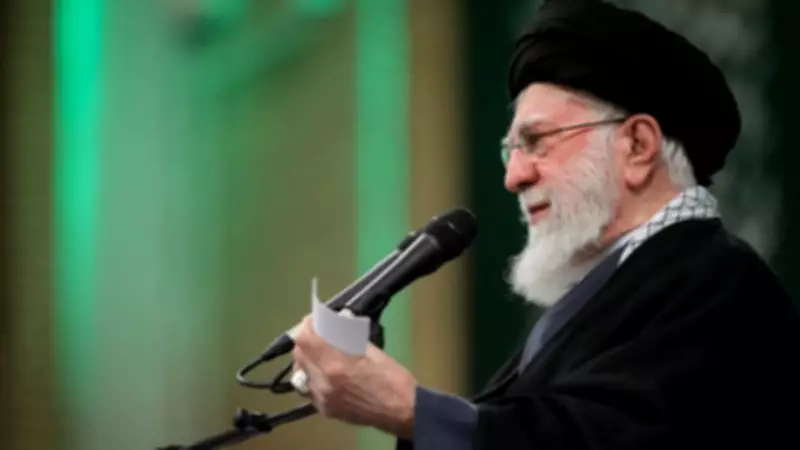
The End of an Era: Ali Khamenei's Death Marks a Turning Point for Iran
Ayatollah Ali Khamenei, the supreme leader of Iran, has passed away, concluding a reign defined by absolute power, deep-seated paranoia, and an unshakeable belief in his divine destiny. His death, confirmed by Iranian state media on Sunday, 1 March 2026, without specifying the cause, leaves a void in a nation he molded entirely around his persona. At 86 years old, Khamenei's legacy is one of authoritarian control, economic stagnation, and violent suppression of opposition.
A Reign Built on Fear and Loyalty
Khamenei ascended to the role of supreme leader in 1989, succeeding Ruhollah Khomeini at the age of 50. Inheriting a position already endowed with immense authority, he expanded his control, fostering a cult of personality and ensuring all state institutions were led by fiercely loyal followers. His decrees were absolute, and dissent was met with severe repercussions. The network of secret informants and the Revolutionary Guard maintained his grip on power, instilling fear among the populace.
Under his rule, Iran's economy floundered, exacerbated by punitive international sanctions linked to his nuclear ambitions. Billions were diverted into nuclear development, isolating Iran globally and worsening living conditions for its citizens. Despite a 2015 nuclear deal aimed at easing restrictions, economic hardships persisted, fueling widespread unrest and protests.

Violent Crackdowns and Defiant Rhetoric
Khamenei's regime was notorious for its brutal response to dissent. In 2022, the death of Mahsa Amini in police custody sparked massive protests, met with violent repression by security forces. Human rights groups estimate over 7,000 deaths and nearly 53,000 arrests during the unrest. Khamenei remained defiant, dismissing critics as enemies incapable of undermining the Islamic Republic.
His rhetoric often targeted Western powers, particularly the United States and Israel. He labeled America the Great Satan and Israel the Little Satan, vowing to destroy the latter. In his later years, he formed an Axis of Resistance, supporting proxies like Hezbollah and Hamas, and arming Russia with drones for use in Ukraine. However, when Israel retaliated with precision strikes, Khamenei's air of invulnerability faded, revealing vulnerabilities in his leadership.
From Religious Roots to Political Supremacy
Born and raised in Mashhad, Khamenei's early religious education intertwined with political activism, leading him to join opposition movements against Iran's monarchy long before the 1979 revolution. A close confidant of Ayatollah Khomeini, he played a pivotal role in the revolution, surviving an assassination attempt in 1981 that left his right arm disabled. Later that year, he was elected president with 97% of the vote, serving two terms before becoming supreme leader.
His appointment was contentious, as he lacked the required religious credentials, prompting constitutional changes to secure his position. A proposal for power-sharing was shelved, consolidating his absolute authority. Throughout his decades in power, Khamenei's self-confidence seemed unassailable, but recent events hinted at a decline in his perceived invincibility.
Global Implications and Future Uncertainty
Khamenei's death raises profound questions about Iran's future, with implications for the Middle East and beyond. His successor will inherit a nation grappling with economic woes, social unrest, and strained international relations. The world has transformed significantly since Khamenei took power, and how Iran navigates this transition will be closely watched by global observers.
As former US President Donald Trump once described him as one of the most evil people in history, Khamenei's legacy remains a subject of intense debate. His death may signal a chance for change, but the path forward for Iran is fraught with uncertainty and potential upheaval.