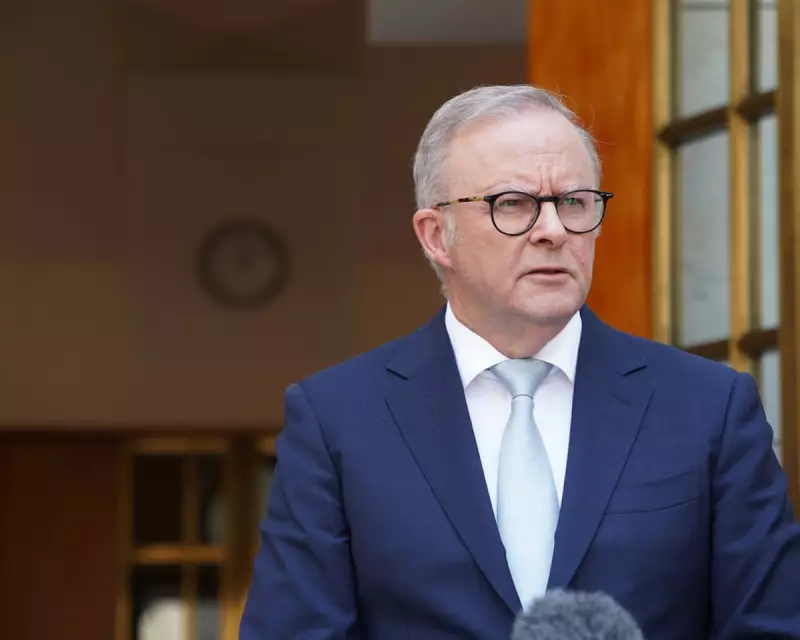
Prime Minister Anthony Albanese has announced a significant government crackdown on hate speech and violent religious incitement, fast-tracking its response to a major report on antisemitism in the wake of the Bondi Junction terror attack.
Government Adopts Envoy's 13 Recommendations
Joined by the special envoy to combat antisemitism, Jillian Segal, on Thursday, Mr Albanese confirmed the government would adopt all 13 recommendations from her July 2023 report. The central measure is the official adoption of the International Holocaust Remembrance Alliance's (IHRA) working definition of antisemitism. This move comes after sustained pressure for stronger action following the tragic Bondi beach massacre, which targeted Jewish Australians among others.
The Executive Council of Australian Jewry (ECAJ) labelled the announcement an essential "first step". However, its president, Daniel Aghion, cautioned that the community would need to see the details and remained critical of the timeline. "We warned of the risk of not dealing with antisemitism in this country promptly and effectively after 7 October [2023]. It is an absolute tragedy that it has taken a massacre of Jewish and other Australians for that step to be taken," Aghion stated.

Critics Warn of Conflation and Division
Opposition to the plan has emerged from several fronts, primarily focused on the IHRA definition. Critics argue it could be used to stifle legitimate criticism of the Israeli government. Tim Roberts, president of the NSW Council for Civil Liberties, expressed concern that endorsing the report now conflates the Bondi attack with opposition to Israel's actions.
"Our grief should not be used as a political weapon, nor as an excuse to pursue agendas that divide communities," said Max Kaiser, executive officer of the Jewish Council of Australia, which had criticised Segal's report in July. He argued that a "law and order response" risks further division and that grassroots, cross-community solutions are needed instead.
Hate speech expert Professor Kath Gerber from the University of Queensland highlighted the legal complexity, noting Australia's unique civil anti-vilification laws. "If we accept something as antisemitism, but it doesn't cross the legal line into an actionable complaint, then what are we saying?" she questioned.
Political Response and Alternative Plans
The political debate intensified as Opposition Leader Sussan Ley accused the Prime Minister of "missing the mark". She announced a Coalition plan featuring more stringent measures, including:
- Powers to strip citizenship from dual nationals involved in terrorism.
- Denying visas to individuals from "terrorist enclaves", citing Hamas-controlled territories as an example.
- Blocking funding for arts and research projects supporting "antisemitic activities".
Ley also committed to legislating the IHRA definition, a step Mr Albanese did not confirm. In a call for unity, Bilal Rauf, a senior adviser at the Australian National Imams Council, warned against punitive measures that suppress expression and could achieve the attackers' goal of sowing division.
Despite the criticism, sectors like higher education have welcomed the move. Universities Australia chair Professor Carolyn Evans called it a "strong and necessary step" to ensure campuses remain safe and inclusive for people of all faiths.