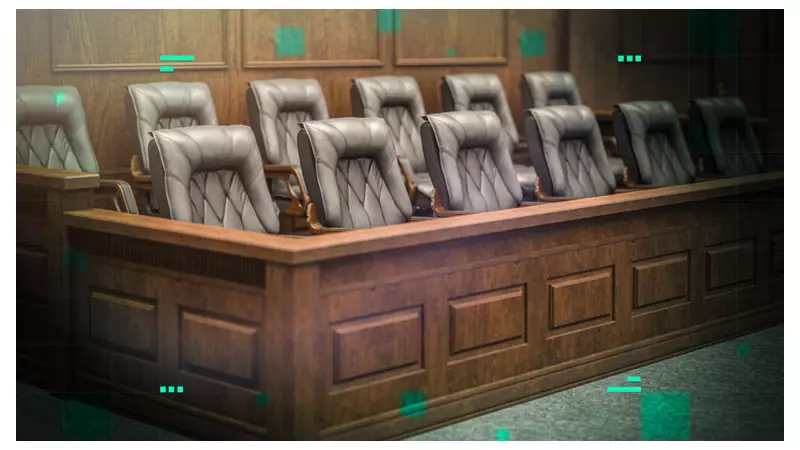
The government has unveiled sweeping justice reforms that could see the historic right to a trial by jury removed for the majority of cases currently heard in crown courts across England and Wales.
The Core of the Reforms: A New Three-Year Threshold
Justice Secretary David Lammy announced that the right to a jury trial will be limited to defendants facing a likely custodial sentence of more than three years. For cases falling below this threshold, new "swift courts" presided over by a judge or magistrates alone would be created.
This radical shift is designed to accelerate the justice process and tackle the severe backlog in the crown courts, which stood at nearly 80,000 cases in June 2025. Victims currently face waits of up to three or four years for trials to begin.

Analysis Reveals Scale of the Change
An exclusive analysis by Sky News's Data and Forensics team underscores the potential impact of these justice reforms. It found that in the year to June 2025, 74% of convictions secured in crown courts resulted in either a non-custodial sentence or a jail term not exceeding three years.
This figure excludes the "most serious" offences, for which jury trials will be preserved. Mr Lammy confirmed exceptions for crimes including rape, murder, manslaughter, grievous bodily harm, robbery, and arson with intent to kill.
In the latest year, approximately 78,000 cases went to trial in crown courts, with 56,000 resulting in conviction. The data reveals stark contrasts between offence types. For instance, only 3% of public order offence convictions attracted a sentence over three years, compared to 41% of robbery convictions.
Furthermore, the analysis identified 291 different offences where none of the 10,763 people convicted received a custodial sentence longer than three years.
Addressing the Crisis in the Courts
The driving force behind these bold reforms is the critical state of the justice system. The immense crown court backlog is causing significant delays, which ministers argue denies victims timely justice and can lead to cases collapsing.
Mr Lammy highlighted that one in 10 adult rape cases collapsed in the latest year due to victim withdrawal, a situation often worsened by protracted waits for trial.
While the overarching policy is clear, full details on implementation—specifically how it will be determined which cases are likely to fall under the three-year threshold—are still to be finalised. The government's aim is to create a faster, more efficient system, though the move represents one of the most significant changes to trial rights in modern English legal history.