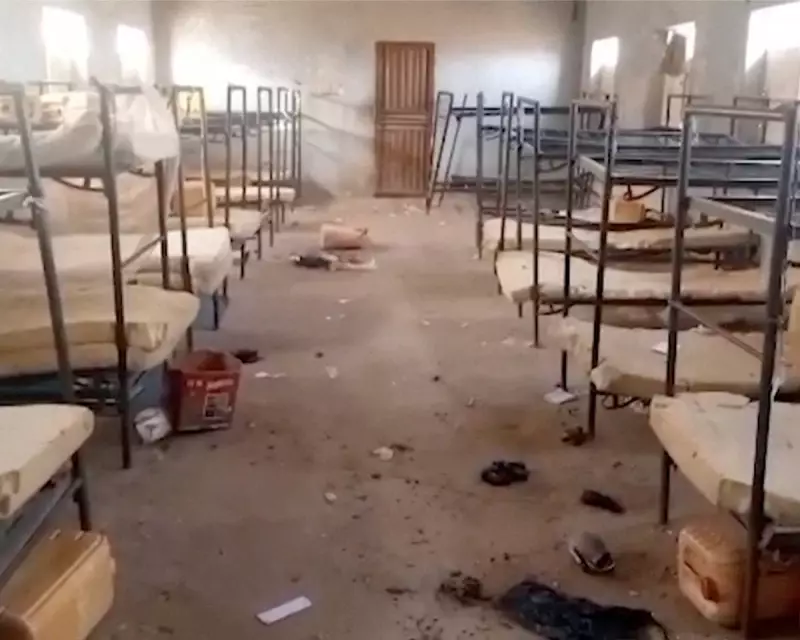
All 24 Abducted Nigerian Schoolgirls Safely Rescued
In a significant development, Nigerian President Bola Tinubu has confirmed the successful rescue of all 24 schoolgirls who were held by assailants following a mass abduction last week. The girls were taken from the Government Girls Comprehensive secondary school in Kebbi state's Maga town on 17 November.
A total of 25 students were originally seized during the attack, but one managed to escape on the same day, according to the school's principal, Musa Rabi Magaji. The remaining 24 have now been accounted for, though authorities have released no specific details about the rescue operation itself.
Relief and Ongoing Security Concerns
President Tinubu expressed his relief at the outcome but emphasised the urgent need for enhanced security measures. "I am relived that all the 24 girls have been accounted for. Now, we must put as a matter of urgency more boots on the ground in the vulnerable areas to avert further incidents of kidnapping," his statement read.
The principal confirmed that while the girls have been released by their captors, they remain in the custody of authorities for the time being. Their current condition has not been immediately disclosed.
For parents like Abdulkarim Abdullahi, whose two daughters, aged 12 and 13, were among those taken, the news brought immense relief. "I am excited to receive the news of their freedom. The past few days have been difficult for me and my family, especially their mother," Abdullahi said. He added that the girls were being taken to the state capital, Birnin Kebbi, and that he was eagerly awaiting to see them in good health.
A Pattern of Mass Abductions in Nigeria
This incident is part of a disturbing trend of mass kidnappings plaguing Nigeria. Just days after the Kebbi abduction, more than 300 students and staff were taken from St Mary's school in north-central Niger state during a raid on Friday. Reports indicate that 50 of those students managed to escape over the weekend.
In a separate but related incident, 38 worshippers who were kidnapped during a deadly church attack in central Nigeria's Kwara state on 18 November have also regained their freedom, as announced by Kwara Governor AbdulRahman AbdulRazaq. That attack on the Christ Apostolic church in Eruku resulted in two fatalities.
While no group has claimed responsibility for these recent abductions, analysts point to armed gangs, often referred to as bandits. These groups frequently target schools, travellers, and remote villages. Kidnapping for ransom has become a common tactic for these gangs to dominate areas with limited government and security presence.
Authorities describe many of these bandits as former herders who have taken up arms against farming communities following clashes over resources. The targeting of schools has become a particularly grim hallmark of the insecurity in Africa's most populous nation, with armed groups seeing them as strategic targets to garner maximum attention.
The problem is vast; since the infamous Chibok schoolgirls kidnapping over a decade ago, at least 1,500 students have been seized across Nigeria. Tragically, many are only released after ransoms are paid, and arrests in such cases remain rare, perpetuating a cycle of violence and extortion.