As the festive season prompts reflection, a curious parallel emerges between a classic carol and the current political landscape in Washington. While the "Twelve Days of Christmas" famously lists a cascade of gifts, a different set of numbers now defines the early phase of Donald Trump's second presidential term. From official schedules to legal battles and economic indicators, these figures paint a detailed portrait of his administration's return to power.
Work, Claims, and Legal Battles
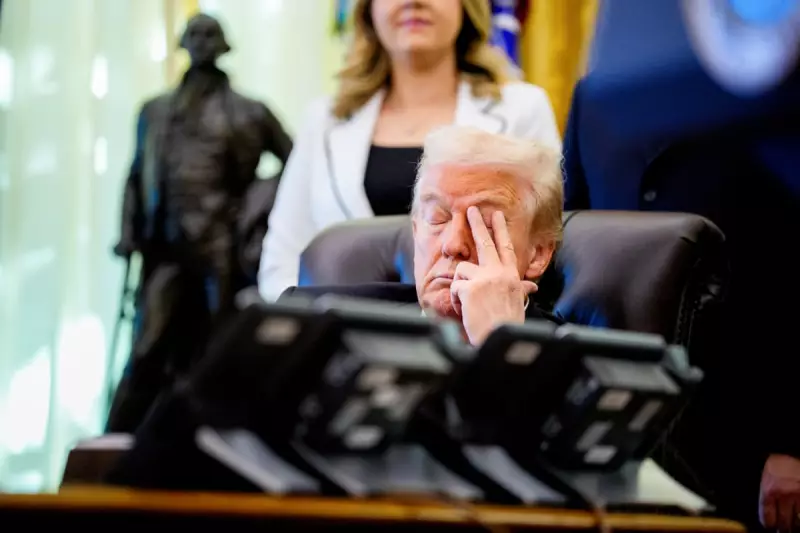
The White House has been keen to project an image of relentless activity. In early December, it provided Oval Office logs to the New York Post, asserting that the President has been working 12 hours each day. This move was a direct rebuttal to a New York Times report suggesting his schedule was lighter than during his first term. However, the very next day, President Trump appeared to fall asleep during a cabinet meeting, an incident that would later be echoed at other official events.
In a December speech, Trump made a bold historical claim, stating that over the past 11 months, his administration had "brought more positive change to Washington than any administration in American history." This assertion of unprecedented achievement forms a central pillar of his administration's narrative.

On the legal front, a staggering figure emerged: 10 billion dollars. This is the sum in damages Trump is seeking from the BBC. His legal team accuses the broadcaster of deceptively editing his speech preceding the January 6 insurrection. While the BBC has apologised for the edit, it intends to defend the lawsuit. Notably, Trump has separately claimed the corporation "used AI" to fabricate his words—an allegation not found in the formal complaint.
Spending, Polls, and Military Deployments
Domestic projects have also generated headline numbers. The proposed new White House ballroom, which Trump says will seat 999 people, has seen its estimated cost balloon. Initially priced at $200 million, the figure was revised to $300 million in October before Trump stated a new estimate of $400 million in December. The plan to fund it through private donors has raised significant ethical concerns.
Public sentiment, however, tells a different story. A recent NPR/PBS News/Marist poll revealed that a vast majority, 61% of Americans, feel the economy is not working well for them personally. Only 39% expressed satisfaction, highlighting a stark divide in economic perception.
On the domestic security front, Trump has deployed federal troops to five major US cities by late November: Los Angeles, Chicago, Washington DC, Memphis, and Portland. All are led by Democratic administrations. The President justified the move as necessary to combat crime and announced plans to send the National Guard to New Orleans in the coming weeks.
Controversies, Economy, and Historical Ranking
The administration has not been without controversy. In November, Trump accused six Democratic lawmakers of "seditious behaviour, punishable by death" after they posted a video encouraging service members to refuse illegal orders. He also reposted a comment advocating for their execution. White House Press Secretary Karoline Leavitt later denied the President wanted to "execute members of Congress."
Economic data presents a mixed picture. As of December, the US unemployment rate stood at 4.6%, a level not seen in four years. This figure underscores the ongoing economic challenges facing the nation.
Perhaps the most subjective number comes from within the administration itself. Steven Cheung, Trump's Communications Director, told the New York Times that the President is ranked number one among all 45 US presidents. This self-assessment stands in sharp contrast to a 2022 survey of 141 presidential scholars by Siena College, which ranked Trump 43rd.

Finally, a historical fact remains unchanged: Donald Trump is the only US president to have been impeached twice, though he has not faced impeachment during this current term. As his second term progresses, these numbers—from hours worked to dollars sought—will continue to define his legacy and the nation's political discourse.