Venezuela's interim president, Delcy Rodríguez, has defended her government's emergency response to the twin earthquakes that have killed more than 3,000 people, asserting that the country will not experience social unrest despite widespread anger over the official reaction to the June 24 disaster.
Many Venezuelans have criticized what they perceive as an inadequate response by the US-backed government before international rescue teams arrived. Speaking during a military ceremony marking Venezuela's Independence Day, Rodríguez stated, "There will be no social unrest here – what we have here is deep social solidarity." She added that thousands of public officials and rescue teams had been deployed to help dig out victims and search for survivors.
Death toll rises amid ongoing rescue efforts
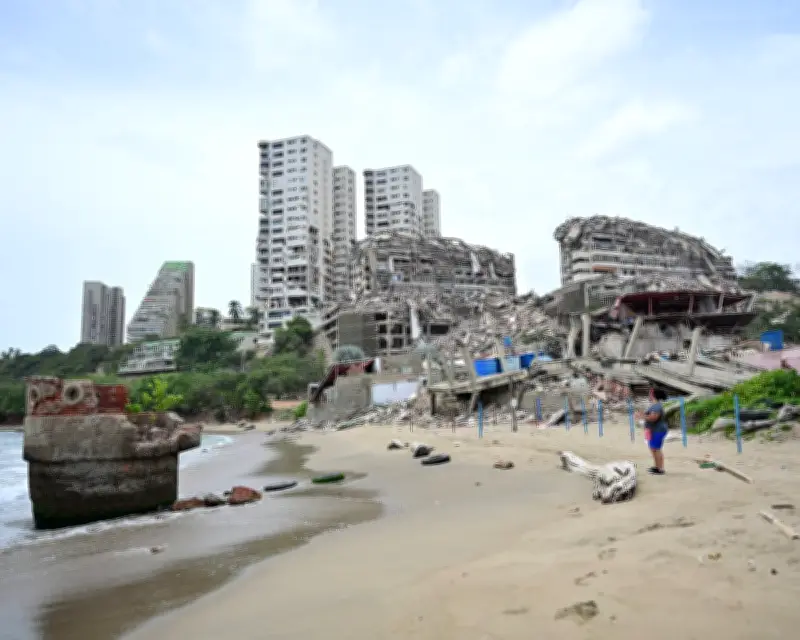
On Sunday night, Venezuela's information ministry reported that the number of people killed in the earthquakes had risen to 3,342, with injuries exceeding 16,700. The disaster, one of the worst in Latin America, caused scores of buildings to collapse, leaving thousands homeless, particularly in the coastal La Guaira area north of the capital, Caracas.
Eleven days after the twin shocks, international rescue teams were concluding operations to find more survivors, while families continued to dig through wreckage to recover the bodies of loved ones. The government estimated that 58,000 buildings were destroyed, leaving vast amounts of rubble.
Families struggle to bury their dead
Rosa López's 25-year-old son-in-law, José Antonio Toledo, was found under the building where he worked as a security guard when the quakes struck. Crews took his body to a local hospital, but staff turned them away due to lack of space. The body was sent to another facility and eventually transferred to an open parking lot. A forensic doctor helped the family locate him days later, on Saturday. However, after identifying his body, they could not afford the $450 charged by a funeral home. Almost at midnight on Saturday, López learned that the mayor's office was offering a free burial plot at a local cemetery, but they had to act quickly. An hour later, López and her daughter climbed a hill to the cemetery and buried Toledo. "He was an exemplary person, a boy who liked helping people," López said.
Forensic workers anticipate mass graves
Forensic technician Joel Mirabal has worked for seven consecutive days since the 7.2 and 7.5 magnitude earthquakes struck. The 45-year-old estimates that in 60% to 70% of cases, a relative or neighbor is available to identify a body when he collects it. Even so, identification is a struggle, with many relying on tattoos, scars, or familiar clothing. "They don't look even 10% like what they were in real life," he said of the victims. If a body cannot be identified, it is sent to forensic specialists at La Guaira seaport. Private companies have donated large cooling containers to help preserve the bodies, but the number of dead continues to grow. "Obviously, mass graves will have to be created," Mirabal said. "The collapse is massive, and the bodies are buried under many layers of debris." Mirabal and other forensic technicians anticipate spending up to three months collecting bodies.