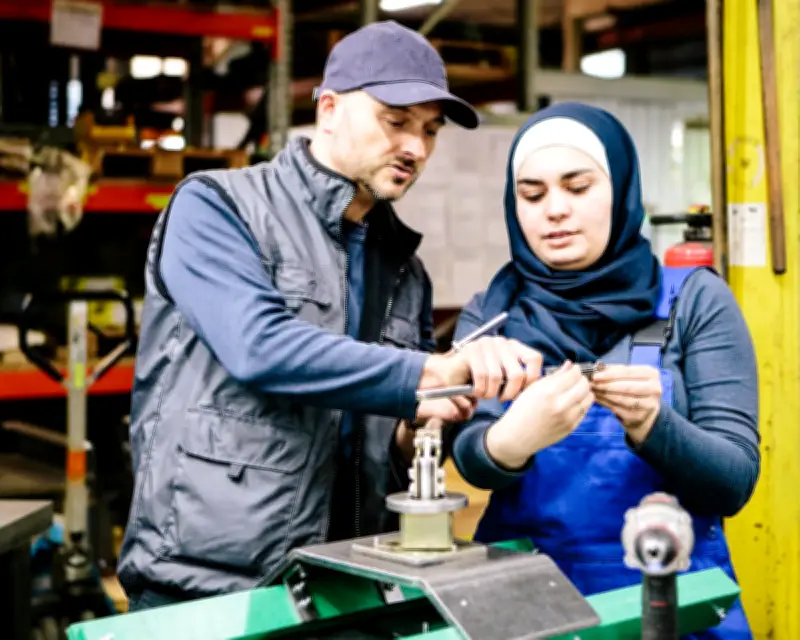
Skills minister Jacqui Smith has announced an ambition to create 50,000 more young apprentices annually by March 2029, aiming to reverse nearly half of the decade-long decline in apprenticeship starts among 16- to 24-year-olds. The announcement came in a letter to Skills England, the newly formed agency responsible for skills policy, requesting urgent advice on which apprenticeship programmes should receive funding increases.
Decline in youth apprenticeships
For the roughly 64% of young people who do not go to university, apprenticeships are vital gateways to the world of work. However, apprenticeship starts among 16- to 24-year-olds fell by 40% in a decade. In 2024/25, 43% of new apprentices had already been with their employer for a year or more, indicating that existing staff are taking a growing share of training funds intended for new recruits.
The Conservative government introduced the apprenticeship levy for big employers in 2017, giving firms too much freedom over how to spend money from the centrally held fund. As a result, an increasing share has been used on training existing staff, sometimes at degree level or higher. Advice from an earlier review that apprenticeship funding for new entrants should be kept separate from wider training budgets was disregarded.

Government response and targets
According to a letter from Jacqui Smith to Skills England last month, the government aims to reverse almost half of the decade-long decline in youth apprenticeships. The skills minister has asked for urgent advice on which apprenticeship programmes should receive funding increases. A further pledge is that employers will receive £2,000 for each apprentice in this age group to whom they give a job.
The decision to transfer responsibility for the £4bn skills budget to the Department for Work and Pensions has been praised, as ministers there are extremely concerned about the 16-24 cohort and looking for ways to boost their participation in the workforce. Clarity about past mistakes enables them to be corrected.
Future challenges and devolution
Skills England has yet to prove itself. Its predecessor body, the Institute for Apprenticeships and Technical Education, was disbanded after presiding over the reallocation of resources away from their intended target. Much has yet to be worked out. Last year’s skills white paper made great play of English devolution, proposing that strategic authorities will in future be the bridge between local jobs and training. This ought to sit well with Andy Burnham’s commitment to empowering the regions. It remains to be seen how this shift will be effected, what role remains for Whitehall, and whether the government’s industrial strategy can deliver sufficient entry-level opportunities.
Political and economic implications
Tom Bewick, who last year published a book about skills policies, believes that they are “key to Labour taking on Reform UK at the next general election”. Voting patterns in areas of high unemployment and poor health back this up. The absence of economic opportunities is damaging to democracy as well as a blight on lives. Apprenticeships are vital stepping stones and the UK urgently needs more of them.