Schools, retailers and government agencies assured parents that asbestos-contaminated play sand posed a low risk to their children's health based on a supplier's own assessment which was not independently verified, the Guardian can reveal.
Recalls and Public Messaging
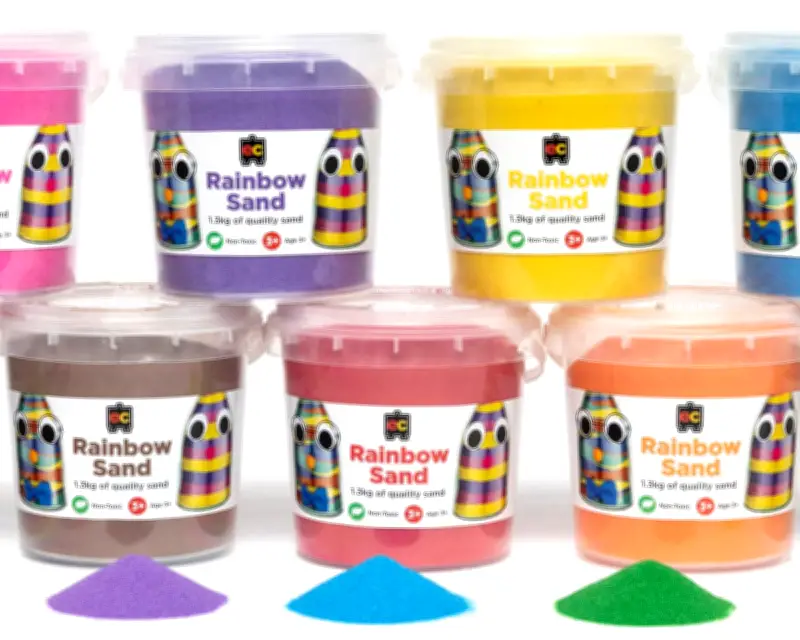
The now-contested public messaging spread quickly after a range of Educational Colours children's sand products were pulled from shelves in November 2025 after samples were found to contain asbestos, which was followed by more than 20 similar recalls across different brands and retailers. Consumers were sold tens of thousands of boxes of potentially contaminated sand over a period of at least five years and the products were used in hundreds of schools and childcare centres in Australia and New Zealand.
ACCC's Initial Position
Until this month, the Australian Competition and Consumer Commission (ACCC) advised toxic asbestos fibres were “unlikely” to be released into the air unless the sand was “processed by mechanical means such as crushing or pulverising”. This advice originated from a risk assessment that Educational Colours itself commissioned, which did not involve any additional testing or even a visual inspection of the contaminated products, and was never made public. The supplier's safety claim became the official position of the Australian and New Zealand governments even though they had no additional evidence to support it.

Airborne Fibres Found in 90% of Samples
The ACCC updated some of its recall notices last week to state the products “may cause a risk to health”, after testing by the Auckland University of Technology (AUT) found 90% of craft sand samples did release asbestos into the air when played with. Privately, the New Zealand workplace regulator said it had challenged the Australian recall statements “from the get-go” as its own testing showed the asbestos fibres were of a respirable size, according to internal emails seen by the Guardian.
A WorkSafe NZ spokesperson on Friday said the regulator had consistently advised that any potentially affected sand products “must be managed, removed and disposed of as friable asbestos-containing material until proven otherwise.” Nevertheless, the “low risk” claim was adopted in both countries, with schools, health officials, government agencies, asbestos disease experts and other major retailers including Kmart all using the exact same wording to reassure consumers.
Kmart and Officeworks
Even though its contaminated sands were not supplied by Educational Colours in the first place, Kmart continues to claim its recalled products “importantly” do not contain friable asbestos and that they are “low risk” unless mechanically processed. Kmart did not respond to a request for comment. Officeworks relied on the report when it told consumers that there was “no identifiable safety hazard” relating to the contaminated products and they were being recalled “purely as a precautionary measure” on 12 November 2025. Officeworks did not respond to the Guardian's request for comment.
Educational Colours Risk Assessment
The Educational Colours risk assessment, published on 10 October 2025 and seen by the Guardian, determined the risk to children “is negligible” because the “release of respirable asbestos fibres from the coloured sand is unlikely to occur unless [it] is further processed by mechanical means such as crushing or pulverising”. The report acknowledged the safety assurance was based solely on a discussion with an Educational Colours representative and a review of the lab results the company provided, and warned against extrapolating its findings.
As the ABC first reported, an Australian laboratory found the asbestos in the sand by chance while analysing samples for staff training and machine testing – it was only reported to authorities after a lab manager mentioned it in a podcast interview. After being informed some of its products were likely contaminated, Educational Colours commissioned additional testing which found six of 14 samples contained non-respirable tremolite asbestos, documents seen by the Guardian show. The laboratory warned against making the same assumption about anything other than the samples it analysed.

Furthermore, the AUT test results released this month show play sand containing tremolite asbestos can release fibres into the air, even when it's only handled the way a child would, in a far more gentle manner than “crushing or pulverising”. The products continued to be sold to consumers and used in schools for at least another month before they were recalled, while the company hired a Melbourne-based OHS firm to do the risk assessment.
Educational Colours said it had proactively recalled its products and commissioned independent NATA-accredited testing and an occupational hygiene firm who advised the risk was negligible. “We take our compliance responsibilities very seriously and remain committed to working with relevant authorities to ensure the ongoing safety of our customers and compliance with any evolving testing standards,” a spokesperson said.
Parents Call for Transparency
Christchurch parents Elle Chrisp and David Dingwall uncovered the documents using freedom of information laws after an eight-month search for answers that began when they learned their young twins had played with potentially contaminated sand. Dingwall said he was shocked when he first read the risk assessment, which was released earlier this month after a complaint to the ombudsman. “I'm not an expert here – but even to me reading it, it felt like this was not an appropriate document to rely on for the kinds of public messaging.” The couple have an ongoing compensation claim against Kmart, where they bought the sand for their children, in the New Zealand disputes tribunal.
Recent Updates
After being contacted by the Guardian, the ACCC on Thursday said Kmart and Officeworks had agreed “in the last 24 hours” to amend their recall notices to remove the words “importantly, respirable asbestos has not been detected in any of the tested samples”. “The ACCC's product safety role in relation to asbestos is shared with specialist regulators,” a spokesperson for the consumer watchdog said. They said the ACCC continued to “actively engage” with suppliers of recalled products on the wording of their recall notices. The NZ government's product safety spokesperson, Ian Caplin, said his department had been “encouraging” suppliers to update their safety messaging and recall notices following the AUT test results showing contaminated sand released asbestos fibres.