Oil prices surged past $100 a barrel on Tuesday following fresh US strikes on Iran, dashing hopes of a Middle East peace breakthrough and raising concerns that the global energy market may have passed the 'point of no return.'
US Strikes Escalate Tensions
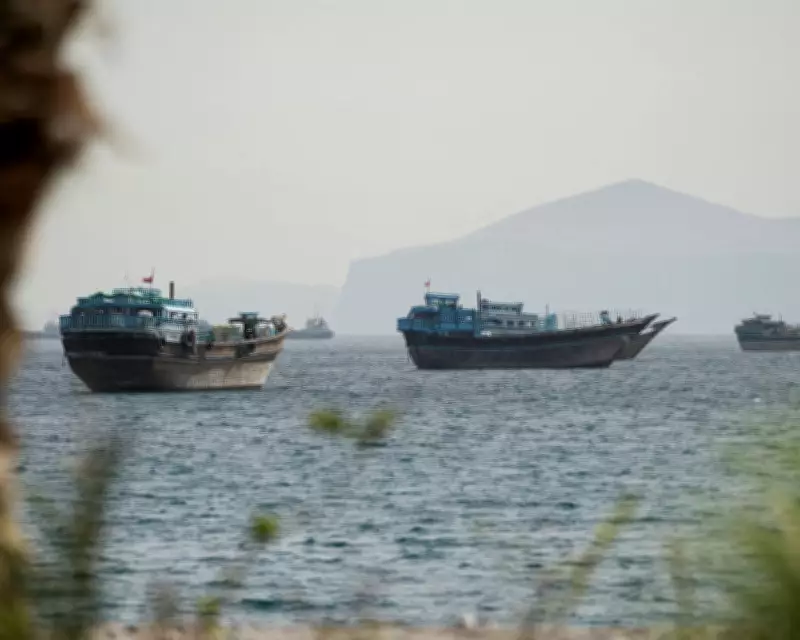
The US attacks on missile launch sites and mine-laying vessels pushed Brent crude above the key threshold, as peace talks remained deadlocked. The conflict and blockade of fossil fuel shipping through the Strait of Hormuz have driven oil prices sharply higher, reaching $126 a barrel at the end of last month.
In recent weeks, prices had retreated from those highs as traders bet on a diplomatic resolution that would allow Gulf states to resume production and exports. On Monday, Brent crude was trading at around $97 a barrel.

Market Disruption and Stockpile Erosion
Market observers warn that weeks of disruption to oil exports have severely eroded global stockpiles of crude and fuel, while demand for transport fuels is expected to rise during the summer travel season. Analysts at HFI Research stated last week that the market had 'reached the point of no return' and could face a 'rude awakening' by early next month.
'It just seems to be this endless loop of Charlie Brown and Lucy with the football,' said Michael Every, a global strategist at Rabobank. 'Every single time, it's “oh, this time is the breakthrough. This time, the energy will flow.” And at any one given time, it could be right. But so far, repeatedly, it hasn't been.'
IEA Warning
The head of the International Energy Agency, Fatih Birol, warned last week that the world could enter a 'red zone' in July and August, consuming far more oil than countries produce, potentially requiring further emergency measures.
On Monday, oil briefly fell below $100 a barrel to a one-month low of $95.95, as traders responded to reports that a peace deal was near. However, Saudi Aramco predicted that if the Strait of Hormuz remains closed for additional weeks, 'oil supply challenges' would persist into next year.
Impact of the Blockade
The shutdown of the Strait of Hormuz, which previously facilitated the transport of about 20 million barrels of oil per day, has cut 14.4 million barrels a day from Gulf prewar output. Record draws from emergency oil stockpiles have helped offset this shortfall by about 2 million barrels a day, but these releases are expected to end by July, and inventories are 'critically low,' according to JP Morgan.
JP Morgan reported that global oil demand fell by an average of 2.8 million barrels a day in March, with deeper declines of 4.3 million in April and 5.5 million in May expected. Despite these demand reductions, a substantial supply shortfall remains.
'The market continues to watch for a US-Iran agreement to resume flows through the strait, but even in a blue-sky scenario, with flows normalising, the market will remain tight with inventories critically low,' JP Morgan said.
European Gas Reserves Under Pressure
In Europe, gas reserves are also under strain, according to HSBC. Storage facilities are only 37% full, well below the five-year average of about 50% for this time of year. Gas injections into storage are also below normal levels, partly because market prices do not reflect tight supplies.
'In our view, this seems to reflect market complacency to some degree,' HSBC said. 'The consequence of this will likely result in accelerated storage injections during the back end of the summer months and with it heightened price volatility.'
Impact on Consumers
Higher oil prices are already affecting consumers at the pump. In the UK, petrol prices have risen to their highest level since the Middle East conflict began, with the average price now 159.43p per litre, up 26.6p since February 28 when the war started.
On Wednesday, the cap on typical dual-fuel costs in Great Britain is forecast to increase by nearly 13% due to higher gas prices caused by the Hormuz blockade, potentially costing the average household an extra £209 per year.