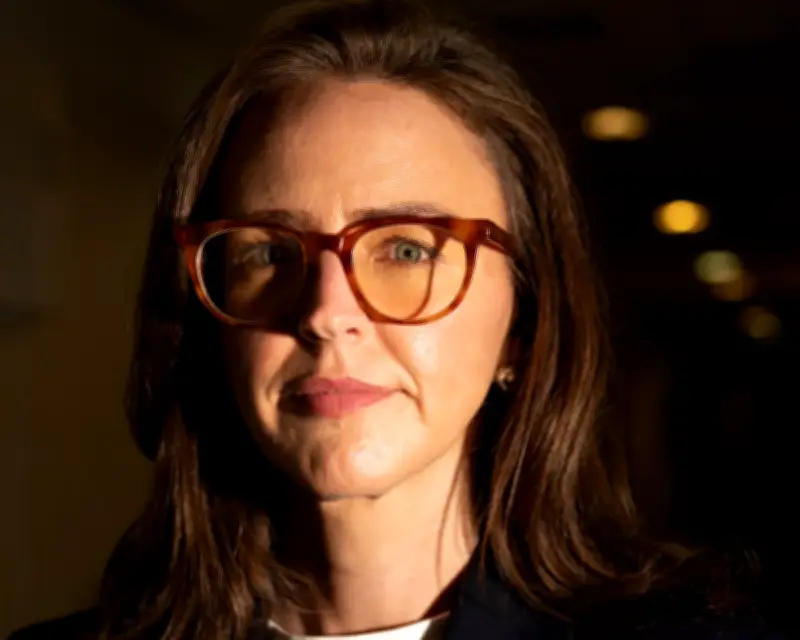
Labour MP Lauren Edwards, who is bringing the assisted dying bill back to the House of Commons, has dismissed concerns about internal party divisions and criticized the 'anti-democratic' way the bill was halted in the House of Lords. She urged peers to finish their work on the legislation.
It has also been revealed that Labour MP and disability rights campaigner Marie Tidball will co-sponsor the bill alongside former minister Alex Davies-Jones.
Edwards, the MP for Rochester and Strood, said she was motivated primarily by the 'anti-democratic' manner in which the terminally ill adults bill was blocked in the Lords after being passed by the Commons.

'I'm a proud Labour MP, I've got a huge trade union background, I have always been Labour, I will die Labour, but I can't be in a position of saying: I'm not going to do this because it might be a little bit tricky for the parliamentary Labour party,' Edwards said, in a pointed address to critics who have expressed concern about division during a time of great party turmoil.
'My role as a member of parliament is to do what I think is right for my constituents and what I think is right for the country, and that's why I'm pursuing this.'
The bill ran out of time to pass the upper house after more than 1,000 amendments were submitted by opponents who say the bill is flawed.
Edwards told the Guardian she had disengaged from all social media shortly after becoming an MP and would not be swayed by opposition campaigners who have mobilized significantly online.
The backbench MP, who came second in the private member's bill ballot, will present the bill for a first reading in the Commons on Wednesday, and it will return for the second-reading debate in early September.
The return of the bill could give supporters a chance to use the Parliament Act to potentially bypass the Lords if it were to be blocked for a second time, but to do so it must pass the Commons again unamended.
Edwards said she would seek to reassure MPs that she did not intend to use the Parliament Act unless there were attempts to block the bill in the Lords using filibuster tactics.
'I want to reintroduce it primarily so that we can allow that legislative process to continue and send it back as soon as we can to the House of Lords, so that people can continue to have faith in our democratic system,' she said. 'Faith in politics and democracy at the moment is not particularly strong. It's a major driving factor, as well as my principled support for the bill.'
Edwards, who took several weeks to announce she would use her private member's bill to return the subject to the Commons, said she had felt a duty to do so from the moment the ballot was announced. 'There was definitely a feeling of overwhelming responsibility. But I really see it as an interrupted conversation that we've been having as legislators that really needs to come to a conclusion.'
She said she believed the Lords could still amend the legislation, as long as it then went to a vote and returned to the Commons. MPs will not be able to amend the bill before it goes to the Lords, or else the Parliament Act cannot apply. But Edwards said MPs would be able to suggest suitable amendments to be made in the Lords and that she hoped peers would seek to scrutinize and improve rather than block the bill.
Edwards has faced some criticism from disability groups, many of whom are opposed to the bill, and has apologized for past social media comments in which she referred to 'retards'.
She said she had been prepared for the comments from 2009, which resurfaced after her election in 2024, to be part of the criticism of her and she was deeply regretful.
'It's right that they bring it up and I fully expected it to be brought up,' she said. 'Unfortunately, that language was very prevalent. But no one was more horrified than me when I saw that, within a few months of being elected. I can just only apologize again and say that it certainly doesn't reflect any broader attitudes or feelings that I have towards disabled people.'
Edwards said she had been supportive of disability rights campaigns in her constituency and opposed welfare changes that would have affected personal independence payments.

'I signed that reasoned amendment because I was so concerned that it would have a really detrimental impact on the lives of disabled people who need Pip to be able to live their lives with dignity,' she said. 'I guess I would ask people to judge me on all of my behaviours and all of the work I do.'
The bill will have new co-sponsors for its return to the Commons, but those will include its original sponsor, Labour MP Kim Leadbeater.
Others include Conservative MP Peter Bedford, which will come as a blow to opponents who had previously claimed Bedford was among those wavering on the bill. Andrew George, the Liberal Democrat MP, will also co-sponsor it with Davies-Jones and Tidball.
Several other MPs have also signed up to co-sponsor, including those on the previous bill's scrutiny committee: Conservative Kit Malthouse, Labour MPs Dr Peter Prinsley and Dr Simon Opher, as well as Lib Dem MP Josh Babarinde, Green MP Sian Berry, and Plaid Cymru MP Liz Saville-Roberts.