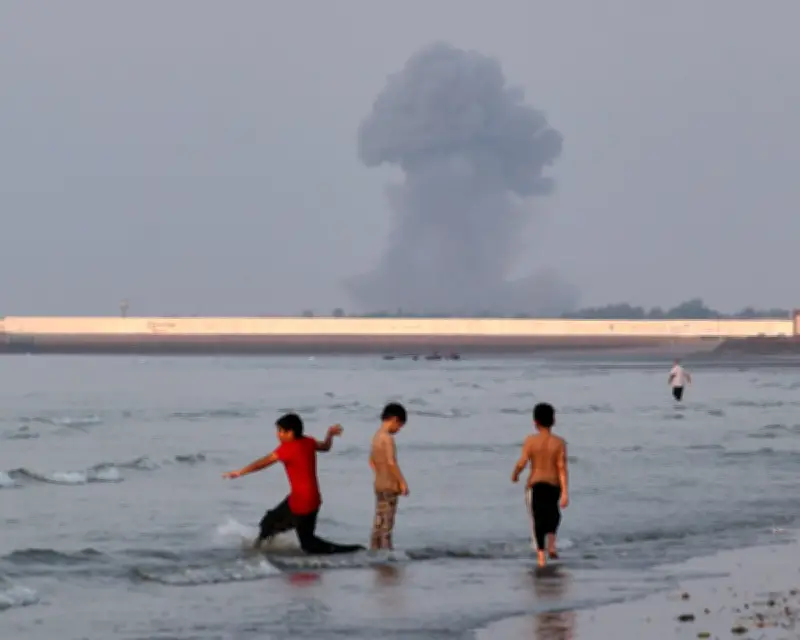
Iranians living in port cities hit by US airstrikes describe a 'new normal' of explosions, power cuts, and water shortages, as the conflict between the US and Iran escalates. Bandar Abbas, headquarters of the Iranian navy on the Strait of Hormuz, has been struck every night for nearly two weeks. Soroush*, a 37-year-old writer who secretly documents human rights violations, said residents are forced to accept this reality. 'We need to accept this could just be our new reality now and it's worked because we are less afraid as each day goes on,' he said. 'There's no one coming to save us from the bombs or the regime's bullets.'
Power cuts and internet shutdowns worsen daily life
For residents near the port, loud explosions and prolonged power cuts have become routine over the past week. Mehnaz*, 39, who relies on internet for work, said the government-imposed internet shutdown has severely affected her earnings. 'We always had power cuts, but the hours have now extended and I fear I can't rely on my online work any more,' she said. 'The war is far from the end and daily life is becoming harder under the bombs, power cuts and internet shutdowns. It's truly hell here.'
Water infrastructure attacks leave villages without supply
Another port city, Jask, was reportedly struck by US airstrikes this week. State media claimed US strikes hit 100 civilian vessels and that an attack on the Bonji desalination plant left 20 villages without drinking water. Moein*, a Jask resident, said water supply was restored but residents are panicking and preparing for a long-running war. 'The heat is rising and if we lack water supply due to these attacks, we will die of heat exhaustion and thirst,' he said. 'We are now making sure to prepare for future attacks and we have to save as much water as we can.' A strike in June on water facilities in Sirik also left thousands rationing water.
Analyst warns of life-threatening consequences
Nik Kowsar, a US-based Iranian journalist and water issues analyst, said attacks on desalination plants in Iran's hot and dry south are particularly dangerous. 'When temperatures climb above 40C, losing access to drinking water can quickly become a matter of life and death,' he said. 'Bombing the infrastructure people rely on will not make Iranians embrace those carrying out the attacks. It may weaken the government, but ordinary people pay the immediate price, and the country is left with damage that could take years to repair.'
Human rights crisis deepens amid conflict
Others highlighted Iran's dire human rights situation, with at least 400 people reportedly executed since the beginning of this year, including teenagers, foreign nationals, and protesters, according to Iran Human Rights. Hundreds more face capital punishment. Soroush said, 'The US government will now take revenge for its personnel killed by the regime and the regime will in retaliation pick up more teenagers and hang them in revenge for the killing of [Ali] Khamenei. This is just the beginning of more Iranian lives being on the line either for the US or the regime. I am deeply saddened and feel helpless.'