Iran threatened to halt all energy exports from the Middle East after the United States reimposed a blockade of its ports and ships, as the two countries traded strikes for a fifth day. US President Donald Trump threatened to attack a site linked to Iran's nuclear programme while weighing further expansion of US strikes next week.
US blockade and strikes
The US blockade came into force early on Wednesday, followed by a 90-minute wave of strikes against Iran's coastal defence systems and missile sites, according to the US military. Iranian authorities said the previous day of US strikes had killed at least seven troops and wounded more than 300 people, the highest casualty count in any recent round of violence between the two countries. At least 30 civilians have been killed by US strikes in southern Iran in recent days, according to Iranian government spokesperson Fatemeh Mohajerani.
Trump suggested the US could widen attacks against Iran to force open the Strait of Hormuz, warning he would hit “Pickaxe Mountain”, a fortified underground facility linked to Iran's disputed nuclear programme. “We’re going to take out Pickaxe Mountain. Tell the Iranians to be ready,” Trump said in an interview on the Hugh Hewitt Show. The facility was not hit in the last two wars.

Iran's retaliation and Strait closure
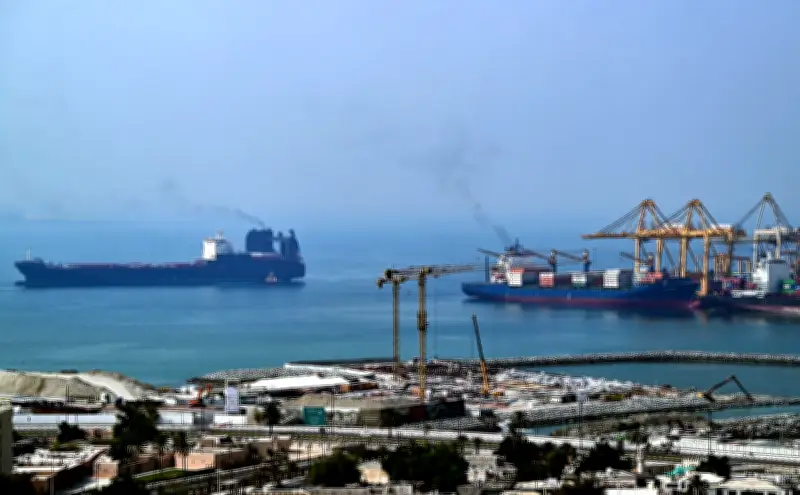
The US strikes and renewed blockade prompted Iran to shut the Strait of Hormuz and carry out a wave of retaliatory airstrikes on countries hosting US bases in the region. “Regional energy exports are either shared by all or denied to all,” Iran’s Islamic Revolutionary Guard Corps (IRGC) declared in a statement on Wednesday. It added that the strait would remain closed until the “end of America’s evils”, further disrupting shipping in the waterway that before the war was a chokepoint for a fifth of the world’s oil and gas.
Iran’s deputy foreign minister, Kazem Gharibabadi, said the renewed US blockade had “in a way, dismantled the Islamabad memorandum”, the interim deal meant to keep the strait open and allow space for negotiations towards a permanent peace.
Economic and regional impact
The flare-up in violence and disruption to shipping drove up the price of oil, with crude prices continuing to rise past a one-month high reached on Tuesday. Shipping companies were avoiding transiting the strait through a US military programme meant to keep commerce flowing, Reuters reported, after continued Iranian attacks prompted safety concerns.
The US said Iran had attacked seven commercial ships in the strait last week, with almost a dozen crew members killed, missing or injured. Iran also launched airstrikes on Bahrain, Jordan and Kuwait, countries that host US forces. Jordan said it intercepted three ballistic missiles from Iran on Wednesday, while Kuwait said it was working to extinguish a fire caused by Iranian attacks.
The US military said it targeted Iranian defence and missile sites on Greater Tunb island in the Strait of Hormuz, as well as barracks for Iran’s mechanised brigade in Sistan and Balochistan province, Iranian state TV reported. Iran’s army vowed a “decisive response to this aggressive action by the American enemy”.
Threats of escalation
The dispute over the strait threatened to pull the region back into total war. “Next week it gets really bad for them because next week comes the power plants. Next week comes the bridges,” Trump said in a Fox News interview on Tuesday. “We’re going to knock out all their power plants. We’re going to knock out all their bridges unless they get to the table and negotiate.” Targeting civilian infrastructure without a clear military target could constitute a war crime.
Axios, citing three sources, reported that Trump held a situation room meeting on Tuesday to discuss a massive offensive against Iran to force Tehran to reopen the strait. Trump said US negotiators had been in touch with their Iranian counterparts to tell them to make a deal, while saying the US would save energy targets for last but ultimately hit them.
Trump made similar comments in March, when he threatened to “obliterate” Iran’s power stations and fresh water plants if Tehran did not agree to peace terms “shortly”.

Diplomatic developments
Trump backtracked from a threat earlier this week that ships would have to pay a 20% fee to the US for “security” in the strait, replacing it with what he described as investment and trade deals with Gulf Arab states. The US president said he had decided to scrap the toll “based on highly productive conversations with Middle East leadership”, and touted “massive” investments, just five hours before the toll was due to come into effect.
In Rome, Lebanon and Israel completed a new round of negotiations described as “positive” by the US. A US official said both sides had agreed to implement the “pilot zone” scheme, which would see Israeli troops withdraw from certain areas in south Lebanon and be replaced by the Lebanese army, tasked with safeguarding the areas from Hezbollah. “Talks concluded after two days of productive and positive discussions,” a US official said in a statement, adding that participants “agreed on the structure and guidelines for the pilot zone process, to be finalised and implemented in the coming days”.
Israel occupies more than 600 sq km (230 sq miles) of land in south Lebanon, which it has labelled a “security zone” to protect residents of northern Israel. The Israeli military has destroyed dozens of villages in the areas it occupies, something Human Rights Watch said could amount to a war crime. The Lebanese delegation seeks the withdrawal of Israeli troops from Lebanon, unlikely in the short term. Hezbollah, not a party to the talks, has made clear it views the dialogue process as illegitimate.