Former BHP chief economist Dr Huw McKay has called for stronger government climate policies, including a carbon price, to compel major resource companies to accelerate decarbonisation. Speaking to Guardian Australia, McKay said voluntary corporate commitments are insufficient and that a carbon price calibrated to reduce hard-to-abate emissions would 'move the needle' on investment decisions.
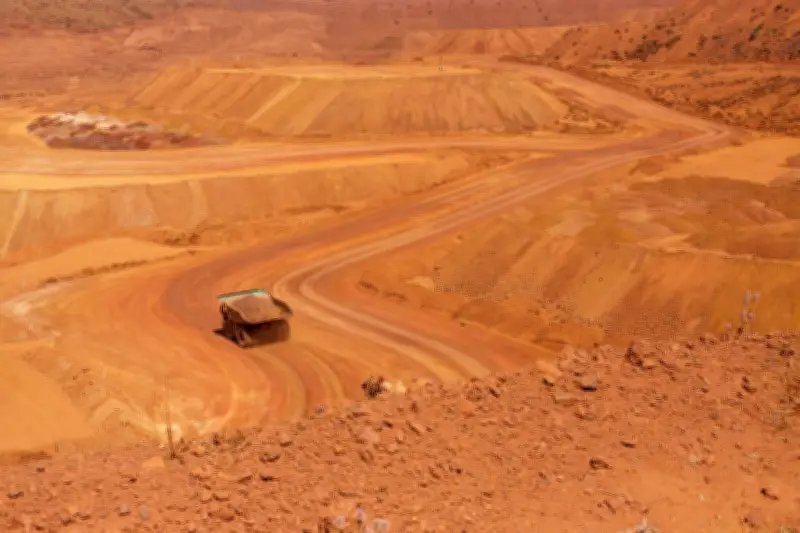
Leaked internal documents, obtained by Guardian Australia and the ABC earlier this year, revealed that BHP had delayed large-scale renewable energy projects in Western Australia's Pilbara region, scrapped a project that would have significantly cut global emissions, and considered postponing the electrification of its diesel truck and train fleets until the 2040s. Experts have warned that BHP's slowdown jeopardises Australia's climate targets and exposes flaws in the government's safeguard mechanism.
Carbon price as a policy lever
McKay, who left BHP in 2024 and is now a visiting fellow at the Australian National University's Crawford School of Public Policy, endorsed the view of economist Ross Garnaut that voluntary corporate commitments are unstable. 'That's absolutely right,' McKay said. 'The preferred policy is, of course, a carbon price that is calibrated to move the needle on hard-to-abate emissions. Inserting a carbon-price obligation like that into the investment process at major resources companies would lead to swifter action.'

He is scheduled to speak at an ANU seminar on 'Heavy industry decarbonisation: insights from the BHP leaks', where he will discuss how corporate goals are set and the influence of policy and financial environments on decision-making.
BHP's emissions targets and progress
BHP has committed to reducing operational emissions by 30% below 2020 levels by 2030, a target it has already met through power purchase agreements, especially in Chile, and the suspension of its struggling Western Australian nickel operations in 2024. However, its long-term net-zero goal requires significant cuts from mining operations, including transitioning away from diesel-powered vehicles and transforming its gas- and diesel-dependent inland power grid.
Despite public statements describing climate change as an 'existential' risk, the leaked documents show BHP repeatedly hesitated to invest in decarbonisation. The company shelved a planned 50MW solar farm and 20MW battery at its Jimblebar mine after board approval, delayed a larger 500MW solar, wind, and battery system, and continued to acquire 62 new diesel haulage trucks despite pledges to electrify its fleet from 2027-2028.
Government response and safeguard mechanism
Climate Change and Energy Minister Chris Bowen defended the existing safeguard mechanism, which requires about 200 large industrial facilities, including several BHP sites, to reduce emissions intensity by up to 4.9% annually or purchase carbon offsets. 'We won't be imposing a carbon tax,' Bowen said, noting that total onsite emissions covered by the scheme fell by 2.3% this year.
The safeguard mechanism, revamped by the Albanese government in 2023, sets emissions baselines for each facility and allows the use of Australian carbon credit units or safeguard credits. A deal with the Greens introduced an absolute emissions cap, though the pace of reduction is set by the minister.
BHP's public relations push
Following the leaks, BHP launched a public relations campaign highlighting a trial of two 240-ton battery-electric haul trucks at its Jimblebar mine, an event attended by journalists and Western Australian Premier Roger Cook. Critics argued the event merely re-announced previous plans. A BHP spokesperson stated that trials are necessary because the technology for scaling battery-electric trucks to an operational fleet is not yet advanced enough. 'To support the acceleration of this technology, BHP is partnering with equipment producers to run trials of battery-electric equipment including two 240-ton battery electric haul trucks being trialled on a BHP site in the Pilbara, and four battery-electric locomotives which we plan to commence trialling in coming months,' the spokesperson said.