The European Union's offer of "associate member" status to Canada is a symbolic gesture of support rather than a binding commitment, and it will not resolve Europe's pressing security challenges, according to Paul Taylor, a senior visiting fellow at the European Policy Centre.
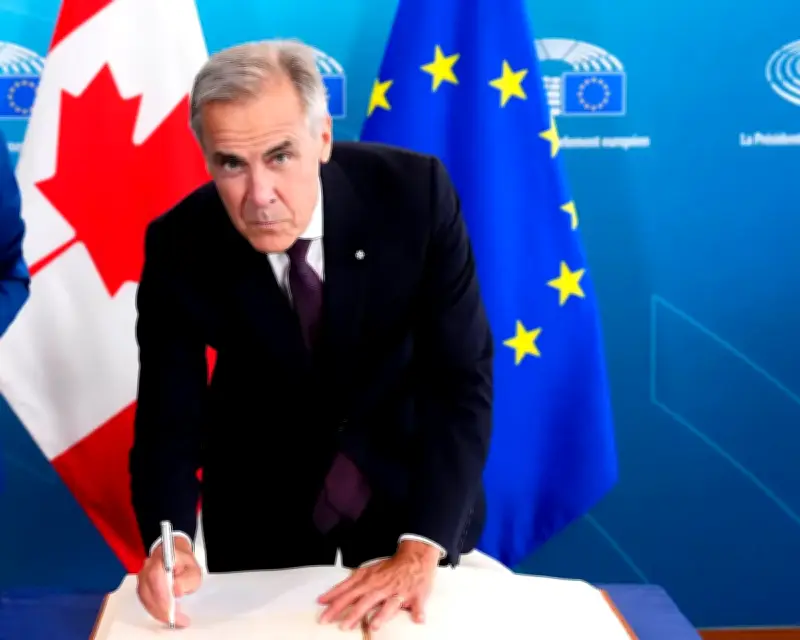
During her annual State of the Union address to the European Parliament in Strasbourg on 16 September 2026, European Commission President Ursula von der Leyen welcomed Canadian Prime Minister Mark Carney as a guest. Carney, whose country is engaged in a trade dispute with the United States, received a standing ovation and was offered the newly invented status of "associate member" of the EU.
A gesture of solidarity, not a treaty obligation
The EU's founding treaties do not provide for associate membership. The bloc typically negotiates association agreements with close partners, some of which eventually join, and partnership or cooperation agreements with more distant allies. The term "associate member" in connection with Canada, which does not meet the geographical criteria for EU membership, may set an ambiguous precedent for Balkan and eastern European countries currently in accession negotiations, as well as for the UK, which left the bloc a decade ago but seeks closer ties.

Ukraine objected to similar "associate" status in May when German Chancellor Friedrich Merz proposed it as a stepping stone to full membership. Western Balkan states that have waited over two decades for accession also reject such a halfway arrangement.
Canada's presence boosts EU's global image
For Canada, the title conveys European solidarity in its confrontation with the Trump administration and aligns with Carney's January Davos call for an alliance of like-minded "middle powers" to uphold the rules-based international order. Carney's appearance in Strasbourg and his endorsement of EU trade, tech regulation, and defence initiatives made the EU appear more attractive globally than it does to some European electorates tempted by Eurosceptic populism in upcoming national elections.
Von der Leyen may hope that Carney's popularity will bolster the European integration project, which faces challenges from hostile great powers, big tech, and member states reluctant to share sovereignty in defence. Closer cooperation with Canada and other like-minded nations such as India, Japan, Australia, and New Zealand could amplify EU influence and support alliances for democracy, open trade, and critical raw material security. However, such partnerships cannot mitigate the urgent threats from Russian aggression or substitute for US engagement in European security.
Proposed initiatives face implementation hurdles
Von der Leyen proposed a new EU mechanism aligned with Nato's Article 4 to enable urgent consultations if member states face hybrid warfare, including cyber-attacks, drone incursions, undersea cable cutting, railway sabotage, energy grid disruption, and disinformation. She called for a "counter-hybrid playbook" with a more robust response to covert warfare. Whether all member states will risk escalation by retaliating against Russia remains uncertain. Some EU and Nato members with offensive cyber capabilities could strike back to set red lines, but these national measures are unlikely to be jointly approved.
European countries have already taken steps against Russia's shadow fleet of oil tankers, impounding vessels on safety or insurance grounds and denying passage through sensitive straits. Each action must be calibrated to deter rather than provoke further defiance that could escalate into wider conflict.
Von der Leyen also called for a European security council, including Ukraine, the UK, and Canada alongside EU powers, to guide continental defence efforts. Such a coalition could provide leadership and crisis management, but it needs real authority to avoid becoming a talking shop.
While the gesture toward Canada demonstrates friendship in troubled times, it is not a solution to Europe's urgent security problems.