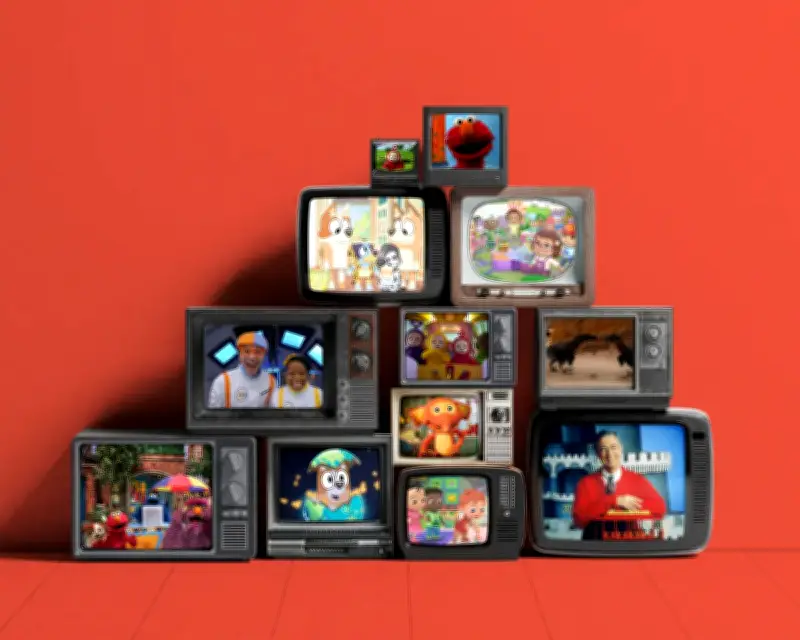
Children's television and apps increasingly bombard young viewers with rapid scene changes, loud sounds, and constant stimulation, leaving little time for reflection or emotional processing, according to a new analysis by researcher Natalia Kucirkova. The analysis, published on Aeon, argues that the pace of media is as important as its content, and that many popular shows and apps fail to give children the time they need to make meaning from what they watch.
The problem of pace in children's media
Kucirkova, who has studied children's media with colleagues and contributed to guidelines and toolkits for designers, describes watching a boy at an airport, clutching an iPad. The screen showed a green character snatching a toy from a pink character, who cried, then instantly smiled when the green character said sorry, all within seconds. The scene then shifted to the characters rowing a boat, with the child's eyes darting across the screen. Kucirkova identifies this as the "pace" of children's media, a design feature often overlooked in favor of content quality, educational value, and safety.
Different media—picture books, games, TV episodes, apps—make different temporal demands on a child. The key question, Kucirkova argues, is whether the pace allows a child to follow a story, grasp a concept, identify with a character, regulate emotion, or share attention with another person. When media moves too quickly, layers of experience collapse. A child may laugh at a joke but miss the anticipation and reversal that make it work. A character may comfort a friend, but if the scene moves on too fast, the child has no time to recognize the repair or imagine doing the same. Developing empathy requires time to notice that another person feels differently.

The attention economy and its impact
Kucirkova connects fast-paced children's media to the broader "attention economy," where design features like "like" buttons and progress bars are optimized to keep users engaged, often at the expense of reflection. She notes that features like delay-email functions and "Are you sure?" pop-ups work in the opposite direction, but these are exceptions. The default in children's media is speed, which can overwhelm a child's developing attention.
Examples of fast-paced media include the animated series Ask the StoryBots, which covers rich topics but through rapid jokes and visual shifts, and Paw Patrol, where rescues are resolved so efficiently that children are swept along by urgency rather than invited to dwell on responsibility or care. The app game Hot Wheels Unlimited is similarly driven by a rhythm of boost, race, crash, win, unlock, repeat.
Research on slow media and its benefits
Kucirkova's research group compared children's shows, apps, and digital stories, finding that pace is a set of design choices. They developed the Kids' Slow Media Project to evaluate media based on how it organizes time, narrative coherence, sensory load, and stopping points. The UK Department for Education advised parents in March 2026 to choose "slow-paced, age-appropriate" content for under-fives, but without defining what that means. Kucirkova's group aims to make the term concrete, though they note that what suits one child may overwhelm another, so they provide ratings only as a map for adult judgment.
Shows scoring highest on the slow rubric include Mister Rogers' Neighborhood, Fantorangen, In the Night Garden …, and Teletubbies, which build rapport and repeat themes like rituals. Bluey often returns to pretend play and emotional understanding, while The Adventures of Paddington uses gentle mishaps to explore perseverance and social understanding. Conversations in shows like Daniel Tiger's Neighbourhood allow new concepts to be introduced slowly, helping them stick. The game app Elmo Loves ABCs also supports slow learning through repetition and touch.

Lowest-scoring media keeps attention in motion with manipulative rhythms—constant tunes, bright images, comic beats, and reward loops—preventing children from settling into a story. Kucirkova argues that pace is a proxy for a deeper question about a child's agency and sense of self. When every pause is filled and every uncertainty resolved, waiting and reflection become intolerable, and children learn to reach for the next stimulus before the previous one has settled.
Critics may dismiss slow media as nostalgia or a privilege of those with time and quiet rooms, but Kucirkova rejects this. The attention economy treats a child's pause as a problem, but slow time gives children space to perceive, process, and make meaning. Fast media, like energy drinks, promises more capacity than a child has, but the bargain is unsustainable and unhealthy. Children need media that preserves their capacity for inwardness and their relation to others. The aim is not to withdraw children from the digital world but to make that world more worthy of them.