The European Commission's long-awaited review of the European Union emissions trading system (ETS) proposes giving companies a less demanding and cheaper pathway to reduce greenhouse gas emissions, risking the weakening of Europe's most effective climate policy, critics say.
ETS overhaul details
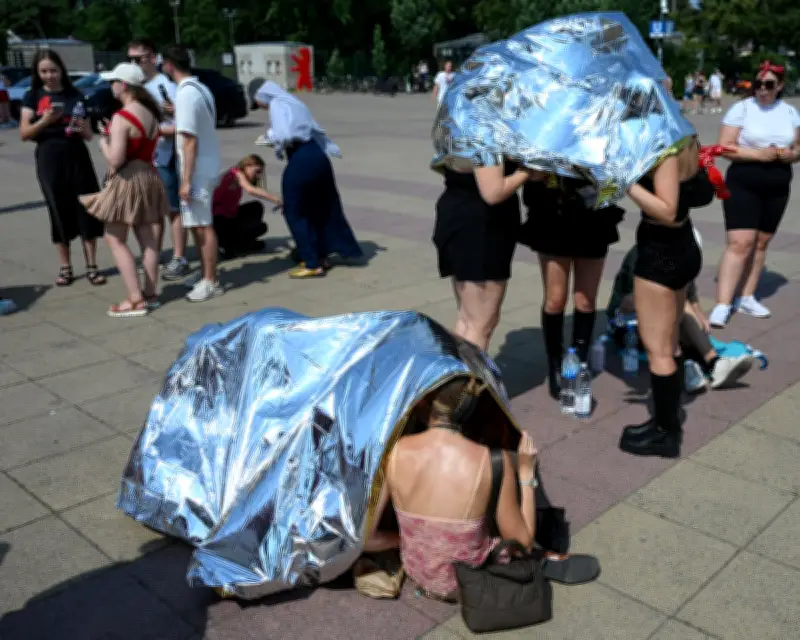
The review, needed to align the ETS with Europe's target of a 90% reduction in greenhouse gas emissions by 2040, follows deadly wildfires in Spain and extreme heatwaves across the continent. Western Europe endured its hottest June ever, with record-breaking temperatures scientists said would be 'virtually impossible' without climate breakdown.
Under the proposals, heavy industries will benefit from free pollution permits for longer, while the number of permits in circulation will be reduced more slowly, giving companies more leeway. Since 2005, the EU's biggest polluters have been required to buy permits to pollute, creating an incentive to invest in cleaner energy. The ETS is credited with reducing planet-heating emissions by 47% by 2023 compared with 2005 levels.

Extension and exemptions
The ETS would be extended to cover municipal waste, with the aim of increasing recycling and reducing incineration. It would also apply to flights within a 5,000km radius of a central point in Europe, affecting airlines flying to north Africa and the Middle East but not China or the US, avoiding conflict with the Trump administration. Private jets would be included for the first time.
EU climate commissioner Wopke Hoekstra called the ETS 'a phenomenal asset', stating Europe would have consumed an extra 100bn cubic metres more gas without the scheme. However, he argued that key European industries faced unfair competition from non-European rivals using 'heavy state subsidies' and 'dubious labour conditions' that a new carbon-border levy did not fully address.
Criticism from environmental groups
Michael Bloss, a German Green MEP, accused the commission of giving industries 'a licence to pollute for even longer and at a lower cost'. He said: 'Weakening the emissions trading scheme harms companies that create jobs and growth through climate-friendly production. Those who have invested in the industries and the jobs of the future will be penalised.'
Camille Maury, senior policy officer at WWF's European policy office, said the proposal 'jeopardises a predictable and effective price on pollution that businesses and investors need to invest in clean technologies'. She added: 'Just like a Jenga tower, when you start removing building blocks, it destabilises the whole structure.'
Industry and member state pressures
The commission has been under pressure from 10 EU member states arguing the ETS contributes to higher energy costs and damages competitiveness. Italy led the charge to scrap the ETS. In response, seven member states, including Nordic countries, Spain and the Netherlands, warned against watering down the ETS because it 'risks undue pressure' on emissions cuts.
Free allowances for polluting sectors such as steel and cement would not be phased out until 2038, rather than 2034 as planned. Companies would only get free allowances if they demonstrate plans to invest in clean production in Europe. The EU would give 80% of free permits to companies with such plans, with the remaining 20% distributed after money is spent.
Cap reduction rate slowed
The annual reduction in the cap on permits would slow to 3.7% from 2031, then 1.7% from 2036, compared with 4.3% currently. WWF said this would allow an additional 2bn tonnes of CO2 to be emitted, raising questions about meeting the 2040 climate target. The proposal also allows some emissions cuts after 2036 to come from 'high-quality' credits funding decarbonisation abroad.
Industry groups welcomed the change in pace but criticised it for not going far enough. Markus Beyrer, director general of BusinessEurope, said: 'Some aspects of the proposal already raise concerns. For example, new conditionalities for free allocations risk increasing bureaucratic complexity, and the uncertain role for international carbon credits is unsatisfactory.'

Official response and next steps
EU officials rejected charges the plans were inconsistent with climate goals. Hoekstra said: 'These numbers are completely climate-law proof.' He added the 'big add-on' was incentives to ensure 'way more investments' on European soil: 'Otherwise, if we just have the industry ship out everyone loses. The stuff will not be produced cleaner out of Europe.'
The draft law must be agreed among the EU's 27 member states and the European parliament. Peter Liese, a German lawmaker from the centre-right European People's party, welcomed the proposals: 'Climate protection that leads to unemployment is not a global role model. Investment within the EU is our goal, and this proposal achieves it far more effectively.'
Launched in 2005, the EU's ETS was the world's first carbon market, inspiring similar schemes in around 40 jurisdictions including China, New Zealand, California and other US states. Ottmar Edenhofer, director at the Potsdam Institute for Climate Impact Research, said the extra flexibility 'does not alter the EU's overall climate policy course' and praised the inclusion of permanent carbon dioxide removals.
Separate electrification and fossil fuel subsidy plan
Separately, the European Commission announced a plan to double the rate of electrification of Europe's economy to 46% by 2040, compared with 23% today. EU energy commissioner Dan Jørgensen said: 'We need to replace the black expensive polluting molecules with cheap homegrown electrons.' He also announced a plan to phase out the €97bn EU taxpayers spent subsidising fossil fuels, calling it 'a little bit like the doctor that tries to help a patient with diabetes by prescribing sugar. We want to get rid of that.'