Members of parliament have demanded the full publication of an explosive report by the UK’s spy leaders, which warns that the collapse of ecosystems overseas will have catastrophic consequences for the UK’s national security, including severe food shortages within five years.
Report warns of catastrophic consequences
The report, compiled by the Joint Intelligence Committee and other government departments, paints a devastating picture of severe food shortages, price rises, migration, political destabilisation, and possible war, fueled by the human-induced climate crisis and over-exploitation. Food shortages could result within five years, according to the report, which has circulated among defence officials for more than a year.
Despite growing concerns for the UK’s food security, likely worsened by the third heatwave this summer afflicting the UK and swathes of the northern hemisphere, the government has refused to publish the full report. A redacted 14-page version of some findings was published after repeated freedom of information requests in January, but MPs argue this is insufficient.

MPs criticise government inaction
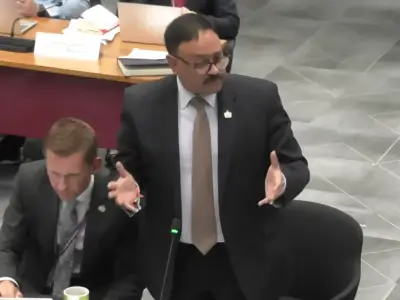
At a hearing of the Environmental Audit Committee on Wednesday, Mary Creagh, the minister for the Department for Environment, Food and Rural Affairs, told MPs that the redacted version should provide enough information. The Cabinet Office, also responsible for the cross-government report, refused to send a minister or official.
Toby Perkins, the chair of the committee, said he was “disappointed” not to see the full version. “It’s a disappointing signal, and it would be a positive sign if we could cooperate on a response to the findings,” he said. “The minister clearly does appreciate the scale of this crisis. But I remain of the view that the government has more to do to grasp the urgency of the moment.”
Chris Hinchliff, the Labour MP and a member of the committee, contrasted the £15bn to be added to the defence budget with the lack of funding to protect critical ecosystems. “The government can summon billions of pounds for new military hardware when the defence sector calls for it. We need an equally decisive mobilisation of investment to restore the natural world on which we rely for our food, water, and clean air. Without these essentials our country has no future,” he said.
Ecosystem collapse threatens global stability
The report shows that the UK will face catastrophic consequences from the collapse of key ecosystems in other countries, including the Amazon rainforest, which scientists fear is reaching a “tipping point” triggered by deforestation and rising temperatures, turning it from a huge absorber of carbon dioxide into a net source of carbon.
Food shortages would be almost certain to result from the decline of ecosystems overseas, as would a big increase in global migration, with the potential to fuel unrest. Among the most alarming findings was that armed conflict, including nuclear war, was also a potential consequence.
Adrian Ramsay, the Green Party MP, said: “If the government is serious about security it makes no sense to be cutting the international development and climate finance budgets which are crucial to tackling these fundamental threats. It’s outrageous for the government to refuse to let MPs see the full report. How can we possibly scrutinise whether the government’s response to these grave risks is adequate?”
Government urged to act urgently
The report was due to be published at an event last October, attended by King Charles, at the Natural History Museum. However, at the last minute the publication was pulled, at the behest of Downing Street. Ministers at the Department for Environment, Food and Rural Affairs, and the Department for Energy Security and Net Zero, also tried to have the report released at the Cop30 summit in Brazil, but that was also prevented. Insiders said this was due to the former adviser to Keir Starmer, Morgan McSweeney.
The Guardian revealed in February that the UK’s climate assistance to poor countries would be slashed, with a ringfence for nature spending scrapped, and projects from the Congo to Latin America and Asia losing out.

Creagh told the hearing that the government was “laser-focused” on using the diminished finance available to protect nature. She pointed to £6.7bn the government planned to spend on nature and climate, with an added aim of “mobilising billions” from the private sector.