
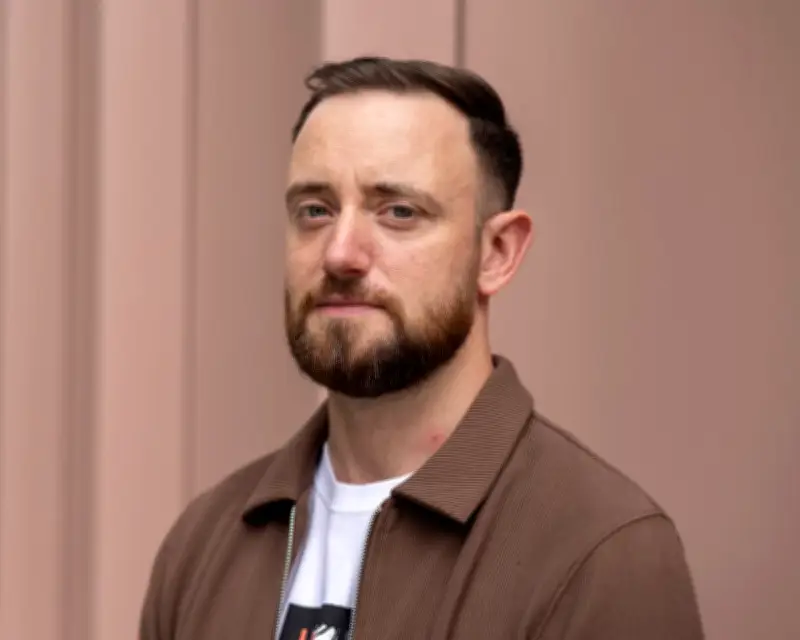
Jacob Dunne, a youth violence campaigner who was jailed for manslaughter after killing a stranger with a single punch in 2011, has condemned Nigel Farage's call for 'pure cold rage' in response to a recent murder. Dunne, now an unpaid government adviser on youth justice, argues that such language risks inciting further violence and ignores the underlying causes driving young men toward extremism.
Farage's 'pure cold rage' comment sparks backlash
When Nigel Farage urged the British public to respond to the murder of 18-year-old Henry Nowak with 'pure cold rage,' it drew widespread condemnation. Prime Minister Keir Starmer accused Farage of exploiting the tragedy for political gain, against the wishes of Nowak's parents. Dunne, speaking to the Guardian, said: 'The definition of rage is uncontrollable and extreme anger. For a political leader who wants to become prime minister, I think he got a little bit too excited. At worst he was inciting violence.'
Dunne's personal transformation through restorative justice
Dunne was 19 when he threw a fatal punch that killed James Hodgkinson in Nottingham in July 2011. After meeting Hodgkinson's parents through restorative justice, he transformed his life. His story inspired an Olivier award-winning play that sold out in London and New York. 'I threw a punch at 19 years old, a violent act that killed another man. Words and dialogue are more effective at reducing violence than rage,' he said.
Underlying causes of youth violence
Dunne spoke after recent violent disorder in Southampton and Belfast. He acknowledged the need to condemn rioting but stressed the importance of addressing 'underlying causes' driving young men to volatile behavior. 'There is a section of our population, mainly men and young men, who arguably don't believe that there is a way of expressing their anger constructively,' he said.
Digital belonging and extremism
Dunne noted that many young men are 'falling through the cracks of society' and turning to extremism due to a lack of community. 'They're finding digital forms of belonging, and there are people online exploiting that lack of community. Which is why you have 'incels,' far-right nationalist groups, and others who create a space for belonging that soothes the void young men feel,' he said.
Historical patterns and the search for belonging
Dunne drew parallels to football hooliganism of the 1960s and postcode gang culture he experienced. He recalled that the 2011 riots were ongoing when he threw the fatal punch. 'In search for belonging, you will adopt whoever adopts you, their values and principles, and form that identity,' he said. He criticized Farage for failing to unite the middle ground and promote peace.
Common Ground Justice Project and long-term solutions
Dunne co-founded the Common Ground Justice Project, an apolitical organization facilitating open conversations about crime and justice. He urged the government to develop a long-term strategy to improve social cohesion and tackle the rising number of 16- to 24-year-olds not in education, employment, or training (Neet). 'We need to have a serious strategy for how we stop young boys and men feeling marginalized. Those children are all susceptible to dogmatic incels, whether left or right,' he said.
'We've got a growing number of outcasts who are willing to burn the whole place down to feel its warmth, and if we keep ostracizing them, we will only perpetuate the problem,' Dunne added. Reform UK was contacted for comment.




