
The dramatic capture of Venezuela's authoritarian leader, Nicolás Maduro, by US forces has not delivered the democratic breakthrough many hoped for. The regime he led remains firmly in place, leaving the country's opposition movement grappling with a profound sense of uncertainty over its next steps.
A Regime Intact, Repression Continues
Despite the removal of Maduro and the US seizure of Venezuela's vital oil assets, the power structure of the so-called 'Chavismo' movement is largely unchanged. The former dictator's entire cabinet, now led by acting president Delcy Rodríguez, retains control, operating under a claimed US oversight that activists say is ineffective.
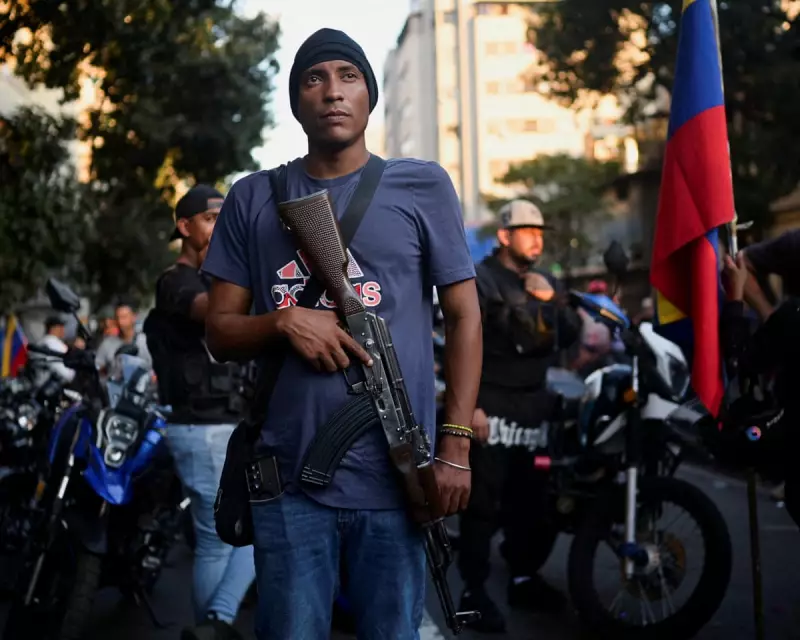
Repression on the ground continues unabated. Armed colectivo militias still patrol streets, checking citizens' mobile phones. A group of teenagers was recently detained for allegedly celebrating Maduro's capture and held for a week. Furthermore, despite promises of a mass release, nearly 1,000 political prisoners remain incarcerated for criticising the government.
Rafael Uzcátegui, a sociologist and activist with the NGO Laboratorio de Paz, describes the current situation as "Chavismo 3.0". He states that state terrorism is still operational, with key figures like Rodríguez, her brother Jorge, and the feared interior minister Diosdado Cabello maintaining power. Uzcátegui, like many activists, was forced into exile to avoid arrest or worse, a fate shared by thousands during Maduro's rule, where security forces killed over 19,000 people between 2016 and 2019 alone.
The Opposition's Dilemma: Elections or Installation?
The opposition is united on the desired outcome but divided on the immediate path. They argue that Venezuela must either hold new, free elections or install the retired diplomat Edmundo González, who is widely believed to have legitimately won the 2024 presidential election before it was stolen by the regime.
However, neither option appears to be a priority for the US administration under Donald Trump. After capturing Maduro, Trump opted to leave the existing cabinet in charge, arguing the US must first "rebuild" Venezuela and questioning Venezuelans' capacity to hold an election. This stance frustrates pro-democracy campaigners who point to the opposition's effective and victorious 2024 campaign as proof of their readiness.
Nobel peace prize winner and opposition leader María Corina Machado has demanded González be sworn in. Yet, activists like Uzcátegui note an internal debate: some fear calling new elections would undermine the legitimacy of the 2024 result González is believed to have won.
A Long Road to Democratic Transition
Exiled activists emphasise that the foundations for democracy have been systematically dismantled over two decades. Griselda Colina of the Global Observatory for Communication and Democracy stresses that not a single public institution escapes Chavista control. A genuine transition, therefore, cannot be swift.
For credible elections to occur, Deborah Van Berkel of Ideas por la Democracia outlines necessary preconditions: a truly independent electoral council, unrestricted access for international observers, a free press, and guarantees of democratic governability for any newly elected government.
There is a palpable fear that the Rodríguez administration aims to cling to power until the 2030 elections, hoping that an economic recovery fuelled by reopened US relations could deliver them a victory. Meanwhile, civil society within Venezuela operates under severe constraints, hobbled by a restrictive "anti-NGO law" passed after the 2024 vote.
Despite the challenges and the cautious mood, a resilient hope persists. "We are a people who refuse to live under dictatorship," says Colina, capturing the spirit of a movement that, while unsure of its immediate tactics, remains steadfast in its ultimate democratic aspiration.




